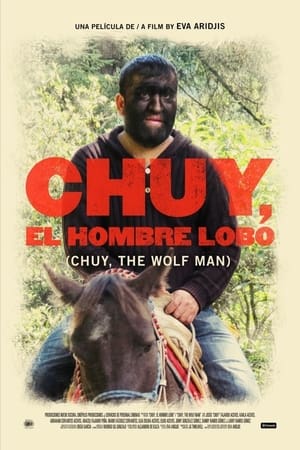
Jesus 'Chuy' Aceves and a dozen living members of his extended family suffer from the very rare condition of congenital hypertrichosis, meaning they were born with excessive hair on their faces and bodies. Due to their appearance, they suffer from discrimination in all areas of their lives: the children are made fun of at school and abandoned by their 'non-hairy' parents, and the adults cannot find work unless they choose to exhibit themselves as freaks in circuses. This moving and visually arresting documentary is a portrait of Chuy and his family members. It examines their day-to-day lives and their struggle to find love, acceptance and employment.
Anya was an ordinary Moscow teenager who found a chat group of her choice online. They talked about animals, the stars and social issues. A man called Ruslan D joined the group, who set up an office space for the online group to meet. Step by step, he began to lead young people who were critical of the Putin's regime towards political activism. Ruslan D placed a camera in the meeting room, and when he had enough footage, he handed it over to the prosecutor. The police raided the teenagers' homes and they were arrested on charges of planning to overthrow the government and terrorism. Three years of legal proceedings transformed Anya's mother from a loyal follower of Putin to a hunger-striking activist. Moscow-based director Anna Shishova followed Anya and her mother's life throughout the event and eventually revealed the true identity of Ruslan D.
A short 1994 documentary that highlights the lives and experiences of a few LGBTQ+ residents of the Palouse. Filmed and narrated by Jeff Olson. Produced by the Latah/Nez Perce Voices for Human Rights. The film was digitized and provided by the Boise State University Special Collections and Archives.
A documentary about the atrocities committed against the Hmong people by the Laos government. Shot by Hmong people with cameras provided to them in 2006, this film provides a unique look into one of the worst, and silent, human rights tragedies of the 21st century.
Grow Vasu is a biographical documentary on the life of comrade Ayinoor Vasu aka Grow Vasu, a leader of the working class, as well as a champion of Muslim, Dalit, and marginalized communities and human rights movements. At 94 years young, he was jailed for questioning the authority, yet, Vasu continues his fight against oppression, for justice, and for the revolution. The film follows a narrative style divided into ten chapters consists of his personal-political up and downs.
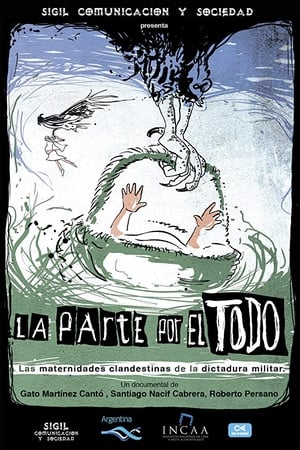
An historical documentary that rereads the recent death of Jorge Videla, bloodthirsty dictator of Argentina in the 70’s, telling the disappearance, one by one, of the members of La Plata Rugby club. A tragic and compelling story where the passion for politics and sport is opposed to a fascist - military regime.
Brazil is one of the most dangerous countries for environmentalists. The rural community of Belisário holds the country's second largest bauxite reserve, right below one of the most bio-diverse areas in the world: the Atlantic Forest. The small community was shaken when the beloved Gilberto, a Franciscan Friar, received a death threat followed by the lines: "you've been talking against mining way too much". PT: O Brasil é um dos países mais perigosos do mundo para defensores do meio ambiente. Em Minas Gerais, a comunidade rural de Belisário abriga a segunda maior reserva de bauxita do país, em uma das áreas de maior biodiversidade do mundo: a Mata Atlântica. A tranquilidade do pequeno vilarejo foi abalada quando Frei Gilberto, um franciscano que dedica sua vida à preservação da natureza, recebeu uma ameaça de morte com o seguinte aviso: "você tem falado demais contra a mineração".
In the midst of conservative politics in the city of Goiânia, an anti-prohibitionist collective mobilizes for the legalization of marijuana against government repression.
Svetlana has lost her son who was found dead while he was in the army. As she tries to shed light on the culture of violence and abuse in the Belarusian military, a group of young friends from the techno underground soon face being drafted themselves. They go to rave parties in undershirts and round sunglasses, but in a moment the party could be over – at least until huge protests break out in the streets following the recent ‘re-election’ of dictator-president and Putin sympathiser, Aleksandr Lukashenko. A glimmer of hope and a promise of change, which only causes the brutality of the authoritarian society to erupt in full force.
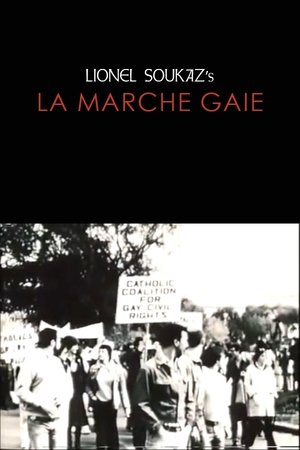
A story of the LGBT struggle from the 1960s to the present, after the Stonewall riot sparked the militant action in New York that was to spread around the world. From San Francisco to Paris via Amsterdam, between the first Gay Pride, the election of Harvey Milk, the French "decriminalization", the AIDS epidemic and the first homosexual marriages, these few decades of struggle are embodied through numerous testimonies of actors and actresses of this revolution rainbow.
It’s the last dictatorship of Europe, caught in a Soviet time-warp, where the secret police is still called the KGB and the president rules by fear. Disappearances, political assassinations, waves of repression and mass arrests are all regular occurances. But while half of Belarus moves closer to Russia, the other half is trying to resist…
Throughout the Islamic world, each year hundreds of women are shot, stabbed, strangled or burned to death by male relatives because they are thought to have “dishonoured” their families. They may have lost their virginity, refused an arranged marriage or left an abusive husband. Even if a woman is raped or merely the victim of gossip, she must pay the price. Crimes of Honour documents the terrible reality of femicide – the belief that a girl’s body is the property of the family, and any suggestion of sexual impropriety must be cleansed with her blood. We meet women in hiding from their families, a brother who describes his reasons for killing the sister he loved, and a handful of women who have committed themselves to the protection of young women in danger of losing their lives.
4, April, 2014. Worker's who worked in "SaengTak" are get to the struggle to require adjust of working environment for safely food, and guarantied a Three Right of labors. Then. Worker's tried to record there's own struggle and launch forth to street, However, Law, Capital, unconcern of crowd and avoid of famille are swallow up them.
In a darkened classroom, the white cracked walls serve as a movie screen. We are in a remote mountain village in Georgia. The light from the projector breaks the darkness: the children's first cinematic experience is about to begin. Among the kids are Iman and Eva, two Muslim girls, for whom the experience becomes a turning point and inspires them to pick up a camera and start filming their daily lives. The girls are growing up in a valley infested by radicalism, where most people live in constant fear that their relatives will sacrifice their lives in the name of God.
Through a child's lens, The Honest Poet reveals a rarely seen side of Afghanistan, following 11-year-old Raheem on a journey through his country and into the homes and hearts of his people.
The story puts İlhan Çomak at the center, even though he is not physically present in the film. It focuses on the 21 years that İlhan spent in prison and his family’s experience of those years without him. The narrative is constructed through the letters İlhan wrote and aims to describe his life, his emotions and longings. The film constructs İlhan’s history through a chronology in the prison but refrains from restricting it only to a “prisoner’s quest for justice”, and rather tells a story of the situations he finds himself in over the years and his emotions and their equivalents in life.
Through one woman's experience as an adopted person and also as a mother who relinquished her child in 1971, this documentary highlights the many complex issues associated with adoption.
Archival film maestro Göran Hugo Olsson has assembled—from a vast catalogue of footage in the vaults of Sweden’s national television service SVT—accounts of the Israeli-Palestinian conflict as witnessed and represented by Swedish journalists. Stories of the beginning of the Israeli state interwoven with the Palestinian struggle for independence. News coverage with Yasser Arafat and interviews with Israeli foreign minister Abba Eban during a visit to Sweden unseen since first broadcast. From the tenth anniversary of Israel’s founding to the First Intifada, perspectives and encounters with statesmen, civilians, revolutionaries, and intellectuals tell the story from myriad angles of an evolving media landscape, revivifying a history of the ongoing conflict.
Pikilina is a Dominican-born woman of Haitian descent. Racial and political violence erupts when the country of her birth, the Dominican Republic, reverses birthright citizenship and she and 200,000 others are left stateless.
Scott Mills travels to Uganda where the death penalty could soon be introduced for being gay. The gay Radio 1 DJ finds out what it's like to live in a society which persecutes people like him and meets those who are leading the hate campaign.