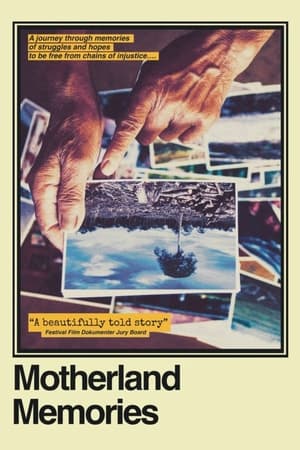
The story puts İlhan Çomak at the center, even though he is not physically present in the film. It focuses on the 21 years that İlhan spent in prison and his family’s experience of those years without him. The narrative is constructed through the letters İlhan wrote and aims to describe his life, his emotions and longings. The film constructs İlhan’s history through a chronology in the prison but refrains from restricting it only to a “prisoner’s quest for justice”, and rather tells a story of the situations he finds himself in over the years and his emotions and their equivalents in life.
A short 1994 documentary that highlights the lives and experiences of a few LGBTQ+ residents of the Palouse. Filmed and narrated by Jeff Olson. Produced by the Latah/Nez Perce Voices for Human Rights. The film was digitized and provided by the Boise State University Special Collections and Archives.
Throughout the Islamic world, each year hundreds of women are shot, stabbed, strangled or burned to death by male relatives because they are thought to have “dishonoured” their families. They may have lost their virginity, refused an arranged marriage or left an abusive husband. Even if a woman is raped or merely the victim of gossip, she must pay the price. Crimes of Honour documents the terrible reality of femicide – the belief that a girl’s body is the property of the family, and any suggestion of sexual impropriety must be cleansed with her blood. We meet women in hiding from their families, a brother who describes his reasons for killing the sister he loved, and a handful of women who have committed themselves to the protection of young women in danger of losing their lives.
Anya was an ordinary Moscow teenager who found a chat group of her choice online. They talked about animals, the stars and social issues. A man called Ruslan D joined the group, who set up an office space for the online group to meet. Step by step, he began to lead young people who were critical of the Putin's regime towards political activism. Ruslan D placed a camera in the meeting room, and when he had enough footage, he handed it over to the prosecutor. The police raided the teenagers' homes and they were arrested on charges of planning to overthrow the government and terrorism. Three years of legal proceedings transformed Anya's mother from a loyal follower of Putin to a hunger-striking activist. Moscow-based director Anna Shishova followed Anya and her mother's life throughout the event and eventually revealed the true identity of Ruslan D.
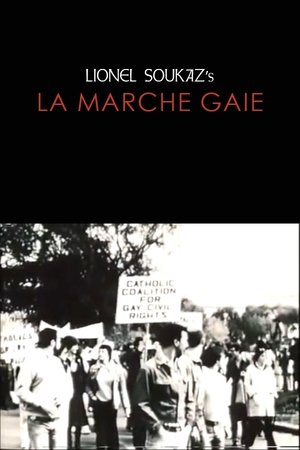
A short documentary about the October 14 1979 March For Lesbian And Gay Rights in Washington D.C.
An historical documentary that rereads the recent death of Jorge Videla, bloodthirsty dictator of Argentina in the 70’s, telling the disappearance, one by one, of the members of La Plata Rugby club. A tragic and compelling story where the passion for politics and sport is opposed to a fascist - military regime.
In April 2015, two shipwrecks in the central Mediterranean resulted in over a thousand deaths. The first, on 12 April, occurred when an overcrowded boat was approached by a large commercial vessel. Less than a week later, on 18 April 2015, a similar incident led to over eight hundred deaths after an overcrowded vessel collided with a cargo ship that had approached to rescue its passengers. Both incidents are in part the result of changing EU policies toward at-sea rescue, particularly the retreat of state rescue operations and a resulting onus on commercial vessels to fill the ‘rescue gap’.
2003 documentary film produced by Oliver Stone for the HBO series America Undercover about the conflict in occupied Palestine. He speaks with Ehud Barak and Benjamin Netanyahu, former prime ministers of Israel, Yasser Arafat, late president of the Palestinian National Authority, and various Palestinian activists resisting the oppression of the zionist regime.
I have been pretty satisfied with my life before I got on the bus. When I do in June 2011, my whole life turns upside down. I am just a regular passenger at first. Like other people I was sorry, and felt obliged to help and care for other passengers. Then I begin to film these common heroes with my camera. Those who speak about hope, who provide it and get on the bus, Ms. Kim Jin-suk, and other crane laborers who risk their safety while demonstrating for their rights on high. She, while stationed insecurely on high, begins interacting with the world through Twitter and makes friends. Then I realize I really love her. Will we have her back safely?
Though both the historical and modern-day persecution of Armenians and other Christians is relatively uncovered in the mainstream media and not on the radar of many average Americans, it is a subject that has gotten far more attention in recent years.
One of the rooms inside the legendary Barba Azul Cabaret has become a shelter for the girls working there: the women's bathroom. Every night La Mami, who's in charge of the bathrooms, offers them the warmth and the advice they need to take on the challenge they face in the dance hall.
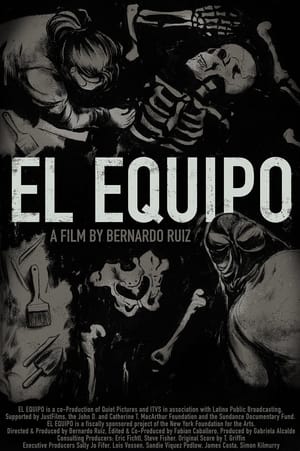
The most crude and atrocious institutional violence of the Spanish State hides behind a true dark figure, an abyss into which this documentary peers through 30 firsthand accounts.
The destiny of women is irrevocably linked to blood. Between tradition and modernity, the female body has been marketed, honored, and mutilated.
This documentary offers a women’s picture of the Egyptian revolution. We are in Egypt, between Cairo and Ismailia, two revolutionary cities. Four women taking part in the revolution tell us their experiences. The film empathize the role of the women in such a changing period.
In the 1990s many people in Kurdistan were taken into custody and interrogated under torture; their killers disposed of the bodies by throwing them out of helicopters, or burying them in acid-filled wells. Thousands were murdered/disappeared by paramilitary forces—such as Jitem and Hizbul-Kontra—that were financed and supported by the state, though they have always stuck to the line: “We didn’t do it.” The documentary looks at the case of seven people, including four children, who were disappeared from the town of Kerboran [Dargeçit] in 1995, and tells the story of their families’ tireless search for their bones
The autobiographical account of the tormented life of a witness of the century: Louisa Ighilahriz, activist and leading figure in Algerian independence. A student, she joined the independence struggle at the age of 20, joining the ranks of the FLN on the eve of the Battle of Algiers in late 1956 under the name Lila. She took part in the high school students' strike, then fled into the maquis when she was actively sought after. She was part of the French FLN support network of "suitcase carriers" during the Battle of Algiers. Seriously wounded alongside her network leader, Saïd Bakel, during an ambush in 1957, hospitalized and then imprisoned, she suffered numerous tortures in French prisons. She will be saved from certain death by an anonymous person, she will seek, for forty years, to find him just to show him her gratitude... Emblematic of the painful Franco-Algerian history, Louisa's story is poignant and imbued with humanism.
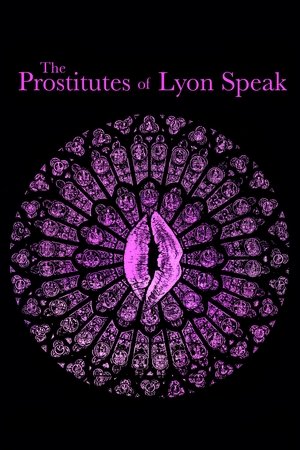
Documentary about the Lyon sex workers who occupied the church of St. Nizier on June 3, 1975.
Wangala is a short documentary about women's resistance to the Moroccan occupation. Samira was born in the camps, in the middle of the desert, the only place that was given to them after the arrival of the invader. Through the concepts of torture, refuge and exile, we try to create a mosaic of experiences that explain the current situation of Sahrawi refugees in the camps, in exile and in the occupied territory.
In the aftermath of a tragic fire in a Romanian club, burn victims begin dying in hospitals from wounds that were not life threatening. A team of investigative journalists move into action uncovering the mass corruption of the health system and of the state institutions. Collective follows journalists, whistle blowers, and authorities alike. An immersive and uncompromising look into a dysfunctional system, exposing corruption, propaganda, and manipulation that nowadays affect not only Romania, but societies around the world.
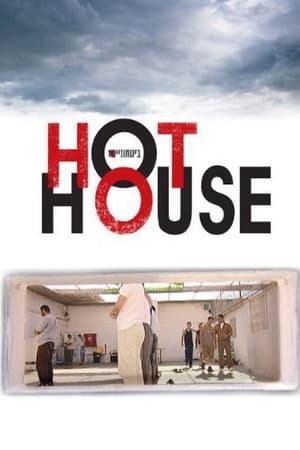
In a candid and unflinching portrait of Palestinian prisoners, Shimon Dotan takes viewers inside the highest security prisons in Israel where thousands of Palestinians fill these detention facilities.