Independent documentary created by group of enthusiast from Russia. It covers the topic of Zapatista uprising in Chiapas, Mexico and struggle of Mexican indigenous peoples for justice, liberty and democracy.
An experimental documentary about dead turtles, crab swarms, decaying tennis courts, and microscopic histories. The filmmakers shot their explorations into the abandoned golf courses, factories, and resorts of Sarasota, Florida and spoke to local youths who are using them for new and strange purposes. What would the Surrealists and Situationists think of a suburban, subtropical tourist town? What goes on in a storage unit in the dead of night? What is the afterlife of a decommissioned train car? What ghosts haunt a ruined hotel? What is the life cycle of a city? When will waters wash it all away?
During the Spanish Civil War (1936-1939) and the Second World War (1939-1945), around three thousand people managed to elude their pursuers, and probably also avoided being killed, thanks to the heroic and very efficient efforts of the Ponzán Team, a brave group of people — mountain guides, forgers, safe house keepers and many others —, led by Francisco Ponzán Vidal, who managed to save their lives, both on one side and the other of the border between Spain and France.
A heady, energised mash-up of animation, unseen archive footage and interviews, Rebel Dykes provides an intimate insight into the politically charged, artistically radical anarchist subculture in 1980s London, and the individuals who helped shape and change their world. Bringing together BDSM nightclubs, inclusive, sex-positive feminism, DIY zine culture, post-punk musicians and artists, squatters, activists and sex workers, these rebel dykes went out onto the streets to make their voices heard. [Feature length version of 2016 short of the same name.]
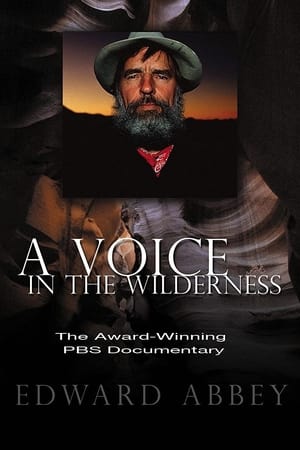
When Edward Abbey died in 1989 at the age of sixty-two, the American West lost one of its most eloquent and passionate advocates. Through his novels, essays, letters and speeches, Edward Abbey consistently voiced the belief that the West was in danger of being developed to death, and that the only solution lay in the preservation of wilderness. Abbey authored twenty-one books in his lifetime, including Desert Solitaire, The Monkey Wrench Gang, The Brave Cowboy, and The Fool's Progress. His comic novel The Monkey Wrench Gang helped inspire a whole generation of environmental activism. A writer in the mold of Twain and Thoreau, Abbey was a larger-than-life figure as big as the West itself.
On September 16, 1920, as hundreds of Wall Street workers headed out for lunch, a horse-drawn cart packed with dynamite exploded in front of Morgan Bank — the world’s most powerful banking institution. The blast turned the nation’s financial center into a bloody war zone and left 38 dead and hundreds more seriously injured. As financial institutions around the country went on high alert, many wondered if this was the strike against American capitalism that radical agitators had threatened for so long.
After a wave of arrests in 1969, Italian anarchist Giuseppe Pinelli allegedly falls out of a police building window while being interrogated. The circumstances leading to his death are re-enacted in three hypothetical versions in this attempt at counter-investigation. Released together with Nelo Risi's 'Giuseppe Pinelli', as 'Documenti su Giuseppe Pinelli'.
Casas Viejas: el grito del sur
The birth of the radical environmental movement is captured in this short, poetic film on the legendary direct action at Glen Canyon Dam in March of 1981. The film contains one of the only interviews ever given by the late, great author Edward Abbey along with his classic speech from the back of a pick-up truck.
The German punk band "Terrorgruppe" was found in 1993 and broke up in 2005. The band was essential for the developement of German punk. Songs like "Keine Airbags für die CSU" or "Mein Skateboard ist wichtiger als Deutschland" inspired a whole generation of punks and anarchists. This documentary portraits the band's history from 1993 to 2005.
In the summer of 1959, as a magazine correspondent, writer and filmmaker Pier Paolo Pasolini (1922-75) traveled along the Italian coast. In 1963, he documented the sexual behavior of the Italians. In the winter of 1970-71, he witnessed the hardships of the most impoverished Italian population suffering from the boot of state power. After these three trips, he came to the conclusion that Italian society had changed drastically for the worse over the years.
The true story of Austria's Empress Elisabeth, whose assassination by an Italian anarchist in 1898 shocked the world and triggered historic unrest.
The Vietnam War during the JFK years and beyond. Made in 1972 in the filmmaker's apartment, without documentary footage of the war, metaphors are created through the animation of images and objects, and through guerrilla skits. By rejecting the authority of traditional documentary footage, the anarchist spirit of individual responsibility is established. This is history from one person's point of view, rather than a definitive proclamation.
Considers marvels of modern science: Fingerprints, cosmetics, radio, microbiological research, airplanes.
The sarcastic account of the assassination of five Spanish politicians between 1870 and 1973 is mixed with the narration of five short stories by Edgar Allan Poe illustrated by five skillful pencil artists. A documentary, a video essay, a collage, a provocative experiment where various pop culture figures and icons perform unexpected cameos. The macabre joke of a jester. Never more.
1970 marked the start of a bombing campaign by British urban guerrilla revolutionaries The Angry Brigade. Their targets, a bizarre mix, included the Miss World contest, Ford’s motor factory, the home of a conservative cabinet minister and the Biba department store. Following a two year hunt by the newly formed Special Branch, eight suspects were arrested, and following the longest trial in British criminal history, four young graduates were convicted of the bombings. The Angry Years tells the little known story of the Angry Brigade - contributors include Jake Prescott, ex Angry Brigade member, the journalist Paul Foot and the Special Branch detective credited with tracking the Angry Brigade down.
A retrospective look at the anarcho-syndicalist and anarcho-communist experience in Spain from 1930 until the end of the Civil War in 1939.
Upon the outbreak of the Spanish Civil War in July 1936, the anarchist union CNT socialized the film industry in Spain, so in Madrid and Barcelona film workers took over the production assets and, between 1936 and 1938, numerous films on a wide variety of topics were released, composing a varied mosaic that gives rise to one of the most unusual and original moments of Spanish cinematography.
After her father's death, Lilo wanders through Zurich's Allmend, a common public space on the edge of the city. It is there that her father spent most of his time during the last years of his life. In her search for his traces, she listens to the landscape, sketches nature and meets the regular walkers.
This timely, bold set of one-on-one interviews presents two of the most venerable figures from the American Left—renowned historian Howard Zinn and linguist and philosopher Noam Chomsky—each reflecting upon his own life and political beliefs. At the age of 88, Howard Zinn reflects upon the Civil Rights and anti–Vietnam War movements, political empires, history, art, activism, and his political stance. Setting forth his personal views, Noam Chomsky explains the evolution of his libertarian socialist ideals, his vision for a future postcapitalist society, the Enlightenment, the state and empire, and the future of the planet.