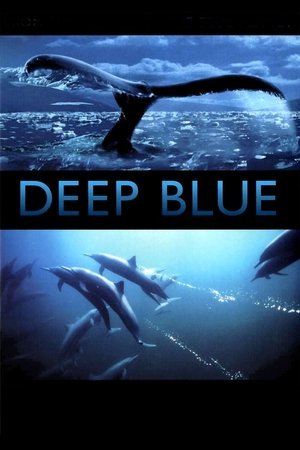
Thanks to sophisticated equipment, marine biologists have managed to capture unprecedented scenes of the intimate life of humpback whales off the Australian coast. A spectacular immersion in the intimate life of this mysterious species. Off the coast of the Kimberley in northwestern Australia is a major breeding ground for humpback whales. Thanks to sophisticated equipment, such as aerial cameras on board quadrotors or innovative night vision technologies, Curt and Micheline Jenner, whale researchers, capture unprecedented scenes revealing the behavior of cetaceans.
WWF : à quoi joue le panda ?
Follows life of Malika, a lioness in South Africa’s Kruger National Park as she battles to survive.
For 70 years, the population of the wapiti deer in the Yellowstone National Park in the United States increased unchecked. Without natural predators and despite all human attempts to check the increase of the deer population they kept spreading and destroyed vast regions of the park's vegetation. They literally defoliated the National Park. However, a well-directed reintroduction of 41 wolves between 1995 and 1997 worked wonders: The animals restored the natural balance in the National Park.
Das Plattbodenschiff
It's springtime, the air is tepid, the skylarks chirp, and spring flowers cover the meadows and the forest grounds. Out of a pile of leaves a fluttery, sniffling snout tip appears: it's a hedgehog awakening from its winter sleep heading into the light of a new year, having only two things in mind: food and finding a partner.
Spreading about 400 km in parallel to the Cantabric Sea, the Cantabrian Mountains, located North to Spain are a natural top wall full of animal and vegetable life that live in an extreme conditions across any year. Making a review along the four seasons, the documentary examines the situation and the relation of the different species, focusing in the brown bear's life in addition with the salmons travel along of thousand kilometers to return home to spawn, showing too the difficult of a landscape where danger is everywhere, including in the smallest size. A fascinating travel for revealing the wonder of nature.
There are few places on earth that have such a diverse variety of terrain and range of climates concentrated in a relatively small area - temperate coastline, scorching arid deserts and tundra, tropical rainforests and frozen snowcapped mountains. And there are few places that are as heavily exploited by humans, yet remain a wilderness.
Des enfants et des arbres
This astounding documentary delves into the mysteries of the Tunguska event – one of the largest cosmic disasters in the history of civilisation. At 7.15 am, on 30th June 1908, a giant fireball, as bright the sun, exploded in the sky over Tunguska in central Siberia. Its force was equivalent to twenty million tonnes of TNT, and a thousand times greater than that of the atomic bomb dropped on Hiroshima in 1945. An estimated sixty million trees were felled over an area of over two thousand square kilometres - an area over half the size of Rhode Island. If the explosion had occurred over London or Paris, hundreds of thousands of people would have been killed.
Take A Spectacular Journey. It Starts Right Here... Arabia: Sand, Sea & Sky Take a stunning tour of Arabia's natural world- a land of vivid contrast and splendor. Your journey begins in the magnificent coral reefs of the Red Sea where barracuda, giant mantra rays, and sharks comb the fertile waters. Then, high in the cliffs of the great mountain barrier, you will be fascinated by the complex social behavior of a troop of baboons. As you descend into the foothills, thousands of migrating birds converge, including the flamboyant Abyssinian Roller which will dazzle you with its brilliant feathers and swooping aerobatic dives. Finally, travel by camel across the immense sculptured desert, as the Bedouins have for more than thirty-five hundred years on an expedition you will never forget in ARABIA: SAND, SEA, & SKY.
Jellyfish blooms are making headlines around the world. This is due to the damage they cause to tourism, fishing and our health. How can these creatures, which are over 98% water and have no shell, skeleton or brain, expand so rapidly? Although this is a normal stage in the life cycle of these gelatinous animals, we have to admit that blooms have become much more frequent and massive in recent decades. We're even witnessing jellyfish populations appearing in more and more regions where fish have been replaced by them, such as off the coast of Namibia, in the Black Sea, in the Sea of Japan and in certain areas of the Baltic Sea. What causes this? Why has the role of jellyfish in the ocean been underestimated, even though they outlived the dinosaurs? Are jellyfish on their way to dominating the oceans as they once did? What if they were to be the only ones left?
The River Emajõgi forms a powerful water world hiding an ancient life. Little Aleksander together with his filmmaker father Remek Meel discovers Alam-Pedja nature reserve and the secrets of its enchanting world. Father and son get acquainted with the hidden life of eagles, beavers, otters, waxwings, great snipes, ravens, penduline tits and Ural owls.
Twenty images of a camera running next to a chemical platform and capturing abstract light throught improvised gestures and asymmetrical motion
Stories of personal connections with orcas, beautiful cinematography featuring B.C’s resident orcas, and an evocative soundscape composed by Jeff Rona and Ben MacDougall provide an uplifting contrast to the environmental challenges we face. Inspired by elders including environmentalist and CBC Broadcaster, David Suzuki, whale researchers Alexandra Morton and Paul Spong, totem carver Wayne Alfred, and lifelong resident of the Broughton archipelago Billy Proctor, this film is anchored by Rob Stewart’s invitation to rise up and create the world we dream for ourselves. Viewers will come to understand the importance of the personal choices we make; it becomes clear that what we do to nature, we do to ourselves.
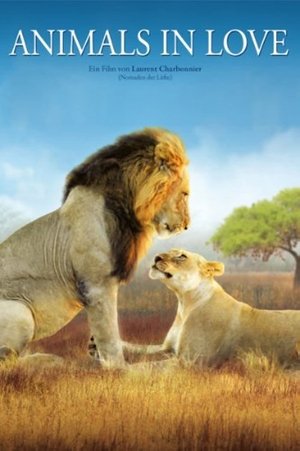
Translated literally as "Animals in Love," the French-language documentary Animaux Amoreux depicts various species of the animal kingdom in courting, mating and reproduction activities. Laurent Charbonnier directs.
As the most dammed, dibbed, and diverted river in the world struggles to support thirty million people and the peace-keeping agreement known as the Colorado River Pact reaches its limits, WATERSHED introduces hope. Can we meet the needs of a growing population in the face of rising temperatures and lower rainfall in an already arid land? Can we find harmony amongst the competing interests of cities, agriculture, industry, recreation, wildlife, and indigenous communities with rights to the water? Sweeping through seven U.S. and two Mexican states, the Colorado River is a lifeline to expanding populations and booming urban centers that demand water for drinking, sanitation and energy generation. And with 70% of the rivers’ water supporting agriculture, the river already runs dry before it reaches its natural end at the Gulf of California. Unless action is taken, the river will continue its retreat – a potentially catastrophic scenario for the millions who depend on it.
Two Canadian experts in underwater filming, Mario Cyr and Jill Heinerth, join forces for the first time to record how Arctic wildlife is adapting to the dramatic effects of climate change.
Bird watchers on both sides of the U.S.-Mexico border share their enthusiasm for protecting and preserving some of the world's most beautiful species.
Il vecchio confine