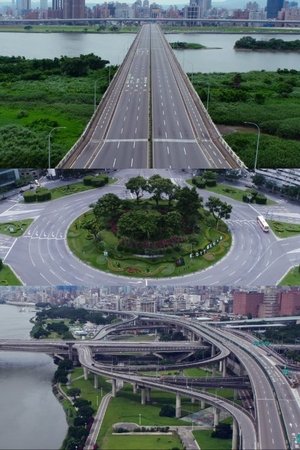
Fifteen images of a camera running in a park and in obscurity searching the space of light through distorsion and the sensory of rapid motion.
The six-hour essay in four parts examines the history of regimes and revolutions, leaders and martyrs, from a philosophical perspective. The collage of personal memories, staged scenes and archives of collective memory compares the Prague Spring to the Velvet Revolution and shows the exposure, conflict, crisis, and catharsis of the post-communist society.
Art historian and filmmaker Sundaram Tagore travels in the footsteps of Louis Kahn to discover how the famed American architect built a daringly modern and monumental parliamentary complex in war-torn Bangladesh.
A portrait of the Canadian architect Luc Durand (1929 – 2018), who, after studying with Eugène Beaudoin in Switzerland, began his career in India. This period would be decisive for his career and would influence many of the projects he designed in Quebec, including the Quebec Pavilion at Expo 67, Place Dupuis, and the Olympic Village for the 1976 Olympic Games. Durand then decided to return to his roots in 2012, traveling from Montreal to Geneva, from New Delhi to Chandigarh. A portrait of an eminent figure in Quebec architecture.
During World War II, the photographer Francisco Boix and other Spanish Republican prisoners of the Mauthausen concentration camp, where 120,000 people died, managed not only to survive their indescribable experience, but also, after the war, to reveal to the world what really happened in that hell, saving from destruction thousands of official photographs taken by the SS.
Documentary about Gert Wingårdh.
Actors work with a director to find the rhythm of a scene.
Director Peter Judson's semifictitious tale opens a revealing window into the indie filmmaking process, capturing the trivialities, aggravations and enthusiasm that go into completing a picture. Using footage from an indie movie set, e-mails constructing a plotline about distributor difficulties and interviews with indie mainstays such as Steve Buscemi and Sam Rockwell, the film provides a riveting look at one producer's rejections and rewards.
Since the 1980s, the video shop has been a desperately necessary space for film culture. In Videoheaven, Alex Ross Perry tells the story of the neighbourhood video shop to consider wider, changing social histories, using appropriated footage from the high and lowbrow.
Narrated by her granddaughter, Marisa Schiaparelli Berenson, this documentary delves into the extraordinary life and legacy of fashion visionary Elsa Schiaparelli. Featuring never-before-seen images from the family’s private archives, it offers an intimate portrait of one of couture’s most daring innovators. Inspired by the book of the same name by Marisa Schiaparelli Berenson, published by Double-Barrelled Books (UK).
Femmes à l'Assemblée : histoire d'un combat
Twenty images of a camera running next to a chemical platform and capturing abstract light throught improvised gestures and asymmetrical motion
Behind the iconic Eiffel Tower lies the story of an incredible challenge to erect a thousand-foot tower that went far beyond a design competition, and marked a major turning point in engineering history. It was the beginning of radical transformation where iron was pitted against stone, engineering against architecture, and modern design against ancients. Press campaigns, lobbying, public conferences, denigration of opposing projects, bragging about big names - all participants engaged in a fierce battle without concession. Using 3D recreations, official sources (reports, letters, drawings...) and intimate archives obtained from their descendants, this film will bring to life this vertical race through a fresh and visual way to mark the centenary of Eiffel death.
Das Plattbodenschiff
Atlantic Ocean, off the coast of Iceland, July 9, 2016. The surprising discovery of a canister —containing four reels of The Village Detective (Деревенский детектив), a 1969 Soviet film—, caught in the nets of an Icelandic trawler, is the first step in a fascinating journey through the artistic life of film and stage actor Mikhail Ivanovich Zharov (1899-1981), icon and star of an entire era of Russian cinema.
A film that immerses its audience in subjective states of consciousness they might experience when they die, imagining what they can see and think and hear in a seamless but fragmentary flow of poetic images, words and music. The viewer undertakes a journey into their own interior world of dreams and projections in which time and space, and cause and effect logic, are turned on their heads. Text Messages from the Universe is inspired by The Tibetan Book of the Dead, a text which guides souls on their journey of 49 days through the 'Bardo', or intermediate state, between dying and rebirth.
Located in former West Berlin, Tempelhof Airport reflects the dramatic history of the 20th century. Once a Nazi showpiece, it later became a symbol of freedom during the Berlin Airlift and the Cold War. In 1978, East German citizen Constanze Glien unexpectedly arrived here after her flight was hijacked, changing the course of her life.
The Finnish architect Alvar Aalto (1898–1976) is one of the great figures of modern architecture, ranked alongside Gropius, Le Corbusier and Mies van der Rohe. This film analyses Aalto’s uniquely successful resolution of the demands and possibilities created by new technology and construction materials with the need to make his buildings sympathetic both to their users and to their natural surroundings. His inventive use of timber in particular represents both a reference to the forest landscape of Finland and a building material that is ‘warm’ and extremely adaptable. Filmed in Finland, Italy, Germany and the USA, this documentary shows how the Finnish natural environment and art traditions were essential elements in Aalto’s pioneering harmonization of technology and nature.
A labyrinthine portrait of Czech culture on the brink of a new millennium. Egon Bondy prophesies a capitalist inferno, Jim Čert admits to collaborating with the secret police, Jaroslav Foglar can’t find a bottle-opener, and Ivan Diviš makes observations about his own funeral. This is the Czech Republic in the late 90s, as detailed in Karel Vachek’s documentary.
In a Hollywood career spanning more than 50 years and with 60 movie credits to his name, Jack Nicholson has conquered everyone, becoming the archetypal star who lives according to his own rules. Unmoved by critical approval and conventions he remains the most elusive of American actors.