The gorgeous and evocative Otto Schenk/Günther Schneider-Siemssen production continues with this second opera in Wagner’s Ring cycle. Hildegard Behrens brings deep empathy to Brünnhilde, the favorite daughter of the god Wotan (James Morris) who nevertheless defies him. Morris’s portrayal of Wotan is deservedly legendary, as is Christa Ludwig, as Fricka. Jessye Norman and Gary Lakes are Sieglinde and Siegmund, and Kurt Moll is the threatening Hunding. James Levine and the Met orchestra provide astonishing color and drama. (Performed April 8, 1989)
Siegfried is the third of the four operas that constitute Der Ring des Nibelungen (The Ring of the Nibelung), by Richard Wagner.
A popular production from 2021, straight from the historic building of the National Theatre. This star-studded title is directed by experienced director Magdalena Švecová, with soloists, the National Theatre Orchestra and Choir, and conducted by Jaroslav Kyzlink. The Barber of Seville was composed by the then 23-year-old Gioachino Rossini in just three weeks, resulting in a witty and dynamic work that perfectly captures the genre of Italian opera buffa. Rossini based his work on the 1772 play The Barber of Seville, or The Misguided Precaution by French dramatist Pierre-Augustin Caron de Beaumarchais. The two-act opera tells the story of the young love between Rosina and Count Almaviva. However, her guardian Don Bartolo also has his eye on her. Almaviva does not give up and asks the local barber Figaro for help, who comes up with a daring plan to bring the couple to their dream wedding.
Performed at Madrid's historic Teatro Real in 2018, Ivor Bolton conducts Benjamin Britten's opera based on Lytton Strachey's 1928 Elizabeth and Essex: A Tragic History. In her repeated clashes with the Earl of Essex-a longtime favorite of the queen who was ultimately put to death for treason-Elizabeth I is depicted as flawed and vain, human and sympathetic.
The historic Toscanini television concerts with the NBC Symphony Orchestra. This concert, broadcast in two parts, on 26 March and 2 April 1949, from NBC Studio 8H, features the opera "Aida" by Giuseppe Verdi. (Both broadcasts were released as "Vol. 3" in the DVD series.)
Dimash Kudaibergen - ARNAU Tour in New York
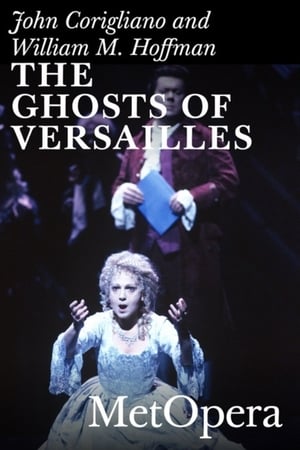
What happened to Figaro and his friends after the events told in Rossini’s and Mozart’s operas? One possible sequel is told in John Corigliano’s “grand opera buffa” The Ghosts of Versailles—an uproariously funny and deeply moving work inspired by Beaumarchais’s third Figaro play, La Mère Coupable, and commissioned by the Met to celebrate its 100th anniversary. This telecast captures its world premiere run, conducted by James Levine. Håkan Hagegård is Beaumarchais, Figaro’s creator, who is deeply in love with Marie Antoinette (Teresa Stratas in a heart-searing performance) and determined to rewrite history and save her from the guillotine. A young Renée Fleming, at the beginning of her international career, sings the unfaithful Rosina. Gino Quilico is the wily Figaro who tries to take matters in his own hands, and Marilyn Horne stops the show as the exotic entertainer Samira.
Based on real events and drawing on Georg Büchner's revolutionary play, Alban Berg's Wozzeck turns a grimly tragic narrative of violence and murder into one of the most powerful and original operas of the 20th century. Berg's uncompromising portrayal of brutality and madness generated much controversy, but the significance of Wozzeck was soon recognised; its compelling lyrical expansiveness, large-scale dramatic gestures and remarkable musical structures producing music of overwhelming emotional intensity. The Financial Times declared this to be 'a beautiful, moving, engrossing production… this is a consummate Wozzeck, blending clarity, lyricism, compassion and crushing force.'
The soldier Wozzeck (Christian Gerhaher) flits through a world that he is unable to decipher. The doctor torments him with absurd medical experiments; the captain humiliates and ridicules him. And Wozzeck’s lover, Marie (Gun-Brit Barkmin), with whom he has a child, cuckolds him with the drum major. Wozzeck becomes a murderer, stabbing Marie to death. Georg Büchner’s drama fragment, on which Alban Berg based his first opera, is an unflinching case study of social injustice and human suffering. But it is also a grotesque piece that thrives on exaggeration – and in which only a fine line separates the unfathomable from the ridiculous. Accordingly, director Andreas Homoki forgoes all realism.
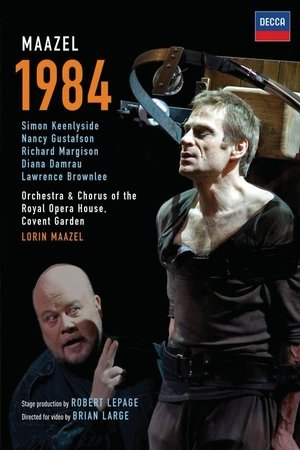
Inspired by one of the twentieth century's greatest novels, composer Lorin Maazel evokes Orwell's totalitarian nightmare, where "Big Brother" is always watching, and those guilty of "thoughtcrime" are condemned to face their worst fears in the infamous "Room 101". Filmed during world premiere performances of Robert Lepage's spectacular and psychologically gripping Royal Opera production and conducted by the composer, an international cast brings George Orwell's dark vision to shattering operatic life.
Running through Bartók’s disenchanted tale, whose haunting music was initially condemned as unplayable, and the expression of despair in Poulenc’s monologue, the director Krzysztof Warlikowski perceives a shared dramatic thread, a shared feminine consciousness and a shared sense of imprisonment and suffocation: for the woman who penetrates the confines of Bluebeard’s castle and Elle, the woman who clings to a telephone conversation with a man as the only thing worth living for, are condemned to share the same fate. And this man she speaks to, does he really exist? Unless the director has interpreted Cocteau’s words to the letter and the telephone has become a “terrifying weapon that leaves no trace, makes no noise”…
Legendary opera house, La Scala is more than just a stage— it’s a dream factory. And this year, over the course of four intensive months, 900 people will work relentlessly to incarnate Verdi’s opera masterpiece, ‘‘The Force of Destiny”. Under the masterful eyes of director Léo Muscato, we will follow set designer Federica Parolini, as her sketches evolve into towering architectural marvels crafted by dedicated artisans. In the costume workshop, Silvia Peroni and her team weave magic with fabric and thread through their expert hands. Then, a stellar international cast of virtuosos arrives in Milan, ready to fill La Scala’s hallowed halls with their soaring voices. But with the clock ticking, and expectations going through the roof, tensions unfold like an opera of its own. As Milan holds its breath for the legendary Prima on the 7th of December, the stakes couldn’t be higher. Will they be ready in time for curtain rise?
Live 2001 production from the Zurich Opera House of the classic Mozart/Da Ponte opera, with Nikolaus Harnoncourt conducting and directed for television and video by Brian Large.
Desdemona in Verdi's Otello was a career role for soprano Renata Tebaldi, from her first operatic performance outside of Italy to her final appearance on the opera stage. Between those landmarks she performed the role nearly 100 times all over the world and made studio audio recordings that became reference recordings for the role. This 1962 production with the Deutsche Oper Berlin and Giuseppe Patane was planned as a media event from the outset and blessedly captures a consummate artist in a signature role at the peak of her gifts.
The stupendous climax to Wagner’s four-part Ring cycle is brilliantly realized by the Otto Schenk/Günther Schneider-Siemssen production and byJames Levine’s monumental conducting. The Met orchestra, chorus, and an all-star cast make this Götterdämmerung one that truly rises to the occasion. Hildegard Behrens’s Brünnhilde must be experienced to be believed, as does Matti Salminen’s richly sung, domineering Hagen. At the center of the drama is Siegfried Jerusalem as Siegfried, who does not realize he has been drawn into a plot of betrayal until it is too late. Christa Ludwig is magnetic as Waltraute and Ekkehard Wlaschiha is a compelling Alberich.
Mirella Freni, Placido Domingo, Christa Ludwig, and Robert Kerns star in this Jean-Pierre Ponnelle-directed version of the Puccini opera, with Herbert von Karajan conducting the Vienna Philharmonic. Madama Butterfly is a staple of the standard operatic repertoire for companies around the world, ranking 7th in the Operabase list of the most-performed operas worldwide.
Ageing misfit Sir Morosus lives alone in an old-style apartment in Charlottenburg in Berlin. He is wealthy, but also lonely and a bit grumpy. Then his nephew Henry moves in with him and his life takes a turn for the better. Director Jan Philipp Gloger homes in on two of the most pressing problems of the day: loneliness and the housing shortage. The Staatskapelle Berlin is conducted by Christian Thielemann.
Prince Abesalom runs into an orphaned Eteri while hunting, falls for her and brings the woman to his palace as his fiancé. The Prince’s aid Murman loses his self-control at Eteri’s beauty and gives her a spelled necklace as a wedding gift. Eteri contracts a mysterious disease that only Murman is capable to heal.
Tchaikovsky’s setting of Pushkin’s timeless verse novel is presented on the Met stage in Deborah Warner’s moving production, starring Anna Netrebko as Tatiana and Mariusz Kwiecien and Peter Mattei sharing the title role. Alexey Dolgov sings the role of Lenski, and Robin Ticciati conducts.
In his new production, Robert Carsen places the action at the end of the Habsburg Empire, underscoring the opera’s subtext of class and conflict against a rich backdrop of gilt and red damask