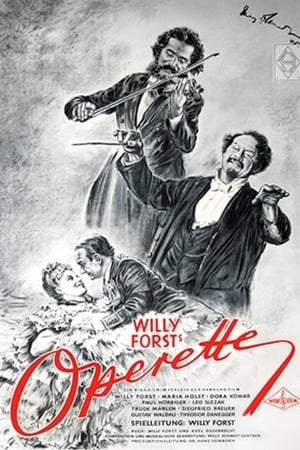
O komínku zedníky laškovně nakřivo postaveném aneb Souboj pantátův se zedníky
Legendary opera house, La Scala is more than just a stage— it’s a dream factory. And this year, over the course of four intensive months, 900 people will work relentlessly to incarnate Verdi’s opera masterpiece, ‘‘The Force of Destiny”. Under the masterful eyes of director Léo Muscato, we will follow set designer Federica Parolini, as her sketches evolve into towering architectural marvels crafted by dedicated artisans. In the costume workshop, Silvia Peroni and her team weave magic with fabric and thread through their expert hands. Then, a stellar international cast of virtuosos arrives in Milan, ready to fill La Scala’s hallowed halls with their soaring voices. But with the clock ticking, and expectations going through the roof, tensions unfold like an opera of its own. As Milan holds its breath for the legendary Prima on the 7th of December, the stakes couldn’t be higher. Will they be ready in time for curtain rise?
Prince Abesalom runs into an orphaned Eteri while hunting, falls for her and brings the woman to his palace as his fiancé. The Prince’s aid Murman loses his self-control at Eteri’s beauty and gives her a spelled necklace as a wedding gift. Eteri contracts a mysterious disease that only Murman is capable to heal.
Franco Zeffirelli's magnificient staging of Puccini's final opera - a fairy tale set in a mythical China - is one of the most popular in the Met repertory. In this Live in HD production, Maria Guleghina takes on the title role and Marcello Giordani is Calaf, the unknown prince. Marina Poplavskaya and Samuel Ramey co-star, and Andris Nelsons conducts in his Met debut.
A Ukrainian comic opera with spoken dialogue in three acts with music and libretto by the composer Semen Hulak-Artemovsky (1813–1873). The orchestration has subsequently been rewritten by composers such as Reinhold Glière and Heorhiy Maiboroda. This is one of the best-known Ukrainian comic operas depicting national themes.
Ageing misfit Sir Morosus lives alone in an old-style apartment in Charlottenburg in Berlin. He is wealthy, but also lonely and a bit grumpy. Then his nephew Henry moves in with him and his life takes a turn for the better. Director Jan Philipp Gloger homes in on two of the most pressing problems of the day: loneliness and the housing shortage. The Staatskapelle Berlin is conducted by Christian Thielemann.
Dvořák's "Rusalka" in a production by David Pountney at the English National Opera in 1986. Mark Elder conducts the orchestra, accompanied by the English National Opera Chorus in English.
Drama lyrique in five acts, after the play by Maruice Maeterlink
Running through Bartók’s disenchanted tale, whose haunting music was initially condemned as unplayable, and the expression of despair in Poulenc’s monologue, the director Krzysztof Warlikowski perceives a shared dramatic thread, a shared feminine consciousness and a shared sense of imprisonment and suffocation: for the woman who penetrates the confines of Bluebeard’s castle and Elle, the woman who clings to a telephone conversation with a man as the only thing worth living for, are condemned to share the same fate. And this man she speaks to, does he really exist? Unless the director has interpreted Cocteau’s words to the letter and the telephone has become a “terrifying weapon that leaves no trace, makes no noise”…
The soldier Wozzeck (Christian Gerhaher) flits through a world that he is unable to decipher. The doctor torments him with absurd medical experiments; the captain humiliates and ridicules him. And Wozzeck’s lover, Marie (Gun-Brit Barkmin), with whom he has a child, cuckolds him with the drum major. Wozzeck becomes a murderer, stabbing Marie to death. Georg Büchner’s drama fragment, on which Alban Berg based his first opera, is an unflinching case study of social injustice and human suffering. But it is also a grotesque piece that thrives on exaggeration – and in which only a fine line separates the unfathomable from the ridiculous. Accordingly, director Andreas Homoki forgoes all realism.
Based on real events and drawing on Georg Büchner's revolutionary play, Alban Berg's Wozzeck turns a grimly tragic narrative of violence and murder into one of the most powerful and original operas of the 20th century. Berg's uncompromising portrayal of brutality and madness generated much controversy, but the significance of Wozzeck was soon recognised; its compelling lyrical expansiveness, large-scale dramatic gestures and remarkable musical structures producing music of overwhelming emotional intensity. The Financial Times declared this to be 'a beautiful, moving, engrossing production… this is a consummate Wozzeck, blending clarity, lyricism, compassion and crushing force.'
Glyndebourne's pulsating new production of the Waltz King's much-loved comic operetta. Its story centers on a magnificent masked ball, given by a Russian prince, that brings together all the main characters in various disguises. The three-act journey from boudoir to ballroom to jail provides ample opportunities for farce and humor, but also for genuine human emotion and a surprisingly realistic view of urban life.
The man looks back on a turbulent love life, which he does not dare to opt definitively for a permanent love. He loves Tosca, but leaves her for another new love, Alpha. He cherishes the infatuation at the start of a relationship, meaning he is not yet ready for real life. However, at the end, he is able to make his choice ...
"The Queen of Spades" is considered Tchaikovsky's best creation by the world-famous conductor, People's Artist of the USSR Vladimir Ivanovich Fedoseev. He took over the leadership of the musical process of recreating the production at Helikon Opera. The original reading, modern stage language, love for Tchaikovsky's music, which became the hallmarks of Helikon's "Queen of Spades," are preserved in the new version. To this were added the thoughtful gaze of maestro Fedoseev, the stunning stage capabilities of the new hall and the artistic talent of the Helikon troupe.
Anew production of Tannhäuser, which was premiered on 26 July 2019 and presented the Bayreuth debut of conductor Valery Gergiev, as well as the house debut of young soprano star Lise Davidsen. Tobias Kratzer’s staging presented Tannhäuser as a wildly contemporary parable of art and freedom which was praised as “novel” and “wrenching” (New York Times) and received exceptional press acclaim. hey were joined by mezzo soprano Elena Zhidkova’s Venus (“scene stealing”, according to Opera Today), baritone Markus Eiche’s Wolfram and Stephen Milling’s Landgraf.
With his affinity for the 16th-century sculptor Benvenuto Cellini's advocacy of artistic and personal freedom, Hector Berlioz went straight for the grand gesture with his first completed opera. Returning to it years after initial production debacles, Berlioz stated that he would 'never again find such verve and Cellinian impetuosity, nor such a variety of ideas.' The plot revolves around Cellini's wooing of Teresa, a match frustrated at every opportunity by his rival, the cowardly Fieramosca. Benvenuto Cellini is a pithy work combining romance, excitement, violence, comedy and spectacle; the perfect stage for Terry Gilliam's stylishly colorful and larger than life directing.
Gustav Von Aschenbach, a passionate composer, arrives in Venice as a result of wanderlust and there meets a young man by whose beauty he becomes obsessed.
Jules Massanet's lyrical opera is transformed into a superb film production by Petr Weigl, shot on location in Prague, with music conducted by Libor Pesek. First produced by the Vienna Opera in February 1892, "Werther" rapidly confirmed Massanet's position on the French opera scene and achieved enormous popularity outside France, notably in Italy, America and England. The tragic story tells of Werther's intense passion for Charlotte, who has married his best friend, Albert, fulfilling a pledge to her now deceased mother. But Werther's letters of love bring Charlotte to his side when he promises to take his own life.
Donizetti's opera as film.
An excellent performance of this delightful opera. The principals are superb, especially the sisters. Bruscantini as Don Alfonso is past his prime, but he knows and understands the role inside out, so one does not even notice his vocal limitations. Araiza is in top form as Ferrando, and Morris makes virile Guglielmo. The only disappointment is Battle as Despina. Unlike her partners, she does not have feel for the Mozart ensemble, and her vocal mannerisms are totally unbecoming. How the producers allowed that to happen is a mystery. Muti's conducting is terrific, much better than on his La Scala video, where he is uninvolved.