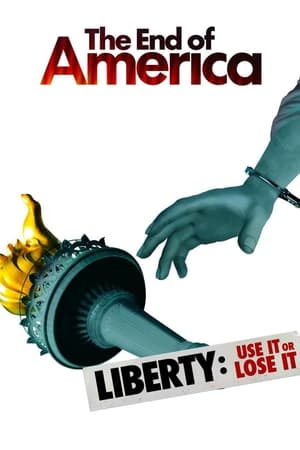
Since the late 18th century American legal decision that the business corporation organizational model is legally a person, it has become a dominant economic, political and social force around the globe. This film takes an in-depth psychological examination of the organization model through various case studies. What the study illustrates is that in the its behaviour, this type of "person" typically acts like a dangerously destructive psychopath without conscience. Furthermore, we see the profound threat this psychopath has for our world and our future, but also how the people with courage, intelligence and determination can do to stop it.
Mexico, March 2015. Carmen Aristegui, incorruptible journalist, has been fired from the radio station where she has worked for years. Supported by more than 18 million listeners, Carmen continues her fight. Her goal: raising awareness and fighting against misinformation. The film tells the story of this quest: difficult and dangerous, but essential to the health of democracy. A story in which resistance becomes a form of survival.
From his days of testifying at the Watergate hearings to advising recent presidential candidate Donald Trump, Roger Stone has long offended people on both sides of the political fence as a force in conservative America. Outspoken author, pundit, ahead of his time election strategist, this is his story.
Amid the civil-military dictatorship implanted with the 1964 coup, Sergio Muniz had the idea of making a documentary about the action of the Death Squad. At the time, the press still had some freedom to disseminate the work of these death squads formed by police officers of various ranks, and that he acted on the outskirts of cities like Sao Paulo and Rio de Janeiro. The victims of police repression (as today) were men, poor and black, and this condition is supposed criminals.
Behind the gas masks of Hong Kong’s democracy movement, the often very young activists are just as diverse as the youths of the rest of the world. But they share a demand for democracy and freedom. They have the will and the courage to fight – and they can see that things are going in the wrong direction in the small island city, which officially has autonomy under China but is now tightening its grip and demanding that ‘troublemakers’ be put away or silenced. Amid the violent protests, we meet a 21-year-old student, a teenage couple and a new father.
20 years after the fall of the Wall, the economic crisis prevails. In the ruined peripheral areas of West Germany, resentment towards the new federal states is growing. The consequences of decades of uncontrolled transfers from West to East are now clearly visible: while the zone has the highest density of water parks in Europe and the East German cities are being pimped out with designer street lighting, entire city archives are collapsing in the run-down West and weeds are sprouting up on the pothole-strewn streets. The times when Merkel was still locked away behind the Wall and the Federal Republic was in full bloom are long gone. The former people's parties SPD and CDU are just as incapable of acting as the fun party FDP, only Die PARTEI continues to gain popularity and now has over 8,200 members. Is it Germany's last resort?
Alex Jones interviews Walter Burien, commodity trading adviser (CTA) of 15 years about the biggest game in town. There are over 85,000 federal and regional governmental institutions: school districts, water and power authorities, county and city governments – and they own over 70 percent of the stock market.
Alex Jones exposes the growing militarization of American law enforcement and the growing relationship between the military and police. Witness US training with foreign troops and learning how to control and contain civilian populations. You will see Special Forces helicopter attacks on South Texas towns, concentration camps, broad unconstitutional police actions, search and seizure and more.
The meteoric path of Emmanuel Macron made him pass in three years of almost anonymity to the presidency of the Republic. Yet, even though the media have followed him every day during his campaign, no one really knows him. Politics has spoken, progressive, social and liberal at the same time, but man remains an enigma. Behind the official story-telling, what is the true personality of the one who is going to lead France? What are its strengths, its weaknesses? Thanks to unpublished images and exclusive testimonials, including that of his wife Brigitte, this film tells the pivotal moments of the new President's career and reveals the deep motivations that animate him. Investigation of a meteor become President.
Deputy General Secretary at the Elysée to candidate for the presidency of the Republic, the novice in politics went from the shadows to the light in a very short time. For 200 days, our cameras followed him behind the scenes of his campaign and his exceptional ascent. For eight months we were the only ones allowed to follow the candidate Emmanuel Macron with our camera behind the scenes of this exceptional campaign. From the announcement of his candidature until his election on May 7, we propose you an exclusive documentary allowing you to live from inside the campaign of Emmanuel Macron in the manner of a political thriller.
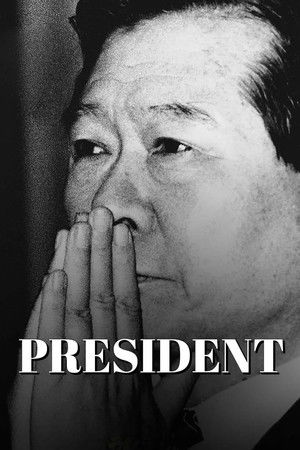
This documentary celebrates the life of former President Kim Dae-joong, who fought for democracy in South Korea and peace in the Korean Peninsula. It marks the 10th anniversary of his passing and covers his challenging journey, from his childhood on an island to his imprisonment, exile, near-death experiences, and ultimately becoming the president.
Short film for Vice Media about the illusion of stability, freedom, and prosperity in the West, comparing it to life in the Soviet Union during the 1970s. Ends with a trailer for HyperNormalisation.
Artificial Intelligence (AI) is possibly the most powerful technology of our time. It has the potential to solve humanity’s biggest challenges yet some fear AI will be our downfall. iHUMAN follows pioneers at the frontline of the race to develop the ever more sophisticated AI to find the questions we need to ask at this crucial point in history.
As the first part of our investigation, the CORONA.FILM prologue will delve into the science behind the pandemic. Starting at the very beginning, we shine a light on the responses. The aim is not to point the finger; our aim is to tell the whole story in all its complexity, as we believe that justice cannot prevail if only one side of the story is told.
This documentary follows the 2002 mayoral campaign in Newark, New Jersey, in which a City Councilman, Cory Booker, attempted to unseat longtime mayor Sharpe James.
This documentary film includes never-before-seen footage and exclusive interviews to tell the story of Charity Hospital, from its roots to its controversial closing in the wake of Hurricane Katrina. From the firsthand accounts of healthcare providers and hospital employees who withstood the storm inside the hospital, to interviews with key players involved in the closing of Charity and the opening of New Orleans’ newest hospital, “Big Charity” shares the untold, true story around its closure and sheds new light on the sacrifices made for the sake of progress.
BDW Politiek Beest
La révolution selon François
Commissioned by the journal Présence Africaine, this short documentary examines how African art is devalued and alienated through colonial and museum contexts. Beginning with the question of why African works are confined to ethnographic displays while Greek or Egyptian art is celebrated, the film became a landmark of anti-colonial cinema and was banned in France for eight years.
"I often say sociology is a martial art, a means of self-defence. Basically, you use it to defend yourself, without having the right to use it for unfair attacks." (Pierre Bourdieu) The world has witnesses who speak out loud what others keep to themselves. They are neither gurus, nor masters, but those who consider that the city and the world can be thought out. The sociologist, Pierre Bourdieu is one such witness." Over a three- year period, Pierre Carles' camera followed him through different situations: a short conversation with Günter Grass, a lively conference with the inhabitants of a working-class suburb, his relations with his students and colleagues and his plea that sociology be part of the life of the city. His thinking has a sort of familiarity, which means it is always within our reach. It is the thinking of a French intellectual who has chosen to think his times.