Etats-Unis : les armes de la colère
After General Flavius Aetius frees the Roman Empire from the clutches of Attila the Hun, Rome is once again secure. However, this assurance is short-lived, as Attila is no longer a threat, it only brings the Germanic tribes to once again unite against Rome. As the growing power of General Flavius Aetius becomes a threat to the Roman Senate, and the Emperor of Rome, Flavius becomes a victim of assassination to the Roman political hierarchy, which leaves Rome to two decades of corruption and turmoil. This unrest causes an intense decline in its infrastructure, finally brings the Empire to its inevitable demise. Leaving the Barbarians to finally fulfil their 400 years old dream, to destroy Rome once and for all.
Captured during the early days of production, this unreleased film offers a glimpse into its rehearsal sessions — an intimate icebreaking moment where the cast come together through song and rhythmic clapping.
A live recorded performance of Castle Atom, a band from the MD/DE area. Six songs are performed, intercut with random conversation and interludes.
A destitute Frank Sinatra pursues sultry starlet Ava Gardner while campaigning for the lead in 'From Here to Eternity'.
Punk rock, B-movies, and Jehovah’s Witnesses unite in this heartfelt documentary. As members of Jehovah’s Witness start to explore culture outside of their religion, they have to wrestle with the possibility of being excommunicated from friends and family. Featuring in-depth interviews and extensive home video footage, Witness Underground tells the story of punk rocker Witnesses pushing against the highly controlling Jehovah’s Witnesses religion as they build their own community through music and art. This prolific community of Witness musicians create their own record label, Nuclear Gopher, and become early adopters of promoting their music through the internet, including what may have been the first album to ever be livestreamed. This community’s history is well documented through archival footage of their home movies and self-produced music videos, all with a very charming energy.
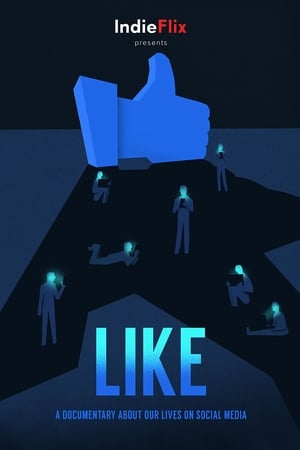
As clichés go, in 1999 the World as we knew it was about to change - and we'd been expecting it. Since childhood we'd been promised that the 21st century would bring us dramatic new technologies like flying cars and Utopian cities. Instead it bought us the smart-phone, social media, and virtual societies. And as it turns out these technologies began to transform society almost as dramatically as the moon colonies we'd been expecting. Now over a decade into the revolution, 'DSKNECTD' explores how digital communication technology is profoundly changing the way we interact and experience each other - for the good and for the bad.
In his new film, Erwin Wagenhofer is looking for the good and beautiful in this world.
Gory real-life footage of blood and guts on the German Autobahn, drug smugglers getting blown away, a parachutist landing in a crocodile pit, torture and murder in El Salvador, a PCP addict getting stoned, a videotaped rape/murder, a car thief getting ripped apart by two junkyard dogs, and much more.
From bimbos to tradwives, the hidden truth behind extreme femininity trends is revealed.
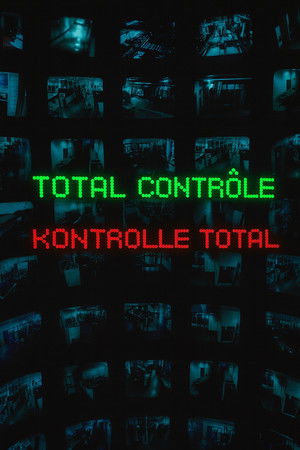
After delivery of a parcel, on leaving a restaurant, hotel or train, or following an exchange with the customer service department of your telephone operator, the same request: to rate. On a scale from 0 to 10, embellished with colors, or by awarding pretty, playful little stars. A simple, mechanical and painless action for the rater. But behind this harmless gesture lies a brutal management system, operated directly by the customer, without their knowledge. Even more worrying: without knowing it, we are all being rated, to feed the algorithms of opaque companies that claim to be able to predict the future. The film questions this invasion of rating systems, and the consequences of this practice for our individual realities and collective freedoms.
New York, 2010. Jeff Harris, a music journalist, sets out to uncover the truth about Francisco Tenório Júnior, a young Brazilian samba-jazz pianist who disappeared in Buenos Aires on March 18, 1976.
Religious fanaticism, schizophrenia, supernatural powers and repressed sexual desire combine into a deadly family drama.
In County Durham, England, 1984, a talented young dancer, Billy Elliot, stumbles out of the boxing ring and onto the ballet floor. He faces many trials and triumphs as he strives to conquer his family’s set ways, inner conflict, and standing on his toes in a musical that questions masculinity, gender norms and conformity.
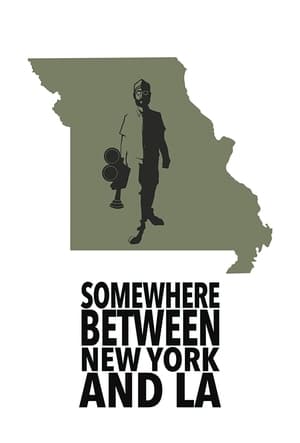
Since he was 18 years old, Blake Eckard has written and directed six feature length films in his hometown of Stanberry, Missouri (population 1186). Aside from a short distribution deal in Canada and a few festival screenings, his movies have largely gone unseen.
Pouvoir Oublier is a political documentary first constructed from the words of the speakers whose lives changed on the tragic day of May 10, 1972 in Sept-Îles. Their word will be juxtaposed with archival material from the events, some of which are unpublished, which will reflect the collective euphoria in which Sept-Îles and all of Quebec were then bathed.
The film is based on a Canadian NRI Punjabi, who goes far away from his religion. Due to his busy work schedule he fails to give time to his family and teach his child about his culture and Sikh religion. He comes to Fatehgarh Sahib in Punjab along with his family to reconnect with his ancestral roots, culture, tradition. His grandmother tells about the entire history of martyrdom of Chote Sahibzadas and Mata Gujri.
Caroline Darian, Gisèle Pelicot's daughter, looks back on the tragedy that shook her family: for ten years, her father drugged her mother to subject her to rapes committed by strangers recruited on the Internet. This case exposes the scandal of chemical submission, a practice where attackers, generally close to the victims, use prescription or over-the-counter medications to commit their crimes. This phenomenon, far from being marginal, affects victims with varied profiles...
Nine fictitious documentaries and films reflect the mood of late 1970s Germany, particularly the two-month period in 1977 when a businessman was kidnapped by the RAF (Red Army Faction). The kidnap had been made to orchestrate the release of the original leaders of the RAF, aka the Baader-Meinhof.
Masao Adachi, the author and director of experimental works and pinku-eiga in the 1960s, was a member of the Japanese New Left that shifted from being a filmmaker to a guerrilla fighter. In 1974, he joined the Japanese Red Army in Lebanon, which worked closely with the Popular Front for the Liberation of Palestine. Filmmaker Lutz Dammbeck met Adachi in Tokyo in 2018 and talked with him about a wide range of topics, including art, revolution, the influence of western avant-garde art and American underground; the Japanese Red Army; collaboration with secret services; the role of the Left after 1968; and the reasons for failures of leftist ideas and strategies.