It arises from the nostalgia for a place that witnessed the growth of two generations, but is now abandoned, awaiting its prompt demolition.
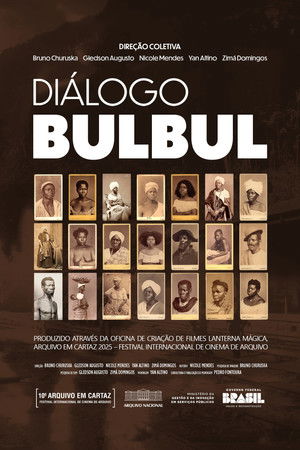
Drawing from archives, through the collective force of invention and resistance, and evoking the creative power of Black people, the film summons sonic and visual memories to construct an insurgent remix.
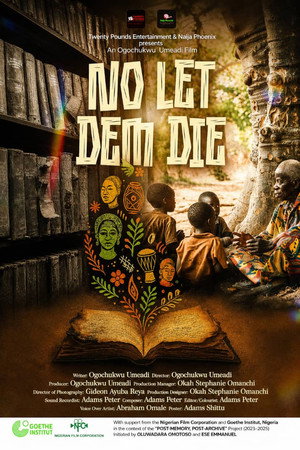
In a nation where books burn and films rot, "No Let Them Die" explores the vibrant yet fragile living archives of Nigeria - preserved through oral traditions, rituals, and everyday practices - when institutional systems fail.
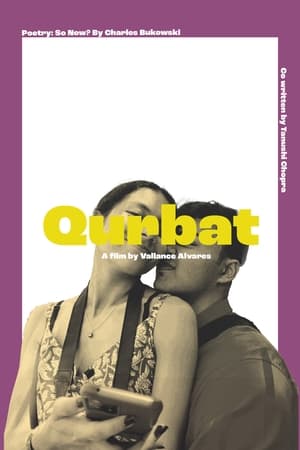
It's been 2 years since they've been together. They haven't seen each other in person. Only pixels on a screen.
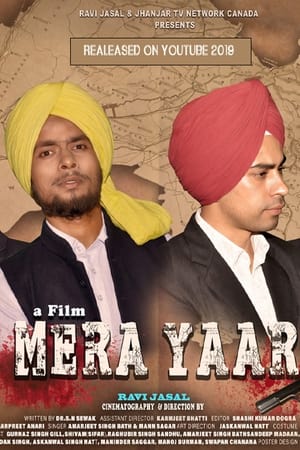
MERA YAAR" Film based On a play in Punjabi by Dr. S.N.Sewak. It deals with an important phase of the struggle for the independence of India from the colonial British rulers in the early years of the twentieth century. It depicts the role of Kartar Singh Sarabha, a young revolutionary, who had gone to the USA for higher studies, as seen through the eyes of another revolutionary of later years, Bhagat Singh, for whom he was a role model. Interestingly, Bhagat Singh kept the photograph of Kartar Singh Sarabha in his pocket because he always sought inspiration from him. Thus, Bhagat Singh is the narrator in the play which follows 'ode and episode' technique.
Mister George : L'Extraordinaire vie de George Eddy
Le Puy du Fou raconté par Philippe de Villiers
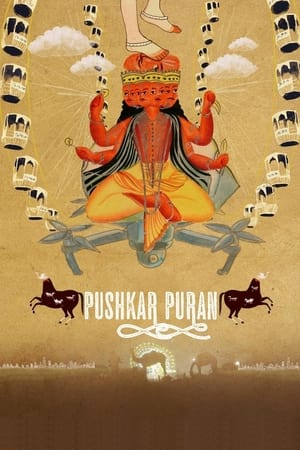
An attempt to engage with the historical, mythical and the contemporary worlds of the city of Pushkar
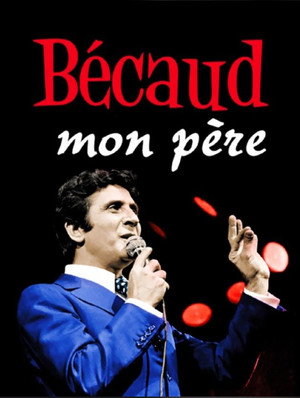
Bécaud, mon père
During a camping weekend, Indian filmmaker Poorva Bhat tries to find the right way to discuss consent with her two children. In the intimacy of the tent, the three find the safe space needed to explore together the innocence or otherwise of looks and gestures, both in everyday life and in the cinema.
A historical film about the Seneca culture featuring the Tonawanda Indian Reservation, Bury My Heart with Tonawanda tells the story of a developmentally disabled boy with Downs Syndrome who is rejected by his own family but is accepted and nurtured by the Tonawanda Seneca Nation.
Christiane Taubira : une loi pour mémoire
In Nova Lima, gold arrived before the city itself. Fragments of past and future intertwine in the present of this story that begins in 1834 and shows no sign of ending.
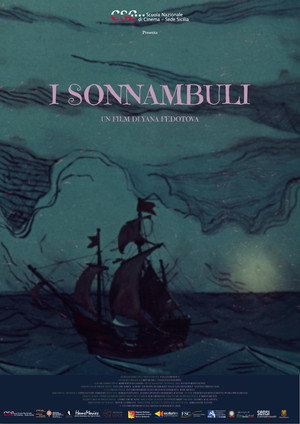
“A fragile journey into childhood, suspended between dream and harsh reality.”
An African and African American debate on the ongoing diaspora war within the black community. Set entirely across the centuries-old East African Mancala strategy game, Bao, the film fuses historical archive with lived experience to wage a fierce interrogation of Black identity and pride.
The hundreds of letters left behind after Latif Demirci's passing describe not only a illustrator's fanbase, but the troubles and dreams of a certain era in Turkey, and a human spirit naive enough to confide in a cartoon hero. While the documentary traces the loss between the slowness of the letter and today's culture of speed, it puts forth a very original portrait of the artist, highlighted by the contributions of his filmmaker daughter Yasemin Demirci, his artistic partner Behiç Pek, and comic book historian Levent Cantek.
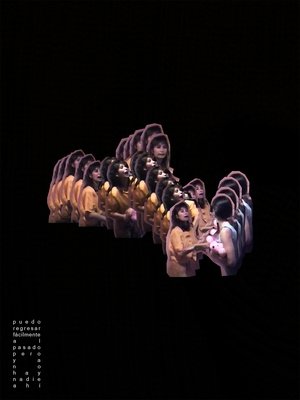
Is it possible to rebuild through a collection of archives? Based on a video workshop organized in Perú in June 2022, this short film aims at initiating the creation of a freely accessible, grassroots video archive for anyone who, in the future, wishes to preserve and continue building upon local memory.
A newly edited 1993 interview with Italian filmmaker Massimo Pupillo.
Studio 54 was the epicenter of 70s hedonism - a place that not only redefined the nightclub, but also came to symbolize an entire era. Its co-owners, Ian Schrager and Steve Rubell, two friends from Brooklyn, seemed to come out of nowhere to suddenly preside over a new kind of New York society. Now, 39 years after the velvet rope was first slung across the club's hallowed threshold, a feature documentary tells the real story behind the greatest club of all time.
The film 'Canterbury is One Hundred' was produced by the National Film Unit in 1950 to celebrate the region's centennial. Written and directed by Oxley Hughan, it emphasises the bucolic agricultural productivity of the Canterbury region, particularly through the lambing and wheat-growing industries. Life in Canterbury's cities is presented as people 'taking pleasure in their neat gardens and comfortable wooden houses', in contrast to the rustic huts built by the early settlers a century earlier. The film is also a poignant tribute to Christchurch's celebrated Neo-Gothic architecture, much of which was destroyed following the February 2011 earthquake.