Mozart’s early masterpiece returned to the Met for the first time in more than a decade with Music Director Emeritus James Levine, who led the work’s company premiere in 1982, again on the podium. Tenor Matthew Polenzani brings both steely resolve and compassionate warmth to the title king of Crete, who is faced with an impossible decision. With her rich mezzo-soprano, Alice Coote sings the trouser role of Idomeneo’s son Idamante, who loves the Trojan princess Ilia, sung with delicate lyricism by Nadine Sierra. Elza van den Heever gives a thrillingly unhinged portrayal of the jealous Elettra. Jean Pierre-Ponnelle’s timeless production blends the grandeur of ancient myth with the elegance of Enlightenment ideals.
In his new production, Robert Carsen places the action at the end of the Habsburg Empire, underscoring the opera’s subtext of class and conflict against a rich backdrop of gilt and red damask
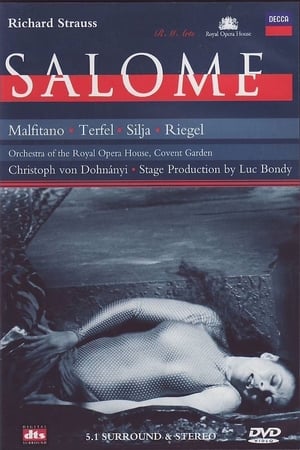
Richard Strauss's opera, from the Royal Opera House, Covent Garden.
Live performance at the Metropolitan Opera in 2000.
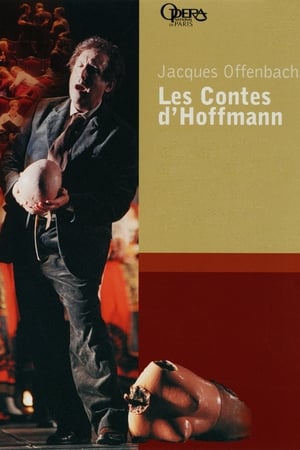
Live performance from the Opéra National de Paris, 2003.
The stupendous climax to Wagner’s four-part Ring cycle is brilliantly realized by the Otto Schenk/Günther Schneider-Siemssen production and byJames Levine’s monumental conducting. The Met orchestra, chorus, and an all-star cast make this Götterdämmerung one that truly rises to the occasion. Hildegard Behrens’s Brünnhilde must be experienced to be believed, as does Matti Salminen’s richly sung, domineering Hagen. At the center of the drama is Siegfried Jerusalem as Siegfried, who does not realize he has been drawn into a plot of betrayal until it is too late. Christa Ludwig is magnetic as Waltraute and Ekkehard Wlaschiha is a compelling Alberich.
A Victor Hugo play, haunting and scandalous, provided the inspiration for Verdi’s mid-career masterpiece. A vengeful but misguided court jester strives to save his daughter from a duke’s licentious clutches, but can't part with the feeling that a curse looms over all of his actions. In Rigoletto, the composer introduces several of his most iconic arias and duets—as well as an 11th-hour quartet that counts among the finest moments in opera.
Leonora plans to elope with Don Alvaro, but he accidentally shoots and kills her father, who curses them as he dies. The lovers go on the run, but get separated. Bent on revenge, Leonora's brother Don Carlo, hunts them down. Verdi painted an immense canvas with this dark but tuneful opera, vividly brought to life in John Dexter’s production, with sets by the great Eugene Berman. The legendary Leontyne Price is seen in one of her greatest roles, Leonora. Price’s soaring voice encompasses every nuance of Leonora’s emotion as she moves from joy through resignation to ultimate heartbreak. James Levine’s brilliant leading of the Met orchestra and chorus is a lesson in Verdi style. Giuseppe Giacomini is Alvaro, the man Leonora loves, and Leo Nucci is Don Carlo, the dark instrument of their Fate.
Renée Fleming stars in the title role of one of Handel’s greatest dramas, seen in Stephen Wadsworth’s 2004 Met premiere production. Rodelinda is faced with an impossible dilemma: With her husband Bertarido believed dead, she either has to marry the despised Grimoaldo (the elegant Joseph Kaiser), who has usurped her husband’s throne, or see him murder her son. But Bertarido (leading countertenor Andreas Scholl) is alive and eventually reclaims both throne and wife—and makes peace with his enemies. Stephanie Blythe is marvelous as Eduige, Bertarido’s sister, who is betrothed to Grimoaldo but turns against him. Baroque authority Harry Bicket conducts.
Verdi: La forza del destino
A brand new production of ‘’Tannhäuser’’ at the Staatsoper Berlin conducted by Daniel Barenboim, staged and choreographed by Sasha Waltz, who has already staged Purcell and Berlioz, Dusapin, Rihm and Hosokawa. Now Sasha Waltz brings to the stage a grand romantic Wagner’s opera with a star cast of some of today best Wagnerian singers: Peter Seiffert in the title role, Réne Pape as Landgraf and Peter Mattei as Wolfram, Ann Petersen sings Elisabeth and Marina Prudenskaya is Venus.
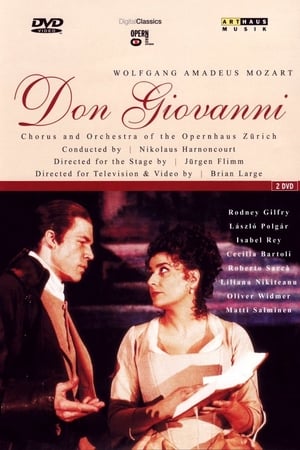
Live 2001 production from the Zurich Opera House of the classic Mozart/Da Ponte opera, with Nikolaus Harnoncourt conducting and directed for television and video by Brian Large.
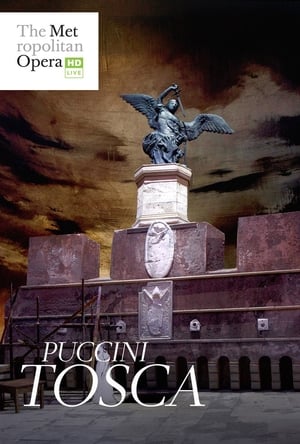
Tosca is an opera in three acts by Giacomo Puccini to an Italian libretto by Luigi Illica and Giuseppe Giacosa. It premiered at the Teatro Costanzi in Rome on 14 January 1900. This version is conducted by Riccardo Muti at La Scala, Milan.
Just as a young woman is about to marry her sweetheart, she is discovered—by the entire village, to say nothing of her fiancé—asleep in the bedroom of a stranger. It takes the young man two acts to figure out that sleepwalking is to blame, and everything ends happily. Natalie Dessay as Amina and Juan Diego Flórez as Elvino deliver bel canto magic and vocal fireworks in Mary Zimmerman’s 2009 production. The Tony award-winning director transfers Bellini’s bucolic tale to a rehearsal room in contemporary New York, where an opera company rehearses La Sonnambula—and where the singers are truly in love with each other.
Iconic songstress Barbra Streisand culminates her 13-city tour in Miami with dazzling ballads, Broadway standards and stories from behind the scenes.
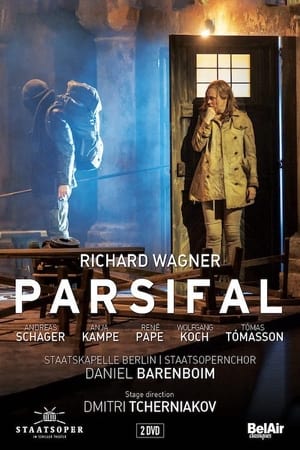
German composer Richard Wagner wrote Parsifal, which is a three-act opera that tells the story of the title character's quest to save the Knights of the Holy Grail by returning the Holy Spear, healing King Amfortas, and carrying out the sacred ceremony of uncovering the Holy Grail.
This telecast offers a rare opportunity to see the legendary Joan Sutherland in the role that first catapulted her to international stardom. She drove audiences wild by the way her opulent voice caressed the music’s long phrases and sprinted effortlessly through the fiendish runs, trills, embellishments and stratospheric high notes. One of the glories of the operatic world, her portrayal of Donizetti’s hapless heroine is a multifaceted and moving characterization. The incomparable tenor Alfredo Kraus is Edgardo, the man Lucia loves but cannot have. (Performance taped November 13, 1982. Broadcasted September 28, 1983.)
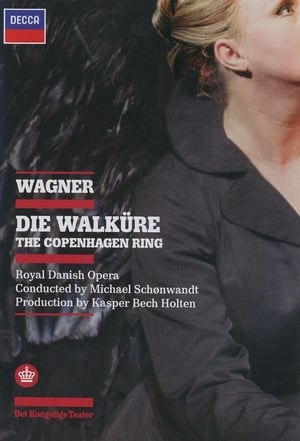
Die Walküre (The Valkyrie), WWV 86B, is an opera in three acts by Richard Wagner with a German libretto by the composer. It is the second of the four operas that form Wagner's cycle Der Ring des Nibelungen (The Ring of the Nibelung). The story of the opera is based on the Norse mythology told in the Volsunga Saga and the Poetic Edda.[1][2] In Norse mythology, a valkyrie is one in a group of female figures who decide which soldiers die in battle and which live. Die Walküre's best-known excerpt is the "Ride of the Valkyries". DVD release June 2009.
Wagner’s mystic masterpiece Parsifal at the Staatsoper Berlin, staged by Dmitri Tcherniakov and conducted by Daniel Barenboim. Wagner’s last opera, Parsifal is a medieval epic story marked by Christian, Buddhist and esoteric references. It is about redemption and renewal, but this new production by Russian director Dmitri Tcherniakov adds a jarring note : revenge. This “Festival Play for the Consecration of the Stage” is similar to a Medieval epic, a blend of metaphysical dreams and esoteric battles with constant spiritual references. This new production is directed by Dmitri Tcherniakov, conducted by Daniel Barenboim and sung by an international cast of excellent singers: Andreas Schager, Anja Kampe, Wolfgang Koch, René Pape, Tomas Tómasson and Matthias Hölle.
David McVicar's exhilarating new production, with Anne Sofie von Otter in the title role, restores the Opera Comique to Bizet's masterpiece. Philippe Jordan, in his Glyndebourne debut, conducts the London Philharmonic Orchestra, the Glyndebourne Chorus, and a cast which includes Marcus Haddock, Laurent Naouri, and Lisa Milne.