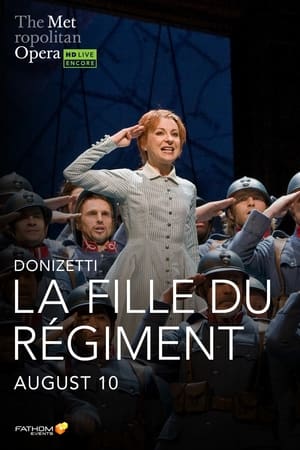
Madcap physical comedy and impeccable coloratura come together for Natalie Dessay’s indelible portrayal of the feisty tomboy raised by a regiment of French soldiers. Juan Diego Flórez is the young Swiss villager who conquers her heart—and a slew of high Cs. Also featuring uproarious performances by Felicity Palmer and Alessandro Corbelli, as well as a cameo by Tony Award winner Marian Seldes, this laugh-out-loud production was a runaway hit that left audiences exhilarated.
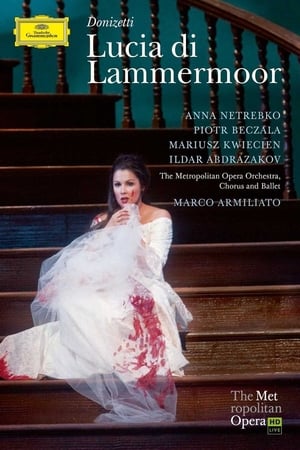
Star soprano Anna Netrebko adds Donizetti’s hapless heroine to her growing list of Met triumphs in this production by Mary Zimmerman that updates the events to the 19th century. Rising young tenor sensation Piotr Beczała is Edgardo and Mariusz Kwiecien plays Lucia’s brother Enrico whose brutal authority forces her to deny her heart and marry for the sake of her family. The famous mad scene brilliantly depicts the cascading fragments of Lucia’s disintegrating mind.
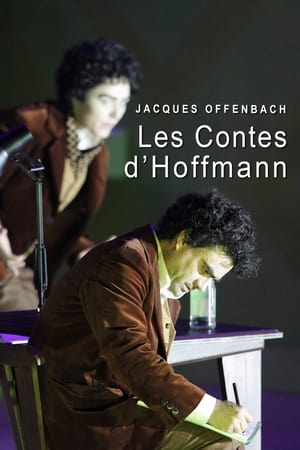
Live performance, Bayerische Staatsoper, 2011. The Tales of Hoffmann (French: LES CONTES D'HOFFMANN) is an opéra fantastique by Jacques Offenbach that combines three short stories by E.T.A. Hoffmann into a haunting whole: a melancholy poet reflects on three women he loved and lost in the past: a mechanical performing doll, a Venetian courtesan, and the consumptive daughter of a celebrated composer. One of the questions this opera poses for any director is how to link the 'tales' of Hoffmann's three lost loves together and knit them satisfactorily into the Prologue and Epilogue. In this production, Richard Jones solves the puzzle by turning it into an autobiographical journey which ends with a grand meet-up of all the characters Hoffmann has encountered: for once, Hoffmann is not presented as a rollicking kind of drunken story-spinner, but rather a sad-eyed, sobered-up depressive, who reaches for the bottle only because his disastrous love life has gone wrong yet again.
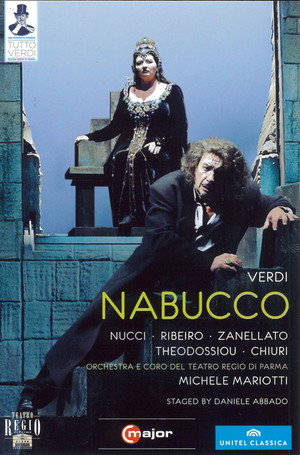
‘Nabucco’, or ‘Nebuchadnezzar’ (Italian: Nabucco), is an opera by Giuseppe Verdi with a libretto by T. Solera, based on events described in the Bible. (Nabucco is a shortened Italian rendering of the name of King Nebuchadnezzar II). It was this opera, the third in Verdi’s oeuvre, that brought him true fame. It tells of the tribulations of the Jews, their captivity by the Babylonians, and their subsequent release to their homeland by Nebuchadnezzar, King of Babylon. Giuseppe Verdi’s opera ‘Nabucco’, is a monumental work that tells the story of the enslavement of the Hebrew people by the Babylonian king Nebuchadnezzar (Nabucco) and their journey towards redemption. The premiere took place on 9 March 1842 at La Scala in Milan. The first performance of the final version was held at the Teatro San Giacomo in Corfu in September 1844. From the box set of 27 Verdi operas, ‘Tutto Verdi’. Recorded live at the Teatro Regio in Parma, 12–14 October 2009.
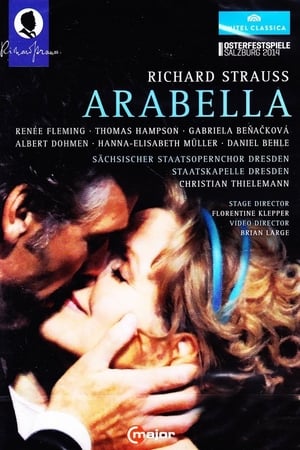
2014 marks a year of celebration recognizing the 150th birthday year of the German late-Romantic orchestral, operatic and lied master composer, Richard Strauss (1864-1949). Arabella (premiered 1933, Dresden) was the last of the half dozen Strauss works to feature a libretto by the great Austrian writer Hugo von Hofmannsthal. This production, from the most recent Salzburg Easter Festival is, after Capriccio, the second of three Richard Strauss operas C Major is releasing in honor of the composers birth, life and work. The star-laden cast includes soprano Renèe Fleming, baritone Thomas Hampson, Albert Dohmen (Covent Garden, Wiener Staatsoper, MET) and Gabriela Beaková (Wiener Staatsoper, Covent Garden). With Christian Thielemann and the Staatskapelle Dresden, the music of Richard Strauss is in the best of hands. (ORF) Thielemann gets the best out of the cast...especially Renée Fleming with her luxurious soprano FAZ
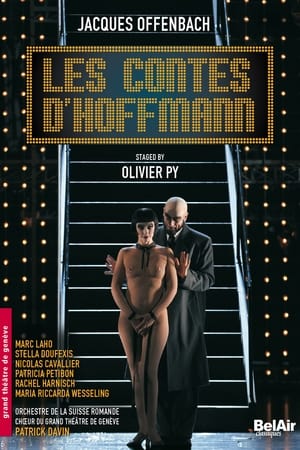
Among DVDs of "Hoffmann" currently available, this is the only one that even begins to stand comparison with the superlative Powell and Pressburger film (whose ideas it occasionally borrows). Olivier Py's baroque imagination, which sometimes leads him into self-indulgence and incoherence, is well suited to bringing out this opera's darkness and he does an excellent job
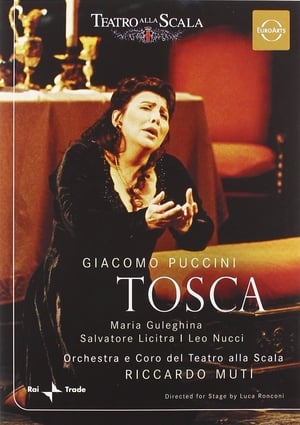
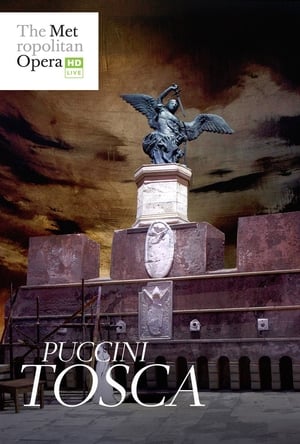
Tosca is an opera in three acts by Giacomo Puccini to an Italian libretto by Luigi Illica and Giuseppe Giacosa. It premiered at the Teatro Costanzi in Rome on 14 January 1900. This version is conducted by Riccardo Muti at La Scala, Milan.
Iconic songstress Barbra Streisand culminates her 13-city tour in Miami with dazzling ballads, Broadway standards and stories from behind the scenes.
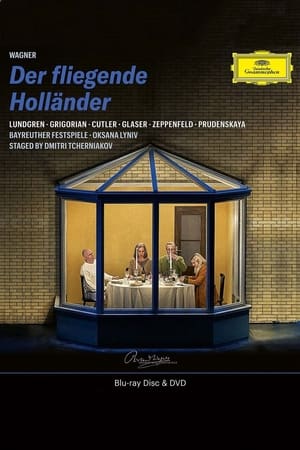
This is a performance of Wagner's three-act opera Der fliegende Holländer ("The flying Dutchman"), performed by Bayreuther Festpiele, directed by Dmitri Tcherniakov. The staging was notable for two other milestones, as Oksana Lyniv became the first woman to conduct at Richard Wagner’s legendary Festspielhaus since its opening in 1876, and the sensational Lithuanian soprano Asmik Grigorian made her house debut with a standout performance as the opera’s heroine, Senta. The exceptional cast also included John Lundgren (The Dutchman), Georg Zeppenfeld (Daland), Eric Cutler (Erik) and Marina Prudenskaya (Mary).
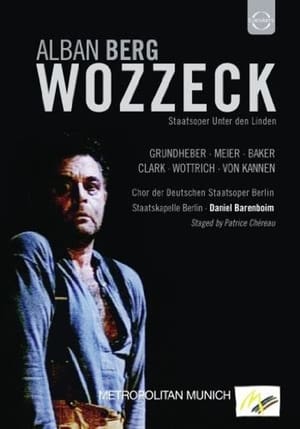
Franz Woyzeck, a lowly soldier stationed in a mid-nineteenth century provincial German town, is the father of an illegitimate child by his mistress Marie.
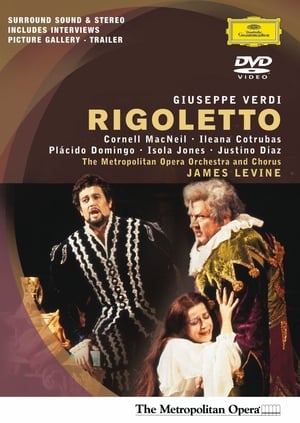
A Victor Hugo play, haunting and scandalous, provided the inspiration for Verdi’s mid-career masterpiece. A vengeful but misguided court jester strives to save his daughter from a duke’s licentious clutches, but can't part with the feeling that a curse looms over all of his actions. In Rigoletto, the composer introduces several of his most iconic arias and duets—as well as an 11th-hour quartet that counts among the finest moments in opera.
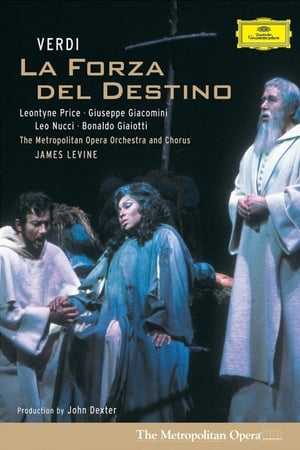
Leonora plans to elope with Don Alvaro, but he accidentally shoots and kills her father, who curses them as he dies. The lovers go on the run, but get separated. Bent on revenge, Leonora's brother Don Carlo, hunts them down. Verdi painted an immense canvas with this dark but tuneful opera, vividly brought to life in John Dexter’s production, with sets by the great Eugene Berman. The legendary Leontyne Price is seen in one of her greatest roles, Leonora. Price’s soaring voice encompasses every nuance of Leonora’s emotion as she moves from joy through resignation to ultimate heartbreak. James Levine’s brilliant leading of the Met orchestra and chorus is a lesson in Verdi style. Giuseppe Giacomini is Alvaro, the man Leonora loves, and Leo Nucci is Don Carlo, the dark instrument of their Fate.
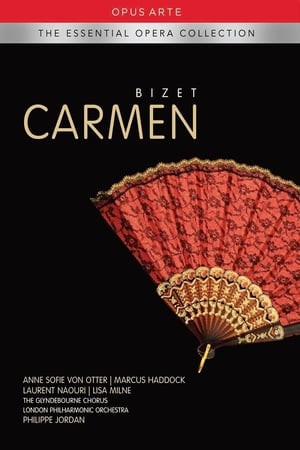
David McVicar's exhilarating new production, with Anne Sofie von Otter in the title role, restores the Opera Comique to Bizet's masterpiece. Philippe Jordan, in his Glyndebourne debut, conducts the London Philharmonic Orchestra, the Glyndebourne Chorus, and a cast which includes Marcus Haddock, Laurent Naouri, and Lisa Milne.
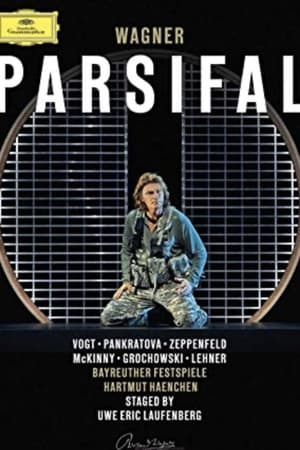
German composer Richard Wagner wrote Parsifal, which is a three-act opera that tells the story of the title character's quest to save the Knights of the Holy Grail by returning the Holy Spear, healing King Amfortas, and carrying out the sacred ceremony of uncovering the Holy Grail.
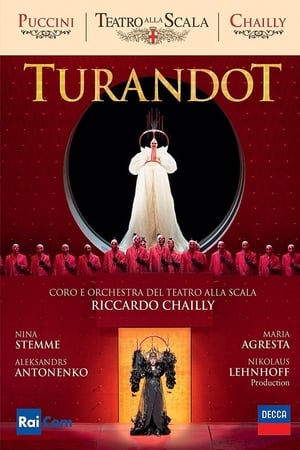
Visually this is a gripping production which captures the drama of this opera perfectly. It's downright exciting! and I found the singing, acting, and orchestral playing reasonably fine. I found only one major problem with it, a problem that kept Puccini for quite a few years. Turandot has been looking for an opportunity to kill Calif and Calif has singlemindedly tried to get Turandot to love and wed him focusing on her and ignoring a better looking girl who loves him truly. The problem is how to get the audience to applaud the match once Calif gets his wish. Puccini couldn't figure out how to do it. The traditional quick ending doesn't do it, and Berio's attempt is longer , tries its best, but ends up making it plain this is one wierd couple.
Premiered immediately before the enduring masterpieces Rigoletto, Il Trovatore, and La Traviata, Luisa Miller incorporates the youthful vitality that had made Verdi an international sensation while also looking forward to the dramaturgical discipline and sophistication of those later works. In this Live in HD performance, soprano Sonya Yoncheva takes on the riveting title role, capping off a season in which she starred in three cinema transmissions. As her father, Miller, the legendary Plácido Domingo adds another baritone role to his extensive repertoire. Tenor Piotr Beczała as Rodolfo, Alexander Vinogradov as Count Walter, and Dmitry Belosselskiy as Wurm round out the illustrious cast, and Bertrand de Billy conducts.
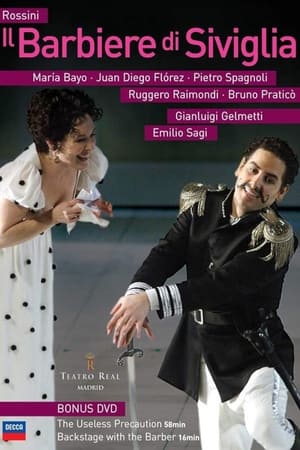
Stage director Emilio Sagi's production of the legendary Barber of Seville is enriched by a bright distribution. Maria Bayo returns to one of her signature role as Rosina, opposite Juan Diego Florez, the Rossini expert tenor. The title role is embodied by the Italian baritone Pietro Spagnoli, while Ruggero Raimondi and Bruno Pratico reconcile the audience with Don Basilio and Don Bartolo.
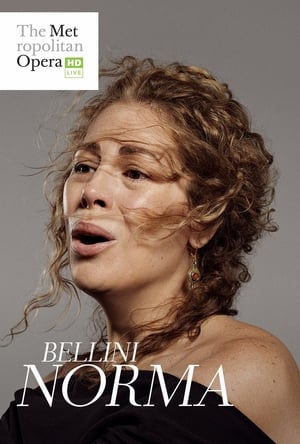
Deep in a forest where druids and warriors seek revenge against the conquering Romans, Norma is scorned by the Roman proconsul Pollione, with whom she has two children. Her kindness turns to fury when she discovers that Pollione has taken Adalgisa, a novice priestess, as his new lover. When Pollione loses his high rank in the army and is offered as a sacrifice, Norma promises him freedom under one condition.
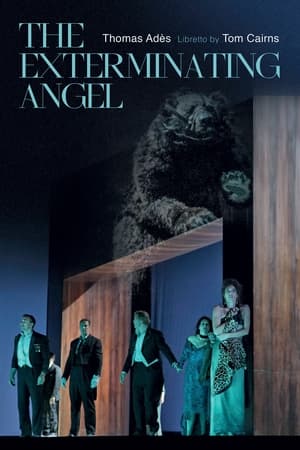
After the acclaimed Met premiere of Thomas Adès's "The Tempest" in 2012, the composer returned with another masterpiece, this time inspired by filmmaker Luis Buñuel's seminal surrealist classic "El Ángel Exterminador", during the 2017–18 season. As the opera opens, a group of elegant socialites gather for a lavish dinner party, but when it is time to leave for the night, no one is able to escape. Soon, their behavior becomes increasingly erratic and savage. The large ensemble cast tackles both the vocal and dramatic demands of Adès's opera with one riveting performance after another. Tom Cairns, who also penned the work's libretto, directs an engrossing and inventive production, using a towering wooden archway to trap the characters onstage. And Adès himself takes the podium to conduct the frenzied score, which features a host of unconventional instruments, including the eerie electronic ondes Martenot.
Sir David McVicar’s bold new staging of Tosca, Puccini’s operatic thriller of Napoleonic Rome, thrilled Met audiences when it rang in the New Year in 2018. Only weeks later, the production was seen by opera lovers worldwide as part of the Met’s Live in HD series of cinema presentations. In this performance, Bulgarian soprano Sonya Yoncheva is the passionate title diva, opposite charismatic tenor Vittorio Grigolo as her lover, the idealistic painter Mario Cavaradossi. Baritone Željko Lučić is the menacing Baron Scarpia, the evil chief of police who employs brutal tactics to ensnare both criminals and sexual conquests. On the podium, Emmanuel Villaume conducts the electrifying score, which features some of Puccini’s most memorable melodies.