Discover how the advent of the automobile brought new mobility and freedom for African Americans but also exposed them to discrimination and deadly violence, and how that history resonates today.
This riveting documentary investigates allegations of systemic racism and child sexual abuse in the New Hanover School District.
In the heart of the Goulburn Murray, the Rumbalara Football and Netball Club stands as a modern-day fortress of Yorta Yorta pride, a sanctuary of cultural healing where a community fights not just for points, but for the safety and dignity of its children.
The documentary Schwarze Adler (Black Eagles) lets black players of the German national football team tell their personal stories for the first time. What road did they take before they got to where we cheer for them? What hurdles did they have to overcome? What prejudices and racist hostility were they exposed to – and what was it like in the past, what is it like today?
The documentary mixes reenactments with true accounts from four characters/actors who tell the stories of six black gay men, their experiences and their romantic relationships crossed by racism and homophobia.
The only people charged over the brutal police murder of Elijah McClain are community activists who organized mass peaceful demonstrations calling for justice. They are facing up to 48 years in prison - among the highest charges for peaceful political protest in recent history.
In the run-up to parliamentary elections in mid-October, Polish filmmaker Marcin Wierzchowski travelled across his country to gauge the atmosphere in a society that is more divided than ever.
Documentary made by Yunus Vally, born in the 60s into a Muslim family during the height of the Apartheid era in South Africa, which examines the impact that the discriminatory laws of the state - specifically the so-called Immorality Act that determined who you could love and the censorship regulations that clearly defined what was deemed desirable - had on his life. It is also his attempt to fathom how he could have been an ardent Trotskyite who secretly fancied blonde Afrikaans beauty queens. (Storyville)
Me sem s-ar tu
On August 29, 1970 in East Los Angeles, a peaceful march of over 20,000 Chicanas/os, united in protest against the Vietnam War as part of the National Chicano Moratorium movement, was violently interrupted by an extreme, unjustifiable response by law enforcement. The tragic events of that day left four dead. Chicano Moratorium: A Question of Freedom is a harrowing, eyewitness documentary of the events of August 29, 1970 and their immediate aftermath, including the murder of Chicano journalist, Ruben Salazar. In contrast to biased TV news reports of the period, this student-made short offers an impassioned, unvarnished community account of the unrest and violence unleashed by the Los Angeles Sheriff’s Department in response to the otherwise peaceful march in protest of disproportionate Chicano casualties in the Vietnam War.
Benito Mussolini: Anatomy of a Dictator
The decades-long debate surrounding reparations is fraught, mired in racial tension and the semantics of restorative justice. While the national conversation remains stalled due to legislative inaction, communities across the country examine their histories and take it upon themselves to arrange their own form of reparations. This detailed investigation of restitution presents accounts of everyday people confronting the past and exploring the possibilities of wealth transfer.
February 1980, young Abdelkader Lareiche was shot in the head by a building guard in a housing estate in Vitry. In a context marked by several racist crimes and a policy of security repression, his friends are mobilizing around the “Rock Against Police” movement. Forty years after the events, Philomène sets out to meet the activists and actors of this movement. “Memory is not commemoration, it is the living part of History” confides Mounsi about the massacre of October 17, 1961. This is the heart of Nabil Djedouani’s project, to restore a moment in a living way. of the militant history of the suburbs, registered here in the Rock Against Police movement, but which cannot be restricted to it. A thread stretched from the 1980s to today, which continues to “analyze the collective and murderous unconscious of the French State” and the ways of resisting and revolting.
Sebz traces an intimate and heartbreaking journey through her past and present, exploring the nuances of her identity as a non-binary, black, asexual trans person. Through an introspective narrative, Sebz reflects on the abuse she suffered as a child and the revelation that these experiences were not unique, but also familial. In a space where memory and reality intertwine, Sebz confronts her relationship with her mother, a complex connection torn between rejection and a search for understanding, accentuated by tensions of gender, sexuality and shared trauma. This short queer documentary is an honest and courageous portrait of wounds, family ties and the resilience that defines those who seek to exist beyond social impositions.
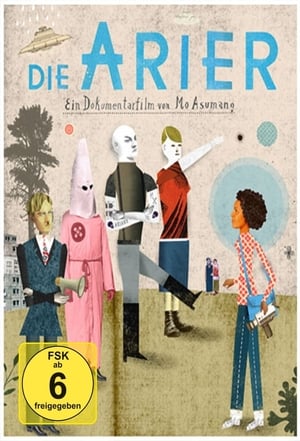
THE ARYANS is Mo Asumang's personal journey into the madness of racism during which she meets German neo-Nazis, the US leading racist, the notorious Tom Metzger and Ku Klux Klan members in the alarming twilight of the Midwest. In The ARYANS Mo questions the completely wrong interpretation of "Aryanism" - a phenomenon of the tall, blond and blue-eyed master race.
Twenty-five years after the verdict in the Rodney King trial sparked several days of protests, violence and looting in Los Angeles, LA 92 immerses viewers in that tumultuous period through stunning and rarely seen archival footage.
United States, September 1st, 2016. American football player Colin Kaepernick kneels during the national anthem, protesting police brutality against black people. Part of the population regards the gesture as an unacceptable affront to the flag. Later, he loses his place on his team. Today, however, he is considered by many as a true hero.
Lillian Smith: Breaking the Silence is a 50-minute documentary about the life and work of Georgia writer and activist Lillian Smith (1887 – 1966). This documentary explores her legacy and the life journey that led to her awakening, from her childhood experiences in a small southern town, to her years of living abroad in China, to directing a girls' summer camp in North Carolina. By the time she published a bestselling novel in 1944, her moral compass was finely tuned to the changes needed in the southern U.S., and she spent the next two decades confronting the ugly institution of segregation, saying that it harmed whites as much as blacks. In the decade before her death she wrote about the need for freedom and respect for everyone everywhere.
In April 1999, three Lakeside brothers murdered a Mexican migrant worker by beating him to death. Producer Lee Harvey spent several months talking with Lakesiders--teachers, social workers, longtime residents and teens who are avowed racists--to unearth the reasons why kids would commit this gruesome crime and why it happened in the peaceful, semi- rural town of Lakeside in eastern San Diego county.
A documentary about rap artists from Ceilândia, a satellite-city of Brazil capital, Brasilia. The film portrait the struggle of the lives of the rapers and makes a parallel with the violent building of the city designed to settle the outcast from Brasilia after its completion.