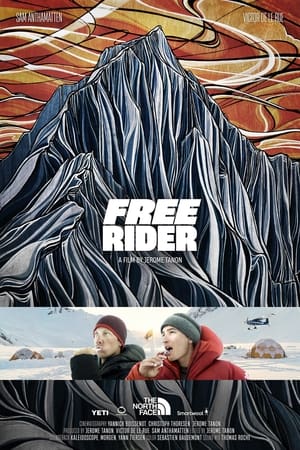
Sam Anthamatten (ski) and Victor de Le Rue (snowboard) push new boundaries in the wildest corner of Alaska. A bush pilot drops the small crew of five on a remote, unexplored glacier to conquer the spine walls in a series of ascents, each one more committed. Narrator Jérôme Tanon describes with honesty and a touch of sarcasm what exactly is going on here. Above all, he wants to feel what it’s like to be in their shoes, to understand what so called “free riders” are made of, and what could be the purpose and beauty of “freeriding”.
An inspiring short film that celebrates the universal language of skiing as a catalyst for human connection. Featuring men and women skiers from Norway, France, Switzerland, Canada, the Netherlands, and Japan, this story serves as a reminder that sometimes the most profound communication occurs when words are not needed at all. From bottomless pow turns in majestic Japanese forests to the high volcanic alpine of central Hokkaido, Lexicon reminds us of the transformative power of adventure, cultural exchange, and the bonds we can create when we embrace our shared passions and the inherent joy of connecting with people from different walks of life.
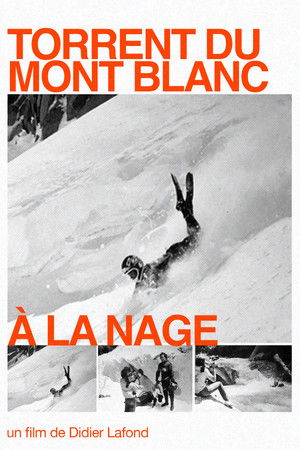
A documentary about André Payraud's descent of the Mont Blanc torrent by swimming down it. "I've always had a thirst for adventure. At 19, I was in a diving club and I loved Jacques Martin's show, 'Incroyable mais vrai' (Incredible but True). I dreamed of participating in this hit program." After careful consideration, André Payraud had the idea of the century, an idea that would attract media attention: to descend the Grands-Montets glacier on his stomach, wearing a full wetsuit (mask, snorkel, fins, and neoprene suit). A crazy idea that drew a flood of press coverage. The film, "Swimming Down the Mont Blanc Torrent," directed by Didier Lafond, was broadcast twice on France 2 and even won an award.
Mountaineering documentary on the Nanga Parbat expedition, in India, in 1982. Led by mountaineer Pierre Mazeaud, this international expedition brings together eight French people, two Germans, an Iraqi, an Austrian and an Englishman including Michel Afanassieff, Michel Berrueux, Walter Cecchinel, Kurt Diemberger, Hans Engl, Shah Jehan, Karim Imamdad and others. On July 14, 1982, Hans Engl reached the summit after twelve hours of struggle.
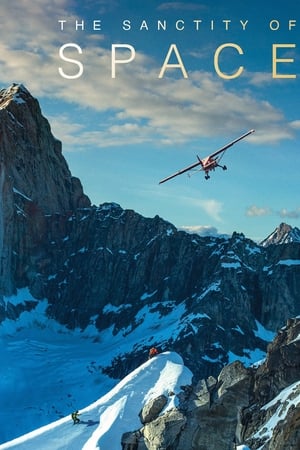
Seventy-five years after Brad Washburn, one of the greatest aerial mountain photographers of all time, first shot Alaska’s Denali Mountain from the open door of an airplane, climbing buddies Renan Ozturk, Freddie Wilkinson, and Zack Smith look at some of his mountain photographs and have this crazy idea. Rather than go up, their dream is to go sideways across the range’s most foreboding peaks, the Moose’s Tooth massif. It’s a fresh new way to explore the same landscape Washburn first discovered. As the group endures rough conditions, disintegrating ropes, and constant rockfall, their desire to be the first to complete the audacious line grows into an obsession. But friendships begin to fray when Renan suffers a near-fatal brain injury, forcing all three partners to decide what’s most important to them.
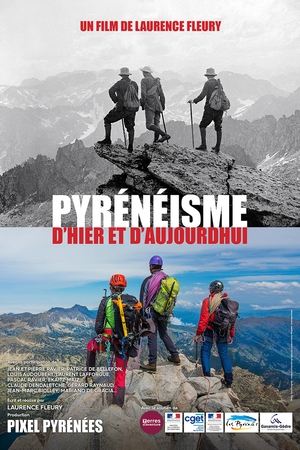
The word Pyreneism was invented by the writer Henri Beraldi at the end of the 19th century. Its definition did not come down to a simple practice of mountaineering in the Pyrenees. To be recognized as a Pyrenean, it was necessary to “ascend, write and feel”. An approach to the mountains, according to him, necessarily accompanied by an artistic or intellectual activity. This documentary looks back at the Pyrenees who have left their mark on history, before interviewing contemporary mountain dwellers who, through their mountain practice, consider themselves, or not, Pyreneanists. What prompted Beraldi to coin this term? Does it result from a Pyrenean complex facing the Alps? Chauvinism or a demand for identity? And today, does this word still have meaning? Beyond the reflection on the subject, this film is a wonderful tribute to the massif.
Two climbers, Dany Badier and Françoise Dassonville, swim to explore an underground cave in the Calanques, near Marseille, then equip themselves with climbing gear to scale the spectacular cliffs of the Calanques. Their ascent culminates at the summit of the Grande Candelle. Directed by Gilbert Dassonville in 1970 and produced by Cérès Films, this film won first prize at the Trento Mountain Film Festival in 1967.
Nicolas Jaeger, a French physician specializing in sports and high-altitude physiology, conducted an experiment by spending two months on the highest peak in the Peruvian Andes, Huascarán. From July to September 1979, Nicolas Jaeger lived alone for 60 days at an altitude of 6,700 meters and studied the effects of hypoxia on his body. He documented his experience on film and later in his book, "Carnet De Solitude," published in 1979.
In 1983, three climbers became the first French people to reach the summit of Everest. Among them were expedition leader Pierre Mazeaud and a promising 25-year-old climber, Jean Afanassieff. Twenty years later, the two legends, accompanied by mountain guide Michel Pellé, retrace the steps of their exploit and make the trek from Kathmandu to the foot of the roof of the world. This is an opportunity to retrace the history of the successive assaults on Everest and to assess the current situation of a mountain that has become a victim of its own success: while Sherpas have been able to take advantage of Western enthusiasm and thus enrich themselves and equip the summit to make it more accessible, the site's attendance poses numerous problems, both human and ecological.
Mountaineers Roberto Sorgato and Ignazio Piussi relive their 1961 adventure: the first winter ascent of the north face of Cima Ovest di Lavaredo, a formidable Dolomite wall reaching 2,973 meters. During this expedition, Sorgato accidentally fell 60 meters while the climbers were preparing their third bivouac and found himself suspended in mid-air by a rope. Through sheer perseverance, ingenuity, and courage, he managed to pull himself back to his partner. The film, shot eleven years later, is a reenactment with the protagonists playing themselves. The difficulties this climb presents, even for the most experienced climbers, are irrefutably highlighted. The film received the Genziana d'Oro award at the Trento Film Festival in 1973.
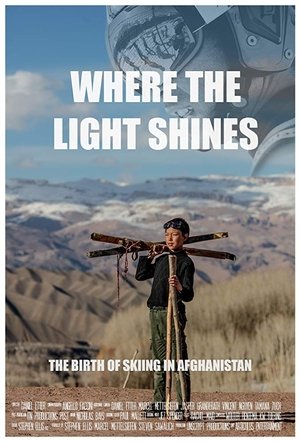
When two men compete to qualify in the Winter Olympics for the first time for Afghanistan, they realize that home is worth fighting for. In their wake they leave a passion for skiing and a hope for a brighter future. Where the Light Shines is the debut documentary from Pulitzer Prize-winning photographer Daniel Etter with stunning cinematography by Angello Faccini. It is produced by Academy Award nominees Marcel Mettelsiefen and Stephen Ellis along with Steven Sawalich from Articulus Entertainment. Filmed over four years, Where the Light Shines paints an intimate portrait of life in Afghanistan and shows the difficulties of trying to create change in a country that for generations has only seen war.
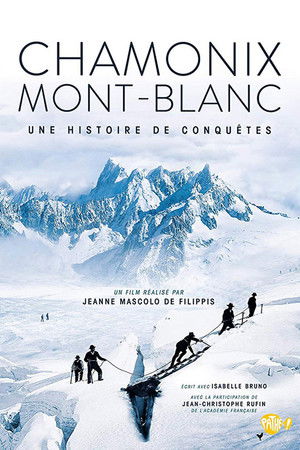
Chamonix - Mont Blanc, A History of Conquests
Sir Chris Bonington’s return to Torres del Paine, 62 years after the first ascent of the Central Tower. At 91 years old, and while living with Alzheimer’s disease, the documentary accompanies Bonington in a profoundly human return: an attempt to reconnect with memories that time has erased, but that the Patagonian landscape still seems to guard. During the filming, Chris once again set foot on the territory of Estancia Cerro Guido, closing a circle between past and present, between the epic of mountaineering and the fragility of memory.
Documentary about the making of a pair of skis using old methods, from the scouting for the perfect tree to finished product.
For nearly three years, director Dina Khreino interviewed world-class mountain climbing athletes, listening to what compels them to leave behind families, friends, and everyday comforts to risk everything for a fleeting glimpse into the unknown. What she found was a tribe, a diverse group of professional adventurers and amateur philosophers forged by the ultimate test of body, mind, and spirit. In the face of shifting winds, sheer granite cliffs, and impossible odds, they climb. Each for their own reason, but every one connected by the vertical world. In this rarefied air, these athletes are fundamentally changed, not just as climbers, but as human beings.
Laura Pineau and Kate Kelleghan chase history on Yosemite’s granite walls, attempting to become the first women to complete the legendary Triple Crown: linking El Capitan, Half Dome, and Mount Watkins in a single 24-hour push. But this isn’t just a story about summits and speed records. It’s about what happens between two people when the only thing keeping you alive is the person on the other end of the rope.
Heinz Mariacher got closer to the mountains by climbing the most important peaks of the Dolomites. He then devoted himself to free climbing, before returning to classic mountaineering. On this route, he reunited with his partner Luisa Iovane. Immersing yourself in the images of the most beautiful walls of the Dolomites, you can follow the different thoughts that accompany the two climbers, different from each other, but united in life and in the rock by the same thought: "When you reach the summit, keep climbing."
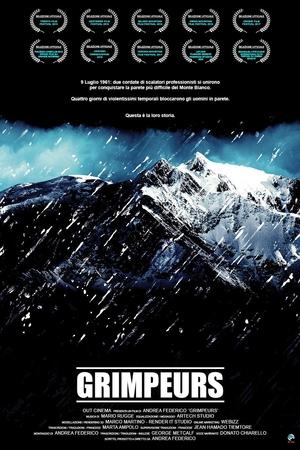
In 1961 the southern face of the Central Pillar of Mont Blanc was still unclimbed. Two roped parties of climbers decided to come together to attempt to open a new route. Four days of violent storms caught the climbers just 80 metres from the summit. Of the seven climbers, only three returned home. One of the most intense and dramatic events in the history of climbing relives on the big screen, thanks to accounts and images of the feat.
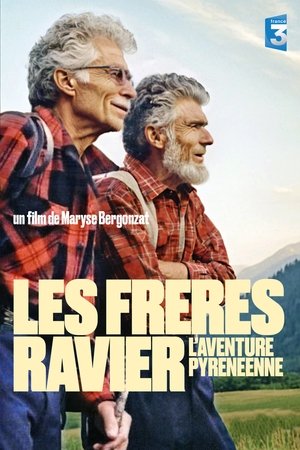
The two brothers Jean and Pierre Ravier have opened almost all the "classic" (difficult) routes in climbing and mountaineering in the Pyrenees. Roped together at the waist using a few flat knots and little equipment, the two twin brothers achieved more than 200 firsts across the entire massif. A unique style and commitment, a state of mind made up of adventure, literature, inventiveness and friendship. Unclassifiable and outgoing, after 60 years of Pyrenees, their desire for the mountains is intact. When does a race start? How does the idea, the desire, come about? What sense does it make to only achieve firsts? And what is the role of the Pyrenees themselves in this reciprocal and endless game of attraction?
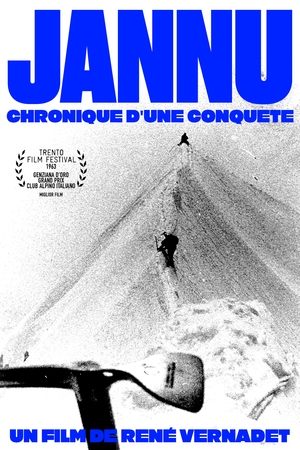
Three years after the 1959 expedition, abandoned 350m from the summit, Lionel Terray leads a new assault on Jannu, one of the most demanding peaks in the Himalayas. At the base camp, equipment and food rations are prepared. The conditions are optimal and the ascent can begin. The camera follows the progress of the mountaineers and Sherpas as closely as possible, from one high-altitude camp to another: installing fixed ropes, progressing over crevasses, in the middle of frozen towers, vertically down immense ice falls or along the edge of sharp ridges. From 7000m, oxygen bottles become essential, as the difficulty of the climb prevents acclimatization. The expedition is a total success: the majority of its members reach the 7710m summit.