A poem about mania written by Omar Zefier. His second film.
Presents life in 18th century Spain as the painter Francisco de Goya showed it to us.
One of the best-known Chinese figurative painters, Liu Xiaodong goes back to his hometown of Jincheng, in the province of Liaoning (North-East China), to re-paint again friends and relatives after several years have gone by. With a soundtrack by famed composer Lim Giong (Millennium Mambo, The Assassin).
EXHIBITION ON SCREEN open its fifth season with Canaletto & the Art of Venice, an immersive journey into the life and art of Venice’s famous view-painter. No artist better captures the essence and allure of Venice than Giovanni Antonio Canal, better known as Canaletto. The remarkable group of over 200 paintings, drawings and prints on display offer unparalleled insight into the artistry of Canaletto and his contemporaries, and the city he became a master at capturing. The film also offers the chance to step inside two official royal residences - Buckingham Palace and Windsor Castle – to learn more about the artist, and Joseph Smith, the man who introduced Canaletto to Britain.
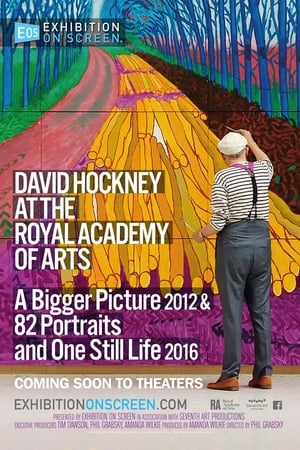
Widely considered Britain’s most popular artist, David Hockney is a global sensation with exhibitions in London, New York, Paris and beyond, attracting millions of visitors worldwide. Now entering his 9th decade, Hockney shows absolutely no evidence of slowing down or losing his trademark boldness. Featuring intimate and in-depth interviews with Hockney, this revealing film focuses on two blockbuster exhibitions held in 2012 and 2016 at the Royal Academy of Art in London. Director Phil Grabsky secured privileged access to craft this cinematic celebration of a 21st century master of creativity.
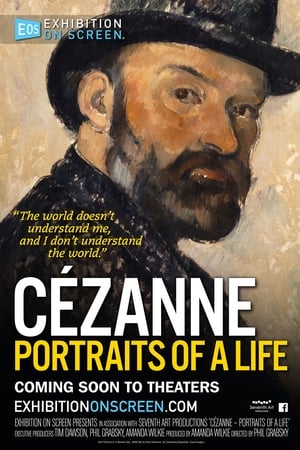
Dedicated to the portrait work of Paul Cézanne, the exhibition opens in Paris before traveling to London and Washington. One cannot appreciate 20th century art without understanding the significance and genius of Paul Cézanne. Filmed at the National Portrait Gallery in London, with additional interviews from experts and curators from MoMA in New York, National Gallery of Art in Washington DC, and Musée d’Orsay in Paris, and correspondence from the artist himself, the film takes audiences to the places Cézanne lived and worked and sheds light on an artist who is perhaps one of the least known and yet most important of all the Impressionists.
After World War II a group of young writers, outsiders and friends who were disillusioned by the pursuit of the American dream met in New York City. Associated through mutual friendships, these cultural dissidents looked for new ways and means to express themselves. Soon their writings found an audience and the American media took notice, dubbing them the Beat Generation. Members of this group included writers Jack Kerouac, William Burroughs, Allen Ginsberg. a trinity that would ultimately influence the works of others during that era, including the "hippie" movement of the '60s. In this 55-minute video narrated by Allen Ginsberg, members of the Beat Generation (including the aforementioned Burroughs, Anne Waldman, Peter Orlovsky, Amiri Baraka, Diane Di Prima, and Timothy Leary) are reunited at Naropa University in Boulder, CO during the late 1970's to share their works and influence a new generation of young American bohemians.
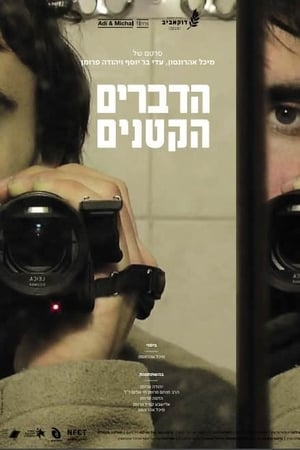
The film follows Yudale, a religious youth from the settlements, as he experiences a crisis of faith. As he receives a camera from Michal, a Tel Aviv director who teaches him how to film, Yehuda documents his life on the line between the settlement Tko’a and Tel Aviv: his final conversations with his dying father—Rabbi Menachem Fruman– their joint study, and saying goodbye to him. When his father dies, Yehuda chooses to take off his kippah. During the year of mourning, he continues to document his life outside the religious world: exploring Tel Aviv, talking to Michal, and his new perspective on his family and their way of life. Elisheva, a newly observant Jew orphaned from her mother, comes into his life as a soul mate exactly at the moment when he loses hope of finding his way.
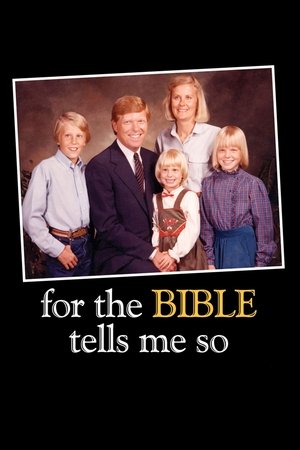
An exploration of the intersection between religion and homosexuality in the U.S. and how the religious right has used its interpretation of the Bible to stigmatize the gay community.
Welcome to Mississauga where lawns are clipped, neighbors are watchful and no blade of grass dares misbehave. Except at Wolf Ruck’s place. His lawn grows wild, and so does the trouble.
Lizzie Lovejoy’s mini-documentary explores the world of non-traditional performance spaces, especially in the Tees Valley and celebrating the fantastic work they do. Lizzie spoke to Bobby Benjamin, artist and curator of Pineapple Black in Middlesbrough, about the exciting range of work the gallery has housed over the past couple of years during festivals, exhibitions and events. And from Redcar Palace Art Gallery, director James Beighton and curator Beth Smith of Tees Valley Arts discuss how the venue is used to create works as well as share them, and why accessibility has become one of their main focuses. People connect to performance in different ways than visual art, but both can be incredibly powerful and influential. Using local creative spaces to pull both together highlights how fantastic our local cultural community really is. This is an Art Mouse film for NARC. TV, written and directed by Lizzie Lovejoy.
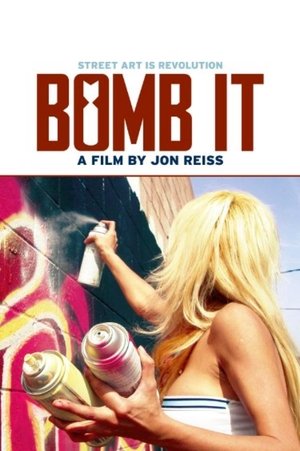
Through interviews and guerilla footage of graffiti writers in action on five continents, the documentary tells the story of graffiti from its origins in prehistoric cave paintings thru its notorious explosion in New York City during the 70’s and 80’s, then follows the flames as they paint the globe.
An illuminating examination of Sofonisba Anguissola's iconic masterpiece as a window into the artist's full oeuvre while painting a detailed picture of Sofonisba's journey and the world she lived in to become one of the most accomplished female artists of her time. At a time when women were typically regarded as objects or madonnas to be represented in art, Sofonisba Anguissola (1532/5-1625) was something very different indeed: a highly respected painter and teacher who interacted with the likes of Michelangelo and Anthony van Dyck, and whose remarkable portraits were enthusiastically sought by many of the most powerful figures of the age. The Chess Game by Sofonisba is a remarkable group portrait of three of her sisters and a maid. It is widely considered to be one of her most compelling and innovative artworks: a painting whose many subtle levels of meaning offer a fascinating window on Sofonisba, her family, and contemporary 16th-century values.
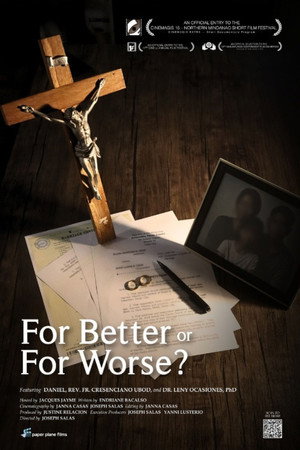
The Philippines remains the only nation without legalized divorce. Through the perspectives of a controversial priest, a women's rights advocate, and a child of a separated couple, this documentary explores whether the legalization of divorce in the country would be for better or worse.
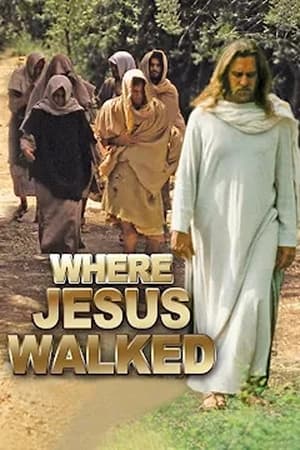
Jesus never traveled more than one hundred miles from His birthplace during His three-year ministry, and His life has changed the world.
Stop for Bud is Jørgen Leth's first film and the first in his long collaboration with Ole John. […] they wanted to "blow up cinematic conventions and invent cinematic language from scratch". The jazz pianist Bud Powell moves around Copenhagen -- through King's Garden, along the quay at Kalkbrænderihavnen, across a waste dump. […] Bud is alone, accompanied only by his music. […] Image and sound are two different things -- that's Leth's and John's principle. Dexter Gordon, the narrator, tells stories about Powell's famous left hand. In an obituary for Powell, dated 3 August 1966, Leth wrote: "He quite willingly, or better still, unresistingly, mechanically, let himself be directed. The film attempts to depict his strange duality about his surroundings. His touch on the keys was like he was burning his fingers -- that's what it looked like, and that's how it sounded. But outside his playing, and often right in the middle of it, too, he was simply gone, not there."
Spomíname na Edmunda Gwerka
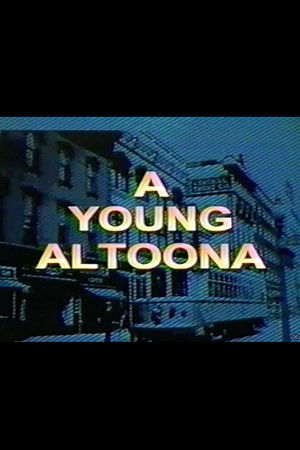
A short documentary looking at Altoona in its heyday.
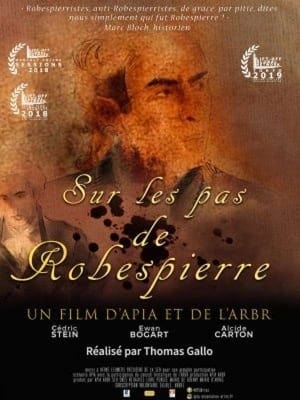
Sur les pas de Robespierre
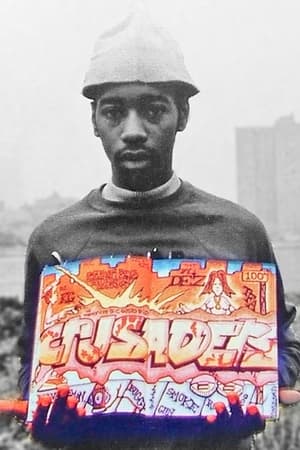
An incredible historic document showcasing the roots of Old School Hip Hop movement with all its disciplines involved: Djing, Mcing, Breakdancing, and Graffiti. Featured in the "NYC: Urban Image" show at MoMA PS1 1983.