Between two Thanksgivings, Hannah's husband falls in love with her sister Lee, while her hypochondriac ex-husband rekindles his relationship with her sister Holly.
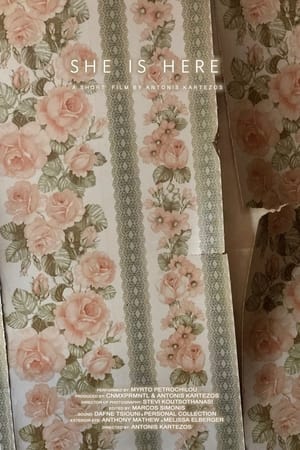
After his mother's death, a young man edits the family's home videos to bring back her image. As he delves into the occult he begins to reveal the paradoxical magic of memories and cinema.
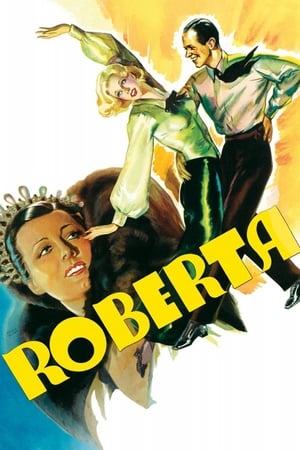
While visiting her sister in Paris, a young woman finds romance and learns her brother-in-law is a philanderer.
Moving Together is a celebratory love letter to music and dance that brims with kinetic life and energy. This documentary explores the intricate collaboration between dancers and musicians, moving seamlessly between Flamenco, Modern, and New Orleans Second Line.
A man prays before the moonlit sky, a silhouette in the blue night, on his knees. The gently moving trees, the mountains on the horizon.
When a devoted husband and father is left home alone for the weekend, two stranded young women unexpectedly knock on his door for help. What starts out as a kind gesture results in a dangerous seduction and a deadly game of cat and mouse.
RABL combines film, early 3D computer animated human movement, and dance. RABL explores the interaction of human bodies and technology with choreography by Patrice M Regnier and the support of the Computer Graphics Laboratory at the New York Institute of Technology.
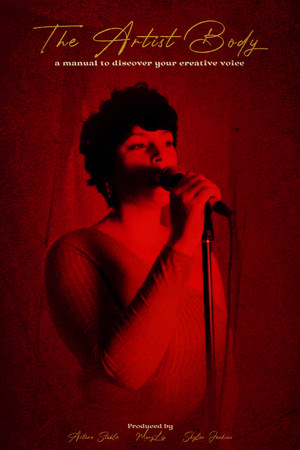
A documentary-style capturing of the life of Ab, a young struggling artist trying to find her way, all while dealing with unwanted company.
Three tales of love, ambition, and neurosis unfold in the city that never sleeps. In "Life Lessons" (Martin Scorsese), a tormented painter channels heartbreak into his art. In "Life Without Zoë" (Francis Ford Coppola), a precocious 12-year-old navigates privilege and loneliness in a Manhattan hotel. And in "Oedipus Wrecks" (Woody Allen), a man’s domineering mother literally becomes a looming presence over New York.
Hermitage: The Power of Art
Portrait of the brilliant Ukrainian artist against the backdrop of the 20th century.
From award-winning director Phil Grabsky comes this fresh new look at arguably the world’s favourite artist – through his own words. Using letters and other private writings I, Claude Monet reveals new insight into the man who not only painted the picture that gave birth to impressionism but who was perhaps the most influential and successful painter of the 19th and early 20th centuries. Despite this, and perhaps because of it, Monet’s life is a gripping tale about a man who, behind his sun-dazzled canvases, suffered from feelings of depression, loneliness, even suicide. Then, as his art developed and his love of gardening led to the glories of his garden at Giverney, his humour, insight and love of life is revealed. Shot on location in Paris, London, Normandy and Venice I, Claude Monet is a cinematic immersion into some of the most loved and iconic scenes in Western Art.
Filmed in the same Torrance Public Library parking lot, Introduction to Crack Sealing 2 reworks the material of the first film into a sharper, more fractured arrangement. Where the original moved fluidly along the wavering asphalt lines, this version interrupts and jolts—images are thrown at the viewer in abrupt succession rather than unfolding in smooth sequence. At irregular moments the progression halts, pausing briefly to give the eye a fleeting chance to study a composition before the next cut arrives. Silent and stripped down, the film turns the repaired surface into a volatile field of inscription, where repair becomes staccato mark-making and perception itself is fractured into sudden bursts of line and form.
Narrated by Uncle Jack Charles and seen through the eyes of Indigenous prisoners at Victoria’s Fulham Correctional Centre, this documentary explores how art and culture can empower Australia's First Nations people to transcend their unjust cycles of imprisonment.
Tony spends his Saturdays at a disco where his stylish moves raise his popularity among the patrons. But his life outside the disco is not easy and things change when he gets attracted to Stephanie.
Johnny Minotaur is a lyrical explosion of taboos: incest, intergenerational desire, pansexuality and autoeroticism are a few of the issues Charles Henri Ford grapples with through mythopoeic, sensual imagery, recitations of his diaries and a philosophical debate featuring an impressive narration by such artists as Salvador Dali, Allen Ginsberg, Warren Sonbert and Lynne Tillman.
Raphael: The Lord of the Arts is a documentary about the 15th century Italian Renaissance painter Raphael Sanzio.
A portrait of Highlights Magazine following the creation of the cultural phenomenon's 70th Anniversary issue, from the first editorial meeting to its arrival in homes, and introducing the quirky people who passionately produce the monthly publication for "the world's most important people,"...children. Along the way, a rich and tragic history is revealed, the state of childhood, technology, and education is explored, and the future of print media is questioned.
A documentary to 'rediscover' the so called Sistine Chapel of Rock Art and to tell the story of the discovery of a cave and some paintings that astonished the world 138 years ago. Filming this documentary lead its director, José Luis López Linares, through many rock caves around the world, grasping information about the life of the Magdalenian man -who lived twenty thousand years ago- and about an art form, the paintings, that make Altamira "the Prado museum of prehistory".
A kind of home movie made in Brus' apartment. Brus' Christmas wishes can be seen on a poster which he painted and which he holds for a short time in front of the camera.