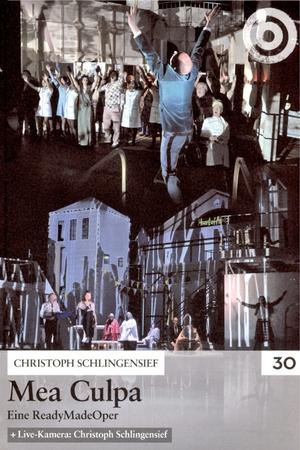
A collectively made filmic opera in 35 parts. The Black and predominantly queer art collective, an evolving line up of poets and artists from across the world, abstracts and reimagines opera in any traditional conception. Set to hip-hop, blues, noise, R&B and electronica, the piece uses the voice (chanting, singing, screaming; written by poet and activist Dawn Lundy Martin) as its primary tool, verbalising centuries of alienation, vulnerability and protest in the global African diaspora through its disruptive libretto.
The life and career of Italian opera singer Farinelli, considered one of the greatest castrato singers of all time.
Prince Abesalom runs into an orphaned Eteri while hunting, falls for her and brings the woman to his palace as his fiancé. The Prince’s aid Murman loses his self-control at Eteri’s beauty and gives her a spelled necklace as a wedding gift. Eteri contracts a mysterious disease that only Murman is capable to heal.
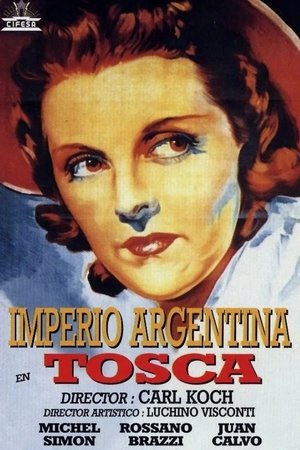
At the beginning of 1964, the music world experiences something completely unexpected. Maria Callas returns to the opera stage as the prima donna. Her “Tosca” at the Royal Opera House becomes a sensation. Maria Callas wants to show everyone once again that she deserves the title of “prima donna assoluta.” On the condition that star director Franco Zeffirelli take over the direction, the exceptional singer agrees to sing the role of Tosca. The BBC recorded the 2nd act of the opera for television. It is one of the most dramatic acts in opera history: in order to free the painter Cavaradossi from the hands of torturers, Tosca ends up murdering the police chief Scarpia. The film footage is one of the rare opportunities to see Maria Callas in an opera performance and to experience her highly emotional performance art and vocal abilities...
An Egyptian military commander, Radamès, struggles to choose between his love for the enslaved Ethiopian princess Aida, and his loyalty to the Pharaoh. To complicate the story further, the Pharaoh's daughter Amneris is in love with Radamès, although he does not return her feelings.
Charlie is a factory owner struggling to save his family business, and Lola is a fabulous entertainer with a wildly exciting idea. With a little compassion and a lot of understanding, this unexpected pair learn to embrace their differences and create a line of sturdy stilettos unlike any the world has ever seen!
A young woman, married to a wealthy man, but miserably lonely; trapped within a world ruled with an iron fist. Katerina is driven by a lust for life and for love. Her husband, though, is impotent; her father-in-law a tyrant. No wonder, then, that she longs to free herself from this yoke. When Sergei starts work on the family estate, she sees in him a chance for salvation. However, their subsequent affair marks the beginning of a descent into crime.
Franco Zeffirelli directs these two legendary La Scala productions telling tragic tales of jealousy. Mascagni's Cavalleria Rusticana features performances by Elena Obraztsova, Plácido Domingo, and Renato Bruson. Leoncavallo's I Pagliacci stars Teresa Stratas, Plácido Domingo, and Juan Pons. Both are conducted by George Pretre. This production of Pagliacci earned director Franco Zeffirelli the coveted Emmy as Best Director in the category of Classical Music Programming.
Franco Zeffirelli's magnificient staging of Puccini's final opera - a fairy tale set in a mythical China - is one of the most popular in the Met repertory. In this Live in HD production, Maria Guleghina takes on the title role and Marcello Giordani is Calaf, the unknown prince. Marina Poplavskaya and Samuel Ramey co-star, and Andris Nelsons conducts in his Met debut.
John Adams’s mesmerizing score, in the powerful production of Penny Woolcock, tells the story of one of the pivotal moments in human history—the creation of the atomic bomb. Conducted by Alan Gilbert in his Met debut, this gripping opera presents the human face of the scientists, military men, and others who were involved in the project, as they wrestled with the implications of their work. Baritone Gerald Finley gives a powerful star turn in the title role as the brilliant J. Robert Oppenheimer.
Disciplined Italian composer Antonio Salieri becomes consumed by jealousy and resentment towards the hedonistic and remarkably talented young Salzburger composer Wolfgang Amadeus Mozart.
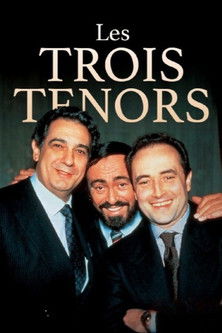
Although he is unanimously credited with having democratised opera, making it accessible to the greatest number, focus is rarely put on the strategy he devised and implemented in order to carry out his actions, nor what his actions reveal of the man and artist, and of the resulting metamorphosis from opera singer to pop artist. Through this angle, this film sets out to pay tribute to the man who summed up his credo, obsession and life’s work, in the following way: “They led the public to believe that classical music belonged to a restricted elite. I was the way to prove to the world that was wrong.
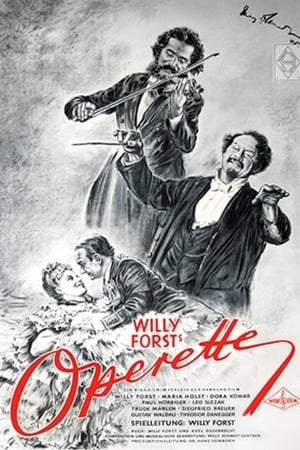
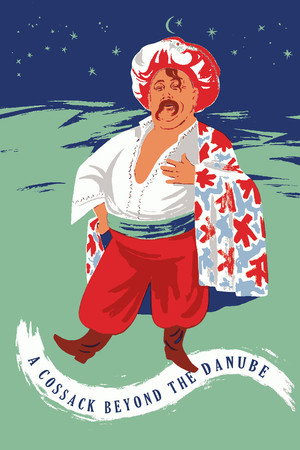
Simultaneously filmed English language version of a period operetta, in which a Polish noblewoman is romantically linked with a revolutionary student activist.
The deformed Phantom who haunts the Paris Opera House causes murder and mayhem in an attempt to make the woman he loves a star.
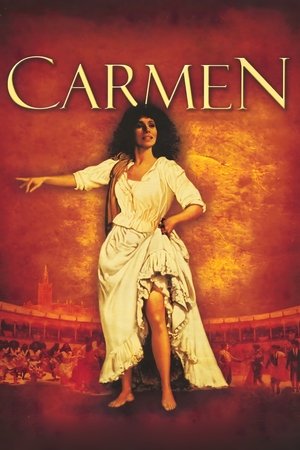
This all-star cast is framed by Peter Hall’s gritty, realistic production and conducted by James Levine, who brings out all the surging emotion and gripping drama in Bizet’s score. At the center of the story is Agnes Baltsa, whose smoky mezzo is tailor-made for the gypsy Carmen, an independent woman who glories in obeying only her own rules, but who is haunted by fate. Superstar tenor José Carreras is Don José, the solider from a small town who catches Carmen’s eye and is destroyed by his growing obsession with her. Samuel Ramey is the charismatic matador Escamillo, who lures Carmen away from Don José with tragic result. Leona Mitchell is Micaëla, the simple girl from Don José’s hometown who cannot save him. March 21, 1987 Matinee Broadcast.
Anna Netrebko und Rolando Villazón singen "La Traviata"
Rossini’s opera based on the fairy-tale Cinderella, filmed in real-life Italian locations in the ballrooms and gardens of some of Turin’s finest palaces. For this special production of the opera, the scenes were filmed at the same time of day as they occur in the story, with the famous ballroom scene filmed as the clock struck midnight
Soprano Anna Netrebko appears in her highly anticipated Met role debut as Leonora, the tortured heroine who sacrifices her own life for the love of the Gypsy troubadour. Dmitri Hvorostovsky sings Count di Luna, Yonghoon Lee is Manrico in his Met role debut as the title character, Dolora Zajick sings her signature role of the gypsy Azucena, and Štefan Kocán is Ferrando. Marco Armiliato conducts Sir David McVicar’s Goya-inspired production.
Renée Fleming sings one of her signature roles, the title character in Dvořák’s sumptuously melodic Rusalka. The story of the opera, which is about a water spirit’s tragic romance with a human prince, is drawn from several folktale sources including Hans Christian Andersen’s “The Little Mermaid.” Star conductor Yannick Nézet-Séguin leads a cast that also includes Piotr Beczala as the handsome Prince whom Rusalka yearns to love; Dolora Zajick as the cackling swamp witch Ježibaba; Emily Magee as the Foreign Princess, Rusalka’s rival; and John Relyea as Rusalka’s father, the Water Sprite.
Radiant mezzo-soprano Susan Graham and dashing Italian tenor Marcello Giordani are unlucky lovers in La Damnation de Faust, Hector Berlioz’s classic take on dancing with the devil.