A documentary of insect life in meadows and ponds, using incredible close-ups, slow motion, and time-lapse photography. It includes bees collecting nectar, ladybugs eating mites, snails mating, spiders wrapping their catch, a scarab beetle relentlessly pushing its ball of dung uphill, endless lines of caterpillars, an underwater spider creating an air bubble to live in, and a mosquito hatching.
Das Alien Insekt
A scientist explains how the savagery and efficiency of the insect world could result in their taking over the world.
The World's Biggest and Baddest Bugs, follows host Ruud Kleinpaste, as he embarks on an entomological odyssey around the globe in search of the ultimate biggest and "baddest" creepy crawlies. The World's Biggest and Baddest Bugs will then profile the "stars" of the show, with Ruud explaining in his audience-friendly style exactly what makes them so amazing.
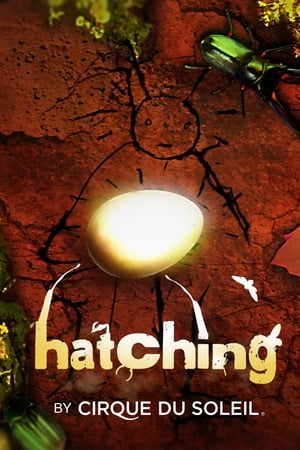
A Documentary on the Creation of OVO, by Cirque du Soleil
This film was produced as an extension of a research film on the metamorphosis of the fly. It successively shows the hatching of the eggs, the nutrition and growth of the larvae, swarming and underground penetration, the formation of the pupa, metamorphosis and organization of the adult insect.
„The Fabulous Insects – Beetles“ presents colourful and bizarrely shaped species as well as the largest beetle in the world, in its habitat in the South American rainforest. The film also shows that the colourful diversity and beauty of beetles and their exciting natural history can be experienced right on our doorstep, in Central Europe. In aesthetic and never-before-seen macro slow-motion and time-lapse shots, the viewer experiences the world of beetles, which is more beautiful, colourful and surprising than many of us realise. No other group of animals on earth is so diverse: beetles come in a wide variety of ‘models’, from miniature versions a quarter of a millimetre in size to large versions twenty centimetres long. Some beetles flaunt jewel-like iridescent colours, while others wear plain black. Some come in eye-catching warning colours, while many wear an astonishing camouflage.
Sir David Attenborough is in the Swiss Jura Mountains to discover the secrets of a giant. Beneath his feet lies a vast network of tunnels and chambers, home to a huge empire of ants. It is believed to be one of the largest animal societies in the world, where over a billion ants from rival colonies live in peace.
Susan and Ted are creating an insect zoo, learning about various insects.
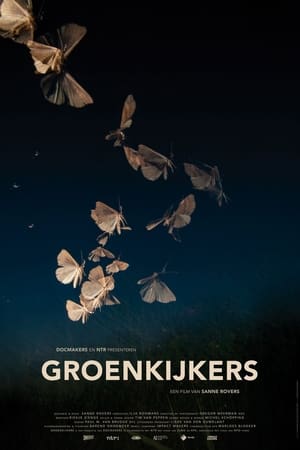
Groenkijkers
David Attenborough searches for the identities of preserved creatures inside a piece of Baltic amber that was given to him by his adoptive sister when he was twelve years old.
In 1908, amateur naturalist and pioneering filmmaker Percy Smith stunned early cinema goers with his footage of the juggling fly. Hailed as the father of Natural History film, Smith was a hugely influential visual pioneer, inventing many techniques that are still used today. Being both a genius and an eccentric, we follow his life from his earliest films, to the collapse of his house from his mould experiment to his ultimate suicide. We also meet Natural History icon Sir David Attenborough, who was so amazed by Smith’s films in the 1930s that they inspired him to get into natural history.
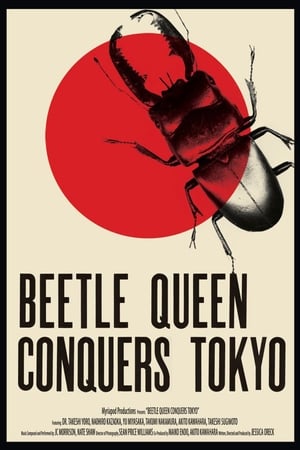
Untangling the web of cultural and historical ties underlying Japan's deep fascination with insects.
This documentary focuses specifically on insects. Giving you an unbelieveably up close and intimate view of the many unique secrets of the bug world. Answering scientific questions on how and why they have evolved certain bizarre adaptations, whilst using stunning imagery never seen before.
The courtship rituals of animals and plants are compared to those of contemporary society, with educational and frequently humorous results.
Satoshi Kuribayashi and his team filmed the insects for over an astonishing 430 days, resulting in breathtaking images and scenes from a still fairly unknown world. Watch a mantis sneak up on its prey and catch it with its razor sharp claws. Experience a deadly, thrilling wasp fight. Sit back and watch the world of the insects unfold before you like you have never experienced it before.
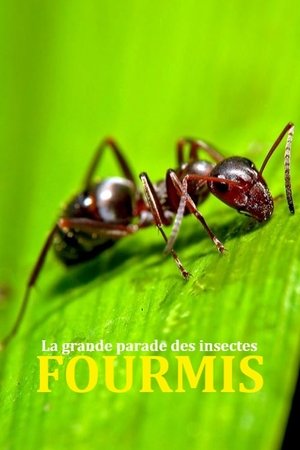
Ages before man proclaimed himself a superior being, the tiny ant had developed the art of agriculture — a practice which was later to be the backbone of human society.
Ant colonies are one of the wonders of nature: complex, organised… and mysterious. This programme reveals the secret, underground world of the ant colony, in a way that’s never been seen before. At its heart is a massive, full-scale ant nest, specially designed and built to allow cameras to see its inner workings. The nest is a new home for a million-strong colony of leafcutter ants from Trinidad. For a month, entomologist Dr George McGavin and leafcutter expert Prof Adam Hart capture every aspect of the life of the colony, using time-lapse cameras, microscopes, microphones and radio tracking technology. The programme explores how these tiny insects can achieve such spectacular feats of collective organisation. It also reveals the workings of one of the most complex and mysterious societies in the natural world – and shows the surprising ways in which ants are helping us solve global problems.
The Hidden World is a 1958 American science documentary film produced by Robert Snyder and narrated by Gregory Peck. The film is about insects. It was nominated for an Academy Award for Best Documentary Feature.
Before Apis is strong enough to fly, this tiny hardworking honeybee takes care of her hive and protects it. Follow her journey as she takes to the air!