Produced by the Army Pictorial Service, Signal Corps, with the cooperation of the Army Air Forces and the United States Navy, and released by Warner Bros. for the War Activities Committee shortly after the surrender of Japan. Follow General Douglas MacArthur and his men from their exile from the Philippines in early 1942, through the signing of the instrument of surrender on the USS Missouri on September 1, 1945. Preserved by the Academy Film Archive in 2013.
A European prince terrorizes the local peasantry while using his castle as a refuge against the "Red Death" plague that stalks the land.
A man of humble beginnings and honest intentions rises to power by nefarious means. Along for the wild ride are an earnest reporter, a heretofore classy society girl, and a too-clever-for-her-own-good political flack.
In ECLIPSE a child survivor wanders barefoot across a stunningly evocative landscape. Director Jason Ruscio expresses the profound loneliness of a decimated world through richly textured images that bring to mind the films of Andrei Tarkovsky – burned out interiors, hands grasping to hold each other, time-worn photographs and faceless soldiers in the snow. ECLIPSE is a remarkable meditation on the effects of war. Preserved by the Academy Film Archive in partnership with New York University Tisch School of the Arts Graduate Film & Television in 2016.
After being discredited as a coward, a 19th century seaman lives for only one purpose: to redeem himself. Preserved by the Academy Film Archive in partnership with Sony Pictures Entertainment in 2000.
"Patton" tells the tale of General George S. Patton, famous tank commander of World War II. The film begins with Patton's career in North Africa and progresses through the invasion of Germany and the fall of the Third Reich. Side plots also speak of Patton's numerous faults such his temper and habit towards insubordination.
While filing for a divorce, beautiful ex-stripper Roslyn Taber ends up meeting aging cowboy-turned-gambler Gay Langland and former World War II aviator Guido Racanelli. The two men instantly become infatuated with Roslyn and, on a whim, the three decide to move into Guido's half-finished desert home together. When grizzled ex-rodeo rider Perce Howland arrives, the unlikely foursome strike up a business capturing wild horses.
Mountain Music illustrates what happens when technology gets too advanced too soon. Preserved by the Academy Film Archive in 2012.
A Korean War vet returns to his job as a railroad engineer and becomes involved in a sordid affair with a co-worker's wife following a murder on a train.
A film's art director is in charge of the set, from conception to construction to furnishing. This short film walks the viewer through art directors' responsibilities and the demands on their talents. They read a script carefully and design a set to capture the time and place, the social strata, and the mood. They must be scholars of the history of architecture, furnishings, and fashion. They choose the colors on a set in anticipation of the lighting and the mood. Their work also sets styles, from Art Deco in the 20's to 30s modernism. Then it's on to the next project. Preserved by the Academy Film Archive in 2012.
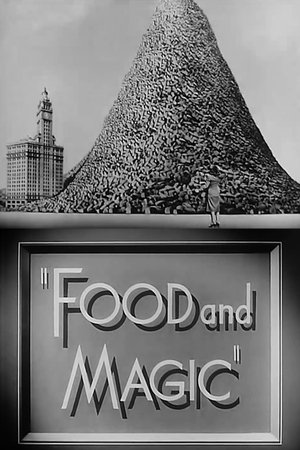
This 10-minute short documentary exploring the shifting state of the American poultry industry was preserved in 2015 from an original nitrate print. More information is available on the film's page in the National Film Preservation Foundation's website, where this version can be found featuring original music by Michael D. Mortilla.
An uptight English writer traveling to Crete on a matter of business finds his life changed forever when he meets the gregarious Alexis Zorba.
Londoner Harry Fabian is a second-rate con man looking for an angle. After years of putting up with Harry's schemes, his girlfriend, Mary, becomes fed up when he taps her for yet another loan.
Shot while LaPore was on a Fulbright Scholar Fellowship to Sri Lanka in 1993-1994. “I have made a film about travelling and living in a distant place which looks at aspects of daily life and where the war shadows the quotidian with a dark and rumbling step.”--LaPore. Preserved by the Academy Film Archive in 2014.
A kinetic film sketch designed to involve the viewers muscles. The rocky seaside cliffs near Stinson Beach, California, hold the wrecked carcass of a #52 pickup that is a rusting monument to Hot Leatherette. Preserved by the Academy Film Archive in 2005.
An mutoscope motion picture installation commissioned for the 86th anniversary of the Guggenheim museum. Later preserved and turned into a short film. Preserved by the Academy Film Archive in 2000.
Is it happening in the screening room or on the screen; in a snowstorm or inside; what isn't surrounding and what is? From filming Ann sewing, on a grey winter day. Preserved by the Academy Film Archive in 2016.
Adopting its title from a poem by Edna St. Vincent Millay, What’s Out Tonight Is Lost is an elegiac film sifting through the unrecoverable. The film is a reflecting pool where vision breaks up. Preserved by the Academy Film Archive in 2010.
Mary Henry ends up the sole survivor of a fatal car accident through mysterious circumstances. Trying to put the incident behind her, she moves to Utah and takes a job as a church organist. But her fresh start is interrupted by visions of a fiendish man. As the visions begin to occur more frequently, Mary finds herself drawn to the deserted carnival on the outskirts of town. The strangely alluring carnival may hold the secret to her tragic past.
Coming in the wake of a whole movement of wild, ecstatic, psychedelic films loaded with unchecked energy and abandon, Throbs demonstrates a remarkable subtlety and restraint, as Fred explores variations in loops and cycles, weaving unlikely combinations of found and original footage to envelop us in a free associative dream world. —Mark Toscano. Preserved by the Academy Film Archive in 2008.