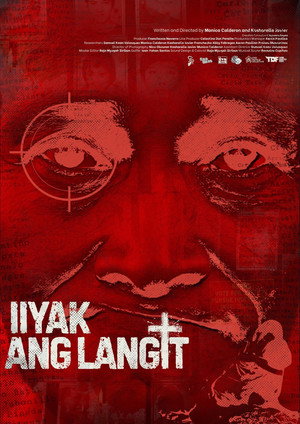
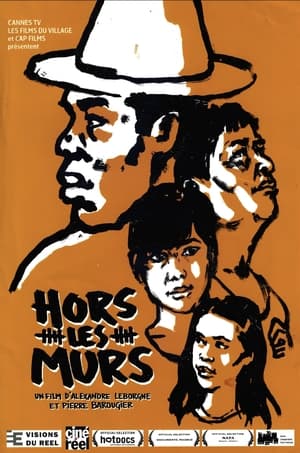
Filmed in a village of the indigenous Mandaya people, located in a mountainous area of southeastern Mindanao, the country's second largest island, the documentary portrays the struggle of the Communist Party of the Philippines and its armed wing, the New People's Army, for the rights of indigenous Filipino peoples and the environment, which are constantly under threat from landowners, large logging companies and agribusiness.
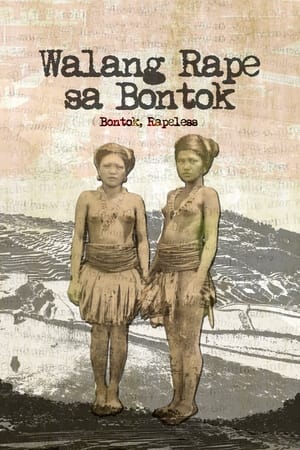
Two Filipina victims of sexual abuse search the truth behind the finding of a renowned anthropologist: that merely a few generations ago, the Bontok Igorot lived in what seems an unthinkable utopia—a rape-less society.
A musical docudrama about the brave and outstanding Women of Malolos to whom Jose Rizal addressed his famous letter in Feb 22, 1898.
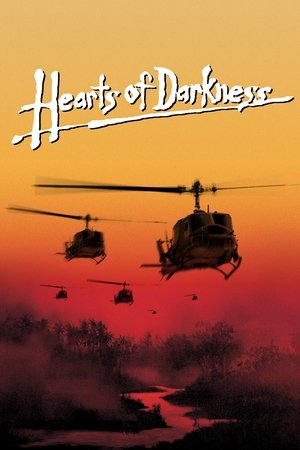
A chronicle of the production problems — including bad weather, actors' health, war near the filming locations, and more — which plagued the filming of Apocalypse Now, increasing costs and nearly destroying the life and career of Francis Ford Coppola.
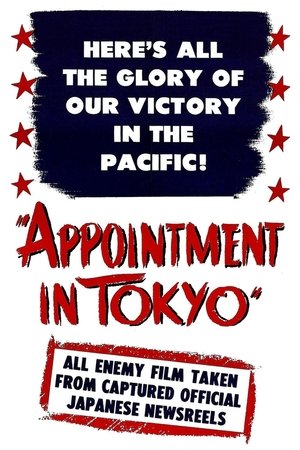
Produced by the Army Pictorial Service, Signal Corps, with the cooperation of the Army Air Forces and the United States Navy, and released by Warner Bros. for the War Activities Committee shortly after the surrender of Japan. Follow General Douglas MacArthur and his men from their exile from the Philippines in early 1942, through the signing of the instrument of surrender on the USS Missouri on September 1, 1945. Preserved by the Academy Film Archive in 2013.
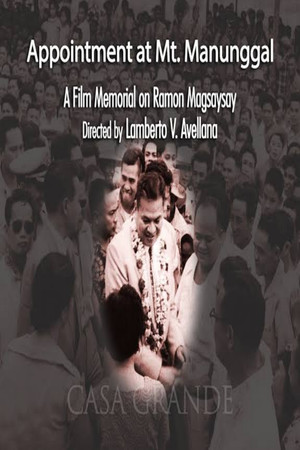
This documentary paints the life of former Philippine President Ramon Magsaysay (1953-1957), from being a simple mechanic, a wartime guerilla leader, and as president of the Philippines, leading up to his death in a plane crash in Mount Manunggal, Cebu.
Ever wanted to go on a backpacking adventure around the Philippines? Me and my mate James are heading to the Philippines to travel for 3 weeks, but does it live up to the hype?
Before he became one of the world's greatest boxers, Emmanuel "Manny" Pacquiao was a young boy living a hand-to-mouth existence, trying to survive from one day to the next. When he discovers his natural talent for boxing, he embarks on a brutal and intense journey that takes him from the mountains of the Philippines to the streets of Manila, and must risk everything to become a champion - for himself, his family, and his country.
In the final decades of the 20th century, the Philippines was a country where low-budget exploitation-film producers were free to make nearly any kind of movie they wanted, any way they pleased. It was a country with extremely lax labor regulations and a very permissive attitude towards cultural expression. As a result, it became a hotbed for the production of cheapie movies. Their history and the genre itself are detailed in this breezy, nostalgic documentary.
The documentary serves as a tribute to National Artist for Cinema Gerardo de Leon in celebration of his Centennial Year. “Salamat sa Alaala.” is inspired by the music composed by the late film director when he was a teenager playing background music for silent movies in Manila theatres. The video opens up with a capsulated history of the birth of the Filipino movies followed by a series of shots of veteran actresses, the academe and the young generation of filmmakers affirming his unique qualities as a world-class film figure. Then we unravel his private life as a family man. The documentary is one way of thanking him for his lasting legacy in the art form he left behind.
When Jennifer Laude, a Filipina trans woman, is brutally murdered by a U.S. Marine, three women intimately invested in the case--an activist attorney, a transgender journalist and Jennifer's mother)--galvanize a political uprising, pursuing justice and taking on hardened histories of US imperialism.
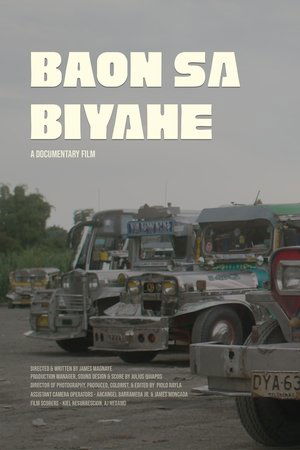
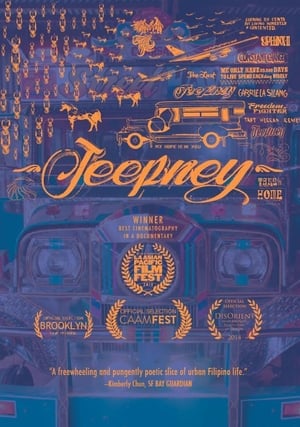
JEEPNEY visualizes the richly diverse cultural and social climate of the Philippines through its most popular form of mass transportation: vividly decorated ex-WWII military jeeps. The film follows jeepney artists, drivers, and passengers, whose stories take place amidst nationwide protest against oil price hikes that pressure drivers to work overseas to earn a living, far from their homes for years at a time. Lavishly shot and cut to the rhythm of the streets, JEEPNEY provides an enticing vehicle through which the rippling effects of globalization can be felt.
The story of Nick Joaquin, who only accepted the National Artist Award on the condition that the Marcos administration release a well-known writer who was being unjustly detained during Martial Law.
In 1975, soon after the end of the Vietnam War, Hoa Thi Le and Hue Nguyen Che fled the country on a small boat. After nine days at sea, they docked in the Philippines, where they were utilized as background extras for “Apocalypse Now.”
Growing up in Masbate Province in the Philippines, Jary is neglected and shunned since the moment of his birth for one reason-- his appearance. His older sister, Jessa protects Jary through his early years, then takes him in as a young teen, to raise him alongside her own two children in a fragile house on a hill. Jessa seeks out the medical care Jary has been denied since birth. And more, the support to begin his physical and emotional recovery. Every Day After is a 35-minute documentary film that provides a more nuanced look at the complexities of the healing process we don’t often see. And honors the invisible labor of a sister whose love and action make it possible for Jary to experience the everyday joys and struggles of growing up.
A five-year visual ethnography of traditional yet practical orchestration of Semana Santa in a small town where religious woodcarving is the livelihood. An experiential film on neocolonial Philippines’ interpretation of Saints and Gods through many forms of rituals and iconographies, exposing wood as raw material that undergoes production processes before becoming a spiritual object of devotion. - A sculpture believed to have been imported in town during Spanish colonial conquest, locally known as Mahal na Señor Sepulcro, is celebrating its 500 years. Meanwhile, composed of non-actors, Senakulo re-enacts the sufferings and death of Jesus. As the local community yearly unites to commemorate the Passion of Christ, a laborious journey unfolds following local craftsmen in transforming blocks of wood into a larger than life Jesus crucified on a 12-ft cross.
In the north of the Philippines lies the area of Banaue, known for its rice cultivation. Roger lives here in a small village. Roger is thirteen and has five brothers and sisters. As the oldest, he is responsible for the daily firewood. To get this, Roger sets off into the mountains every other day. At seven in the morning, they start. A truck takes Roger and his four friends out into the steep, forested slopes above the rice terraces. With them on the back of the truck are the 'scooters', homemade wooden scooters with which the firewood is driven down to the valley. Once they reach the top, they cut down smaller logs, chop them up and pack their scooters full of them. After this strenuous work, the great fun begins. On bumpy paths and at breakneck speed, they make their way back to the village. Races and tricks are part of the fun, of course.
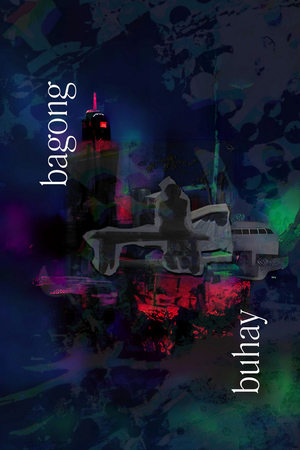
"Bagong Buhay" is a short experimental film that dispels the common belief that packing up and moving to a new place will magically improve one's quality of life. The film challenges this presumption by portraying two contrasting ways of life through objects and locations, encouraging viewers to think critically about the complexities of what makes a better life. In the Philippines, it's believed that relocating to a new area will bring about positive changes in one's existence. True satisfaction is a complex and multifaceted notion, and "Bagong Buhay" encourages us to ponder that relocating to a new place is not a surefire way to attain it.
Once upon a time, you were born. In the Philippines, there was no science education when you were a child. When they began to offer it in your adulthood, you leapt at the chance and studied harder than everyone else. You learned of kingdoms and species and genes and atoms. Science helped you to see the bigger world beyond. You studied so well, an American university paid you to keep studying with them, so you left. You gained mastery over the evolution of birds there, but you missed home the whole time. You lost your first wife and son to Science. So with degree in hand, you went back to your people. You found that they had burned their forests, and had exploded their seas. So you gave a new bird to your people; because, now you knew how to use it to save them. This was the piding. And the rest is the story of Oliver Carlos.
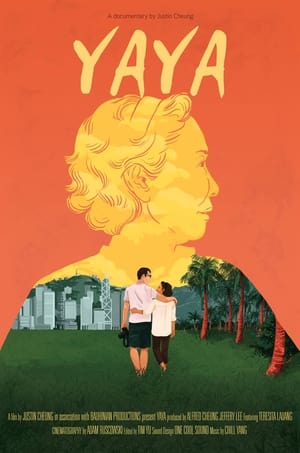
YAYA is a story about a filmmaker who explores the complex relationship between his family and the domestic worker who spent decades away from her family in the Philippines to raise his. This documentary is a tribute to all the domestic workers in Hong Kong, who has served as the backbone of Hong Kong's economy by unleashing a substantial female workforce into the economy and taken care of so many lives with love and care. You are all heroes in the hearts of the Hong Kong people. - Justin Cheung, the director