This short-form documentary focuses on the true story of Alfons Heck, who as an impressionable 10-year-old boy became a high-ranking member of the Hitler youth movement during World War II. The story is told in his own words. This film originally aired as part of the "America Undercover" series on HBO.
A documentary examining possible historical and modern conspiracies surrounding Christianity, the 9/11 terrorist attacks, and the Federal Reserve bank.
A video about Neo-Nazis originating in Sweden provides the starting point of an investigation of extremists' networks in Europe, Russia, and North America. Their propaganda is a message of hatred, war, and segregation.
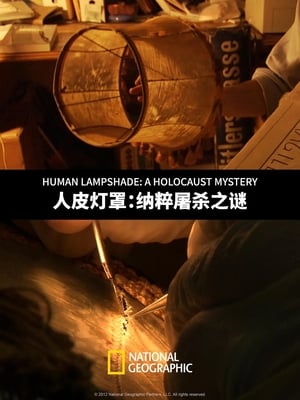
This story follows one man's quest to uncover the origins and reveal the mysteries of a possible Holocaust artifact some historians now say never existed: lampshades made of human skin. When the flood waters of Hurricane Katrina receded, they left behind a wrecked New Orleans and a strange looking lamp that an illicit dealer claimed was 'made from the skin of Jews.'
What would your family reminiscences about dad sound like if he had been an early supporter of Hitler’s, a leader of the notorious SA and the Third Reich’s minister in charge of Slovakia, including its Final Solution? Executed as a war criminal in 1947, Hanns Ludin left behind a grieving widow and six young children, the youngest of whom became a filmmaker. It's a fascinating, maddening, sometimes even humorous look at what the director calls "a typical German story." (Film Forum)
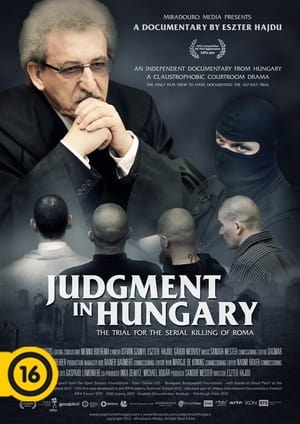
Hungary was the site of serial murders on ethnic basis. Over the course of one year, the murderers killed and seriously injured Roma children and adults. The state charged 4 men with committing the crime with racial motivation. This historical trial started March, 2011, and ended August, 2013 in Budapest. The 167 days of hearings was only documented continuously by our crew. We had exclusive permission to use multiple cameras in the court-room. The film is a classical chamber-drama, taking place in a small, claustrophobic court room, in the middle of Europe. What will be the outcome of the marathon, 3 year-long trial?
A documentary about the life of the actress Hildegard Knef.
In Third Reich, the abuse of drugs made commanders and soldiers feel invincible. The Führer himself took them on daily basis. This is the unbelievable story of the D-IX project and of methamphetamines, which, abundantly furnished to soldiers, changed the course of history.
They grew up under the Nazi regime. They pledged to give their lives for Hitler. They were fanatics who would not be stopped. They were the 20,000 teenagers who made up the 12th SS Panzer Division. Unleashed in France to halt the Allied invasion, they would sow terror and destruction in their wake. Historical colorized archives and a handful of survivors tell us this story.
The Front Show is a series of World War II era German military training films shown to German soldiers before being shipped off to the Eastern Front. They were directed by the veteran propagandist Fritz Hippler, best known for Der Ewige Jude.
Presents a unique and disturbing look at the rise of the Nazi party. The documentary, directed by Lutz Becker, attempts to remain as objective as possible, serving as a neutral observer of the years 1918 through 1933 in Germany. Via newsreel footage and clips of features from the era, the film offers a kaleidoscopic view of the many elements that fueled the rise of the Socialist Nationalist Party, including post-WWI poverty. Hitler occupies a central place in the documentary.
A documentary about the famous athlete and movie enthusiast who made Serbia's first sound film, Innocence Unprotected. The Nazi occupation of Belgrade prevented the film from gaining wider acclaim. Director Makavejev intersperses clips of the original film with interviews of surviving cast and crew members, as well as newsreel and archival footage.
Willem was an artist who lived openly as a gay man at a time when few did. Frieda was a well-connected musician who became the first woman to lead an orchestra. We learn of their early lives and the selfless decisions that informed their devotion to the anti-Nazi cause, often at great personal risk. The gentle revelation of these extraordinary lives is gradually revealed through archive footage, skillfully combined with photographs and interviews with experts, journalists and family members.
Florian Hartung and Dirk Pohlmann have reconstructed a previously unknown dimension of the collaboration between Nazis and the CIA in the Cold War. Drawing upon recently released documents, the film exposes for the first time a perfidious, worldwide net that reaches deep into the power structures of the Federal Republic of Germany. Lending their authority to the fact-finders’ mission are high-ranking statesmen, journalists and historians.
A British-produced documentary about the bizarre life of Nazi SS officer Otto Rahn, focused on his search for the mystical Holy Grail of Christ.
This documentary recounts the life and work of one of most famous, and yet reviled, German film directors in history, Leni Riefenstahl. The film recounts the rise of her career from a dancer, to a movie actor to the most important film director in Nazi Germany who directed such famous propaganda films as Triumph of the Will and Olympiad. The film also explores her later activities after Nazi Germany's defeat in 1945 and her disgrace for being so associated with it which includes her amazingly active life over the age of 90.
During the Nazi regime, there was widespread persecution of homosexual men, which started in 1871 with the Paragraph 175 of the German Penal Code. Thousands were murdered in concentration camps. This powerful and disturbing documentary, narrated by Rupert Everett, presents for the first time the largely untold testimonies of some of those who survived.
Surviving Eugenics is a documentary about the history and ongoing significance of eugenics. Anchored by survivor narratives from the province of Alberta in Canada, which had eugenic sterilization actively in place until 1972, Surviving Eugenics provides a unique insiders' view of life in institutions for the 'feeble-minded', and raises broader questions about disability, human variation, and contemporary social policies.
Co-produced by the U.S. Holocaust Memorial Museum Research Institute, this Academy Award-winning documentary relates the harrowing story of Gerda Weissmann Klein and her journey of survival and remembering both before and after the war.
Everyone knows the public archive footage of Hitler. But most of it is silent. What was he saying? Special computer technology enables us for the first time to lip-read the silent film.