The location of the sanctuary of Artemis at Amarynthos has long remained one of the last great archaeological enigmas of Ancient Greece. This vast Artemision is mentioned in several ancient texts, which even go so far as to specify the distance that separates the sanctuary from the ancient city of Eretria. But despite the efforts of numerous scientific expeditions since the end of the 19th century, no trace of the sanctuary or its temple has ever been found. In the 1960s, a young archaeologist - Denis Knoepfler - set out in search of the lost temple of Artemis. His investigations soon led him into the hinterland of the island of Euboea, well beyond the limits of previous expeditions. It would take five decades of searching, unshakeable faith and moving tons of earth to finally unravel the mystery. In 2017, a tenacious Swiss-Greek team of archaeologists formally identified the sanctuary of Artemis, where Denis Knoepfler had predicted it lay buried.
Move over, King Tut: There's a new pharaoh on the scene. A team of top archaeologists and forensics experts revisits the story of Hatshepsut, the woman who snatched the throne dressed as a man and declared herself ruler. Despite her long and prosperous reign, her record was all but eradicated from Egyptian history in a mystery that has long puzzled scholars. But with the latest research effort captured in this program, history is about to change.
Wolves have been demonized for centuries, blood thirsty beasts haunting our nightmares. We were determined to dispel this myth and show the true nature of wolves. Compassionate family animals, both playful and affectionate. For six years in a tented camp in the wilderness of Idaho, we lived among a pack of wolves, listening to them, earning their trust.Now in "Living With Wolves," we share more of the story of The Sawtooth Pack, first told in our two-time Emmy Award-winning documentary, Wolves at Our Door. Our own lives, brought together by a devotion to wildlife, were forever changed by these elusive, intelligent animals who accepted us. Overcoming forest fires, marauding mountain lions and sub-zero winters, we share with you a heart-warming and unique partnership of human and predator, built on trust and defying the storm of controversy surrounding the wolf.
The word panchão was first heard in Macao. From the Chinese pan-tcheong or pau-tcheong, dictionaries define it as a Macanese regionalism also known as China cracker. Who inhabits the ancient IEC Long firecracker factory?
A heartwarming story about a precautious, 8-year-old girl exploring the world with her globetrotting father and growing up in an unconventional family.
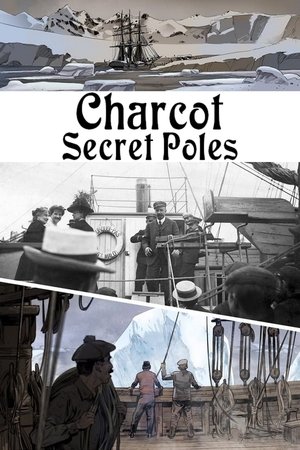
The adventures and exploits of Jean-Baptiste Charcot (1867-1936), an intrepid scientist and explorer who laid the foundations of modern oceanography.
On December 21, Nicolas Vanier will set off with his pack on a new expedition called L’Odyssée sauvage (The Wild Odyssey). He will travel nearly 6,000 kilometers to connect the Pacific Ocean to Lake Baikal, crossing Manchuria, Mongolia, and part of southern Siberia. The documentary follows the preparations for this journey.
A man steadily bashes through the snow. He disappears and the trees, covered in white, shift and show a beautiful array of hidden colors. A poetic, meditative short film about letting go of the past and embracing the unknown future.
L’aube de l’humanité
In 2011, a catastrophic nuclear disaster forced the immediate evacuation of Fukushima, Japan. This documentary follows an international team of scientists using hundreds of cameras to track and investigate the astonishing wildlife that now thrives in this deadly radioactive environment.
The Faraway Nearby follows the tragic life of pioneer physicist Joseph Weber, whose pursuit of gravitational waves takes him on a dizzying journey from the height of acclaim to the depths of despair and disdain when he breaks the cardinal rule of science and clings to his ideas though his results can't be duplicated. Physicists, artists, and other creatives explore the emotional side of discovery and question whether the risk is worth the journey.
The face of stone. About the natural beauty of Ural gemstones, about the unparalleled beauty of pieces and jewellery made by Russian master jewellers. Malachite was used in the furnishing of the lounge room at the Winter Palace in St. Petersburg, which is why it is called the Malachite Room. Also featured are malachite items made using the complex technique of Russian mosaic. This semi-precious stone became widely used by craftsmen after the discovery of huge malachite deposits in the Demidov mines in the Urals.
The complex engineering challenges that make re-entry into the earth's atmosphere so dangerous. Scientists have labored for years to bring a crew safely home in what is essentially a meteorite, wrapped in a cocoon of fire, hurtling towards earth six times faster than the fastest bullet. Scientific experts from NASA explain the significance of Columbia's events as they unfolded, offer insights into what may have caused them and how those key events contributed to the shuttle’s ultimate destruction.
In northern Peru, the unprecedented archaeological discovery of the largest known mass child sacrifice in the world opens the doors to the kingdom of Chimor. This international archaeological investigation carried out like a criminal investigation reveals the mysteries of the last civilization of the Andes before the arrival of the Incas.
An illuminating look inside the lives of the Grucci family, whose Long Island-based fireworks business has been lighting up night skies around the world with spectacular displays since the 1800s.
How have the changing views on children been reflected in their representation in art? From Baby Jesus to the first photographic portraits, an exploration of six centuries of art history through the prism of childhood.
Known for his spectacular pyrotechnic displays, Chinese artist Cai Guo-Qiang creates his most ambitious project yet: Sky Ladder, a visionary, explosive event that he pulls off in his hometown in China after 20 years of failed attempts.
Documentary that takes a scientific and historical look at the story of Moses. Uses archaeological evidence from the stables of Ramses II to little-known Egyptian texts to seek answers to questions about Moses and his origins.
The film presents compelling evidence that Altlantis wasn't so far away after all, but what it omits is just as compelling. Although Plato’s account of Atlantian masonry, consisting of red, white and black stones, was a visually perfect match for the modern walls of the Minoan excavation site favored by the film, and his account of a sea made impassable by small islands of mud could, in fact, be a description of the rafts of pumice left by the catastrophic eruption of an ancient volcano there, little mention is made of Plato's specific account of where Atlantis was or the common root that links Atlantis to the Atlantic ocean. Also omitted is Plato's chronology placing the sinking of Atlantis in the same time frame as the end of the last ice age which caused the inundation of huge expanses of once fertile lands. Is "Atlantis: The Evidence" a thinly disguised example of Eurocentrism in the media? Watch Discovery: Atlantis for a more comprehensive view on an age-old debate.
Documentary of an underwater archaeological expedition led by French explorer Franck Goddio that explores the sunken ancient city of Alexandria, Egypt, where Cleopatra made her home over 2,000 years ago. The underwater exploration team uses advanced scientific methods to locate the remains of Cleopatra's sunken palace as well as the entire submerged Royal Quarters in the harbor of modern Alexandria. Also uses re-enactments, computer graphics and animation to present a picture of Cleopatra's life in ancient Alexandria.