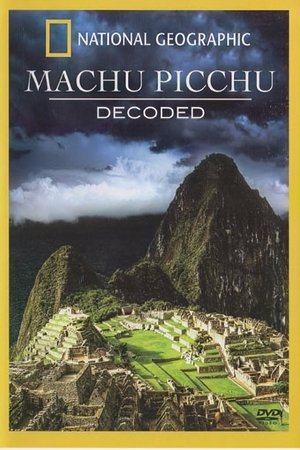
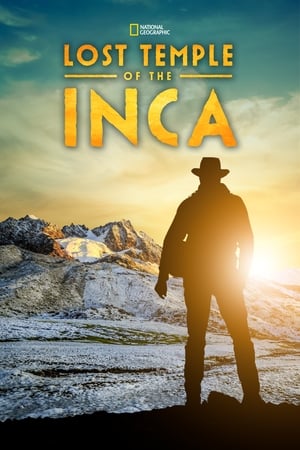
Deep in the Andean mountains lays a mysterious ruin named Machu Picchu. For 400 years it sat abandoned on its misty cliff, the quintessential lost city in the jungle. Rediscovered in 1911, it contained no written records or carvings, nothing that could shed light on its history. For a century since, it has defied the endless scores of visitors and scientists who attempted to understand its purpose. Who were the mysterious people who built it and why did they build it here? Today an international team of archeologists, engineers and scientists are finally piecing together the clues. Together they are discovering astonishing new burials, revealing the intricacies of its ingenious engineering and finally decoding the secrets of Machu Picchu.
The Shipibo-Konibo people of Peruvian Amazon decorate their pottery, jewelry, textiles, and body art with complex geometric patterns called kené. These patterns also have corresponding songs, called icaros, which are integral to the Shipibo way of life. This documentary explores these unique art forms, and one Shipibo family's efforts to safeguard the tradition.
This documentary examines ayahuasca shamanism near Iquitos (a metropolis in the Peruvian Amazon), and the tourism it has attracted. The filmmakers talk with two ayahuasqueros, Percy Garcia and Ron Wheelock, as well as ayuahuasca tourists and local people connected with the ayahuasca industry.
In the mountains of Peru, an environmental scientist discovers ancient artifacts submerged beneath the headwaters of the Amazon; his findings could save this sacred landscape from mining devastation.
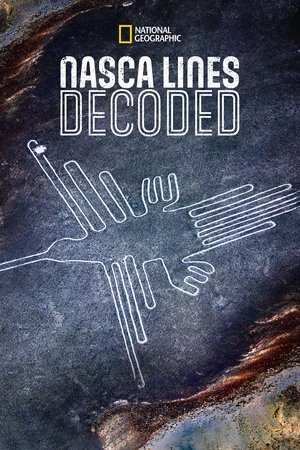
They are striking works of art by any standard: but what purpose did they serve? Some of the theories put forward suggest that the lines were ancient running tracks, runways for aliens, and even a giant astronomical calculator. But after decades of misunderstanding, modern archaeology may finally have an answer to the puzzle of the Nasca lines.
Join Dance Moms stars, Kendall Vertes, Chloe Lukasiak, and Kalani Hilliker as they perform on The Irreplaceables Tour. Watch along as the girls tour around Peru and perform their world-famous dances for eager fans.
In a remote Peruvian city, lives Honorata Vilca, an illiterate woman of Quechua descent who sells candies more than 20 years ago, with the rain will cry to the sky itself.
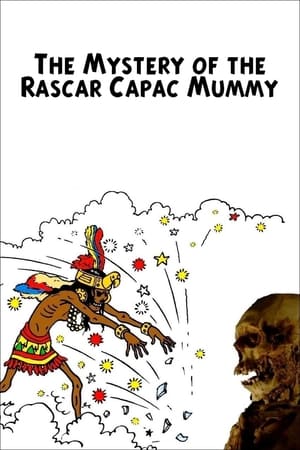
Rascar Capac, the sinister creature featured on Hergé's album The Seven Crystal Balls (1948), has left its mark on many generations of readers. To draw it, the Belgian cartoonist was probably inspired by a mummy exhibited in the first pre-Columbian exhibition organized by the Brussels Cinquantenaire Museum in 1923. Two intrepid archaeologists embark on a fascinating journey to reconstruct the story of the mysterious mummy.
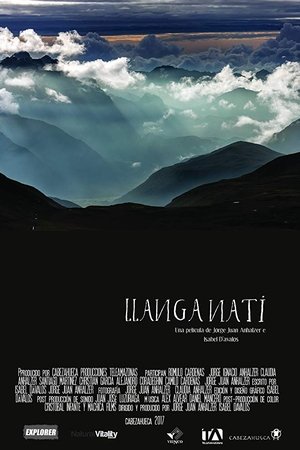
The documentary follows an expedition led by the adventurer and photographer Jorge Juan Anhalzer, in the heart of the Llanganati, in search of the enormous Inca treasure hidden in the Ecuadorian mountains.
A few decades after the destruction of the Inca Empire, a Spanish expedition led by the infamous Aguirre leaves the mountains of Peru and goes down the Amazon River in search of the lost city of El Dorado. When great difficulties arise, Aguirre’s men start to wonder whether their quest will lead them to prosperity or certain death.
Don Emilio is a humble, 63-year-old man who lives in the Amazon rainforest, seven miles from the city of Iquitos, Peru. For all of his adult life he has worked as a curandero and vegetalista, a traditional healer. He estimates that in his career he has treated more than 2,500 clients. Through the camera lens of anthropologist Luis Eduardo Luna, Don Emilio tells us about his practice, his beliefs, his community, and his life. He shows us how he prepares ayahuasca and other herbal medicines. Finally, we see Don Emilio treat a man who has come to him for help, and hear from a poor woman who has brought her infant son for medical care.
The true story of Joe Simpson and Simon Yates' disastrous and nearly-fatal mountain climb of 6,344m Siula Grande in the Cordillera Huayhuash in the Peruvian Andes in 1985.
Exploration of the way of life of the Q’eros Indians of Peru, who have lived in the Andes for more than 3,000 years.
James, giving himself 12 months before he has "a license to kill himself," sets off to the Amazon rainforest with hopes of finding a shaman who can save his life.
Women have always sought ways to terminate unwanted pregnancies, despite powerful patriarchal structures and systems working against them. This film provides a historical overview of how church, state and the medical establishment have determined policies concerning abortion. From this cross-cultural survey--filmed in Ireland, Japan, Thailand, Peru, Colombia, and Canada--emerges one reality: only a small percentage of the world's women has access to safe, legal operations.
Back from war in Afghanistan, a young British soldier struggling with depression and PTSD finds a second chance in the Amazon rainforest when he meets an American scientist, and together they foster an orphaned baby ocelot.
A bedridden war veteran relives his experiences endured in the battles of Tacna and Arica between Chile and Peru, revealing untold secrets and mysteries that history never told.
Oases are more than fairytale places in the desert sand. Amidst the stony heights of the Andes, the endless expanse of the Pacific, or the hectic concrete sausages of Mumbai, islands of life flourish. In breathtaking shots, the documentary explores the phenomenon of oases – and the magical places in the Saharan sand are of course included.
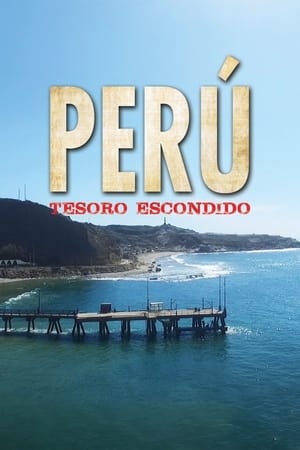
Peru is a country steeped in cultural traditions that stretch back more than 1,000 years. But it's also a land of surprising natural riches.
A documentary which shows the struggle of many women surrounding the Miss Universe 1982 pageant hosted by Peru. The government invested a large sum of money in this event, during a time the country suffered an acute political, economic and social crisis. On the other hand, we can appreciate the denigrating use of the women's image in publicity.