A ritual of grids, reflections and chasms; a complete state of entropy; a space that devours itself; a vertigo that destroys the gravity of the Earth; a trap that captures us inside the voids of the screen of light: «That blank arena wherein converge at once the hundred spaces» (Hollis Frampton).
Avant-garde composer John Cage is famous for his experimental pieces and "chance music" but temporarily branched into video in 1992 with this art film about meaningless activity. The work is composed of two segments that are supposed to be played simultaneously: "One 11" contains the artistic statement, and "103" is a 17-part orchestral piece. Also included is a revealing documentary about Cage and director Henning Lohner.
Basically an artist is also a terrorist, the protagonist thinks in an unguarded moment. And if he is a terrorist after all, then he might just as well be one. Not an instant product, but an experimental feature in which diary material is brought together to form an intriguing puzzle.
Sarah is a debt collector who lives among the inhabitants of the village of Guimbal on the island of Panay. She wants to find the young man who appeared to her in a dream and goes to the island of Negros. Here, as she interacts with the inhabitants, Sarah continues her search, gathering memories of life and war, dreams, myths, legends, songs and stories that she takes part in and at times revolve around her. She is the daughter of an ancient mermaid, a revolutionary, a primordial element, a virgin who was kidnapped and hidden away from the sunlight. “The film is a retelling of fragments of the American occupation. Dialogue, shot in the Hiligaynon language, is not translated but used as a tonal guide and a tool for narration. Using unscripted scenes shot where the main character was asked to merely interact with the villagers, I discard dialogue and draw meaning from peoples’ faces, voices, and actions, weaving an entirely different story through the use of subtitles and inter-titles.”
A day in the city of Berlin, which experienced an industrial boom in the 1920s, and still provides an insight into the living and working conditions at that time. Germany had just recovered a little from the worst consequences of the First World War, the great economic crisis was still a few years away and Hitler was not yet an issue at the time.
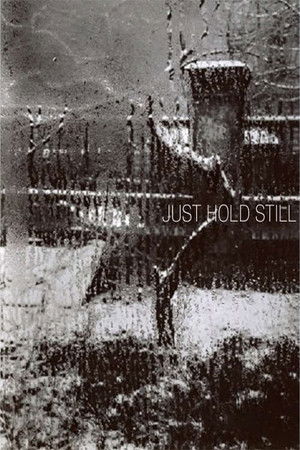
In his New York City landscape, Cohen finds inspiration in disturbance. Looking to life for rhythm and to architecture for state of mind, he locates simple mysteries. Just Hold Still is comprised of an interconnected series of short works and collaborations that explore the gray area between documentary, narrative, and experimental genres.
An experimental film from Jirí Lehovec, mixing the sound process with animated rhythms.
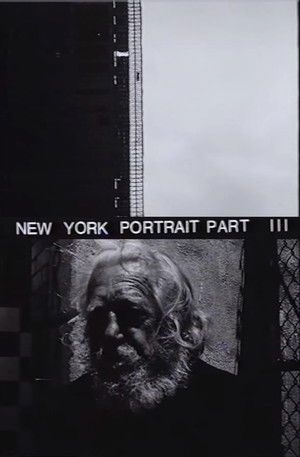
"[Hutton’s] latest urban film, New York Portrait, Chapter III, takes on a unique tone in relation to Hutton’s ongoing exploration of rural landscape. The very fact that Hutton is dealing with older footage, with archives of memory more than immediacy, gives it a different texture than his earlier New York films. Hutton always found the presence of nature in the city, not only in his many shots of sky and vegetation, but also in the geometry and texture of the city itself, which seemed to project an independence from the human." (Tom Gunning)
On the island of Tanna, a part of Vanuatu, an archipelago in Melanesia, strange rites are enacted and time passes slowly while the inhabitants await the return of the mysterious John.
This documentary aims to register this unknown side of James Joyce: His Greek Notebooks. Trieste. Bloomsday, 2013. Dance in slow motion, accompanied by text. By deconstructing the body, we turn it into a memory: of the body, of life, of texts. The biographical references to Joyce and Mando Aravantinou, combined with the diagonal slicing of the image, cancel the realism of the landscape, including that of the Narrator’s space/study. As a culmination, Joyce’s letter “A request for a loan in Greek” functions as a timely denunciation. Various routes through cities, such as Trieste, London, New York, and Athens; languages such as Greek and English. In addition to the primal myth of Ulysses, there is another issue: Greek is “the language of the subject of Ulysses”
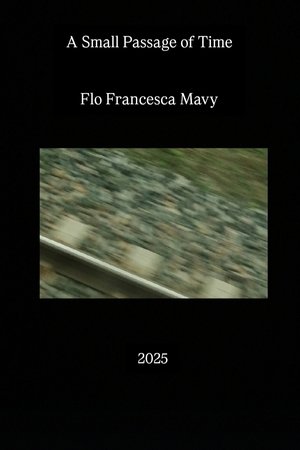
An experiment with three dimensions in a moment of clarity: the focus of the camera's lens towards the present, the speed of the train and the material world distorted by the movements of the train.
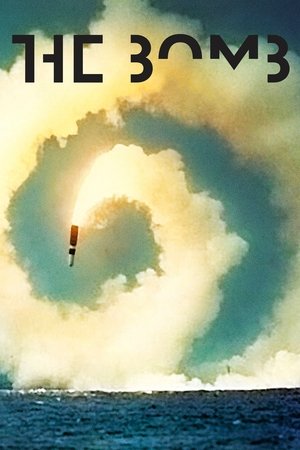
Filmmakers use archival footage and animation to explore the culture surrounding nuclear weapons, the fascination they inspire and the perverse appeal they still exert.
Experimental short film on the excitement and rush of a day trip
Founded in the second half of the 1990s, the experimental film association L'Etna witnessed the transition from film to digital cinema. Its premises, located in the heart of Paris, were unable to withstand gentrification.
This cine-portrait of New York City uses digital effects to turn the countless riders of the subway system into living, breathing paintings.
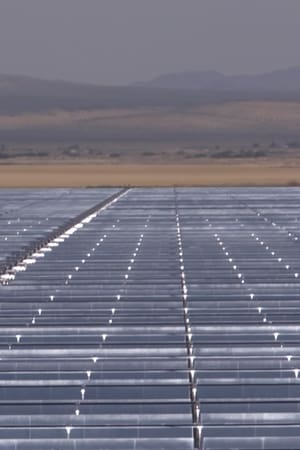
In the Mojave Desert, fields of solar panels follow the sun’s daily journey in perfect synchronicity.
Time to Remove Superman It is fragmentarily a story of death and it can also be connected to the opposite - birth. When I did research for this work, what was really interesting was an article read that 'We came from dirt and we go back to dirt' is everywhere in all religions and philosophies of all cultures. And I found that sentence and thought over different things and I reached it was meant to be only that way. Regardless of primitive or modern society, religions or philosophies couldn't help but think human body is rotten away and it is cremated and made dirt. We know the process but we haven't seen that. I thought it would be meaningful if I made that out to show. We've watched a mummy disappearing in a movie using CG but I thought I could visually display a message that things we cherished or in which knowledge was contained were made dirt or on the other way, they had been dirt before they came to us.
Rapidly changing images of natural objects, scenery, animals, plants, and people flicker, flash, tumble, and cascade across the screen.
100% comprised of found footage, this is a meditation on the filmmaker's relationship with herself, others, and how she is perceived by both parties. Showing the filmmaker at various stages of her life, this short seeks to visualize the embarrassing ordeal of being known when you're at your most vulnerable.
One of the major works by South Korean feminist film collective Kaidu Club, this short is a dynamic, idiosyncratic, and mosaic-like portrait of Korean life, culture, and people who dream of a unified North and South.