Peter Snow presents highlights from today's three deep-sea dives around the world. In 2002 BBC organized three concurrent dives , first in Monterey Bay where unmanned submersible is lowered into underwater canyon which is over mile deep. Second dive is in Grand Cayman where submersible Atlantis will explore life at the spectacular Cayman Wall , Kate Humble reports . During the dive, the crew used bait to attract a deep-water giant, the six-gill shark. Third dive takes place in middle of the Atlantic 1200 miles west of Portugal, which is also deepest of the three dives, divers will descent in Russian submersible Mir from research vessel Keldish and the Mir will dive in the bottom of the ocean in 2300 metres .
Not your normal shark documentary and I have watched many. Never have I felt so emotional and touched by watching one. From the initial incident to the devastating after affects, this shows one persons passion and genuine love for these beautiful animals. Honestly a beautiful documentary with twists and turns unseen before in this genre. Respect and love to you Jimmy I know you will be in Guadalupe in 2023.
Takes viewers inside the homes of people seriously affected by increasingly ferocious floods hitting the UK. With one in six British homes now at risk of flooding, residents across the country count the cost, both financial and mental, to their communities affected by flooding over the last decade.
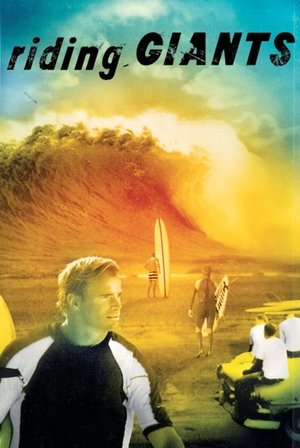
Riding Giants is story about big wave surfers who have become heroes and legends in their sport. Directed by the skateboard guru Stacy Peralta.
Follow along as “budding YouTuber” Jack Carlin makes the hilariously unnecessary trip to the UK (over 3,000 miles) for a single day in order to compete in an animation quiz.
There is a mystery there and the answer lies somewhere between Bermuda, Puerto Rico and Miami. Hundreds of boats and planes have disappeared in the ocean with little or no trace at all. Most of these cases can be explained quite easily by human error or bad weather. But there are some that defy all explanation. Theories abound on these causes: Aliens, massive gas eruptions and freak waves. The documentary reveals that the boats and planes face a real danger in a triangle, but the true threat is often as strange as the wildest theory.
The Smog of the Sea chronicles a 1-week journey through the remote waters of the Sargasso Sea. Marine scientist Marcus Eriksen invited onboard an unusual crew to help him study the sea: renowned surfers Keith & Dan Malloy, musician Jack Johnson, spearfisher woman Kimi Werner, and bodysurfer Mark Cunningham become citizen scientists on a mission to assess the fate of plastics in the world’s oceans. After years of hearing about the famous “garbage patches” in the ocean’s gyres, the crew is stunned to learn that the patches are a myth: the waters stretching to the horizon are clear blue, with no islands of trash in sight. But as the crew sieves the water and sorts through their haul, a more disturbing reality sets in: a fog of microplastics permeates the world’s oceans, trillions of nearly invisible plastic shards making their way up the marine food chain. You can clean up a garbage patch, but how do you stop a fog?
This documentary follows oceanographer Sylvia Earle's campaign to save the world's oceans from threats such as overfishing and toxic waste.
What was once the "Island of Calm" is now on the verge of collapse. Multiple alarm bells are starting to ring. Is this model of tourism sustainable? Could Mallorca become a reference for so many other places suffering from the same problem?
An ecological drama/documentary, filmed throughout the globe. Part thriller, part meditation on the vanishing wonders of the sub-aquatic world.
Documentary about the life of explorer Jacques Cousteau.
Over 2 billion people on earth eat insects for protein. The Gateway Bug explores how changing daily eating habits can feed humanity in an uncertain age, one meal at a time.
Jellyfish blooms are making headlines around the world. This is due to the damage they cause to tourism, fishing and our health. How can these creatures, which are over 98% water and have no shell, skeleton or brain, expand so rapidly? Although this is a normal stage in the life cycle of these gelatinous animals, we have to admit that blooms have become much more frequent and massive in recent decades. We're even witnessing jellyfish populations appearing in more and more regions where fish have been replaced by them, such as off the coast of Namibia, in the Black Sea, in the Sea of Japan and in certain areas of the Baltic Sea. What causes this? Why has the role of jellyfish in the ocean been underestimated, even though they outlived the dinosaurs? Are jellyfish on their way to dominating the oceans as they once did? What if they were to be the only ones left?
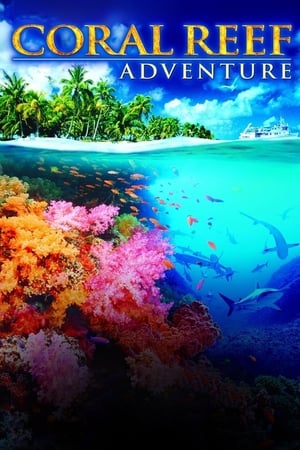
The Indonesian archipelago in the Indo-Pacific Ocean comprises thousands of islands, atolls and the largest concentration of coral reefs in the world. This rich and varied environment is a product of a unique set of natural circumstances. The equatorial sun powers ocean currents among the tiny dots of land. Where the archipelago meets the western tip of New Guinea an intersection of ocean currects creates perhaps the world's richest reefs - in the region of the Rajah Ampat Islands. A coral reef houses a myriad of colors, shapes and patterns: from the bulb tentacle anemone which protects, and in turn is protected by, the brightly coloured clownfish; to the multi-branched gorgonian, home of the tiny pygmy seahorses.
THE LONELIEST WHALE is a cinematic quest to find the “52 Hertz Whale,” which scientists believe has spent its entire life in solitude calling out at a frequency that is different from any other whale. As the film embarks on this engrossing journey, audiences will explore what this whale’s lonely plight can teach us — not just about our changing relationship to the oceans, but to each other. Executive Produced with Leonardo DiCaprio and Adrian Grenier.
Voyages au centre de la Terre : Dans les pas de Jules Verne
This underwater ballet is an ecological story depicting our paradoxical relationship with plastic. Bakelite launched the #SickOfPlastic campaign from On Est Prêt, along with the Surfrider Foundation, Break Free from Plastic and the Resilient Foundation. Photography was directed by Jacques Ballard, a specialist in underwater cinematography.
The largest predator on the planet, the sperm whale, is your host for an amazing exploration of the final frontier – the world at the bottom of the ocean. From the makers of the Walking With series comes this incredible marine tour, in which you'll witness a rarely seen world of hidden mountain ranges, majestic canyons, volcanoes and the beautiful and often deadly creatures that inhabit the deep sea.
Blue Carbon - Nature's Superpower is a documentary that uses music and science to portray perhaps the best weapon in the fight against climate change.
From the Black Earth is a collaboration between Bristol based company Cables and Cameras, and a local farmer Humphrey Lloyd. Employing both lucid speakers and poetic camera work, the film poses stark questions such as; why does food poverty exist in a nation of plenty, and why are people of colour so under represented not only in our countryside and farms, but in the environmental movement more broadly? By giving a platform to people of colour who are connecting with nature and working the land, this short documentary starts to unpick these questions...