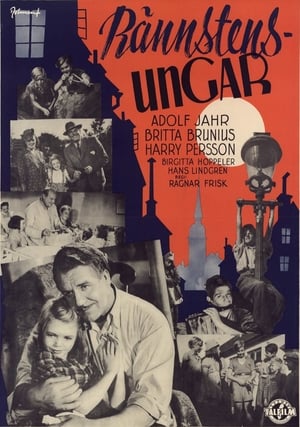
An artist returning from years abroad takes the identity of his dead valet and gets married, but then there are complications.
The Kiss by Gustav Klimt is one of the most recognised and reproduced paintings in the world. It is perhaps the most popular poster on student dorm walls from Beijing to Boston. Painted in Vienna around 1908, the evocative image of an unknown embracing couple has captivated viewers with its mystery, sensuality and dazzling materials ever since it was created. But just what lies behind the appeal of the painting – and just who was the artist that created it? Delving into the details of real gold, decorative designs, symbolism and simmering erotica, a close study of the painting takes us to the remarkable turn of the century Vienna when a new world was battling with the old.
Leonardo da Vinci is acclaimed as the world’s favourite artist. Many TV shows and feature films have showcased this extraordinary genius but often not examined closely enough is the most crucial element of all: his art. Leonardo’s peerless paintings and drawings will be the focus of Leonardo: The Works, as EXHIBITION ON SCREEN presents every single attributed painting, in Ultra HD quality, never seen before on the big screen. Key works include The Mona Lisa, The Last Supper, Lady with an Ermine, Ginevra de’ Benci, Madonna Litta, Virgin of the Rocks, and more than a dozen others.
For the first time in history the Royal Academy of Arts in London, in collaboration with the Museum of Fine Arts in Boston, is bringing together Lucian Freud’s self-portraits. The exhibition will display more than 50 paintings, prints and drawings in which this modern master of British art turned his unflinching eye firmly on himself. One of the most celebrated painters of our time, Lucian Freud is also one of very few 20th-century artists who portrayed themselves with such consistency. Spanning nearly seven decades his self-portraits give a fascinating insight into both his psyche and his development as a painter, from his earliest portrait painted in 1939 to the final one executed 64 years later. When seen together, his portraits represent an engrossing study into the dynamic of ageing and the process of self-representation. This intensely compelling exhibition creates a unique opportunity for EXHIBITION ON SCREEN to reveal the life’s work of a master in one show.
Orientalism is a literary and artistic movement born in Western Europe in the 18th century. Through its scale and popularity, throughout the 19th century, it marked the interest and curiosity of artists and writers for the countries of the West (the Maghreb) or the Levant (the Middle East). Orientalism was born from the fascination of the Ottoman Empire and followed its slow disintegration and the progression of European colonizations. This exotic trend is associated with all the artistic movements of the 19th century, academic, romantic, realistic or even impressionist. It is present in architecture, music, painting, literature, poetry... Picturesque aesthetics, confusing styles, civilizations and eras, orientalism has created numerous clichés and clichés that we still find today in literature or cinema.
Born on March 25, 1840, Gustave Guillaumet discovered Algeria by chance when he was about to embark for Italy. Over the course of his ten or eleven trips and extended stays, he established a familiarity with this space. Traveling through the different regions from north to south, he never ceases to note the differences. He is also the first artist, apart from Delacroix's Women of Algiers, to penetrate into female interiors and reveal the reality, far removed from the harem fantasies that reigned in his time. Fascinated by the country, its deserts and its inhabitants , going so far as to live like the Algerians, Gustave Guillaumet devoted his life and his painting to this country, breaking with the colorful and exotic representations of the time. The painting The Famine in Algeria, restored thanks to exceptional fundraising, was dictated by the events of the years 1865-1868, and well illustrates his knowledge of the country, in a manner that is at once demanding, sensitive and serious.
The story of the secret of self-creativity, the loneliness of the soul, the meridians of con-sciousness and the scope of man. Ilmārs Blumbergs (1943-2016) is a concept in life than can be classically proven if we analyze his work in set design, poster art, painting and multimedia work. The personality of Blumbergs, however is a shifting and intangible material which ensures superior value, wonderfulness and intimacy to all that he created. Those who analyze his art and world perceptions, recognize the work as seeming to come from antiquity, but it can never be catalogued or recorded in bookkeeping. How fortunate that it also cannot be consumed.
A San Francisco couple travels to France in search of Pablo Picasso.
Pavel, an emotionally volatile and socially alienated young man, sets off across Europe in search of his idol, the enigmatic painter Arnaud. Desperately lonely and adrift, Pavel tries to adhere to the host of characters he meets along the way.
This docudrama takes us on a journey through Nikolai Astrup's life and the inspiration behind some of his most famous paintings until his early death in 1928.
A car electrician, Charis, spends all his money on tailors in order to give the appearance of a "lord". He constantly fights with his brother, Vasilis, who is also a day laborer (painter), saddled with all the joint expenses of the house. Charis believes that his looks will someday attract a rich wife and thus change his life and solve all his problems. Martha, however, the wealthy daughter of the shipowner Karapezis, falls in love with and marries his brother Vasilis (after he saved her life) without regard for her father's opinion or Vasilis' lack of money.
An art instructor and an English teacher form a rivalry that ends up with a competition at their school in which students decide whether words or pictures are more important.
An emotionally fragile older woman embarks on an ill-fated love affair with a handsome young artist while traveling through Mexico's Yucatan peninsula...
Can Schalcken save his love, Rose, from the clutches of a ghastly suitor before it is too late?
With his vivid oil paintings, Albert Anker captured Swiss folk life like no other. Together with musician Endo Anaconda we discover the "Anker-House", Anker's old studio.
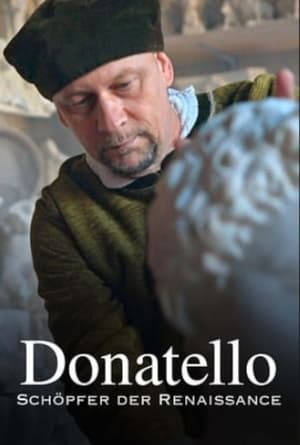
Portrait of the Italian sculptor Donatello (1386-1466), a precursor of the High Renaissance who considerably influenced sculptural art with his innovative way of conceiving space. Donatello is already a legend in his own lifetime. The sculptor is the forefather of the High Renaissance and pioneer for artists such as Raphael or Michelangelo. His bronze sculpture of the "David" or the "Pazzi Madonna" in marble are icons of art history and testify to his sculptural power of renewal.
As her 80th birthday is approaching, Vera Klement, an oil painter in Chicago, adamantly starts yet another new figure painting: a portrait of an artist under oppression, an homage to Russian composer, Dmitri Shostakovitch.
A spirited artist with a mysterious bucket list gets a commission to paint a mural on a new hospital wing in a charming community. When she finds herself falling for the handsome architect designing the addition, she must decide if she can trust him with her list, and the painful memory behind it, or if he’ll break her heart and prove that it’s better to be alone than to be close to someone who will leave.
A painter in the throes of a creative block finds inspiration thanks to a fascinating and mysterious gallery owner, but he can't expect the shocking consequences of their encounter.
When a hardened businesswoman who goes by the initials A.B. overhears someone calling her an “Amazon” because of her butch ways, she agrees to a more “feminine” makeover. In the end she learns that no matter how she looks she’s still the smartest person in any room.