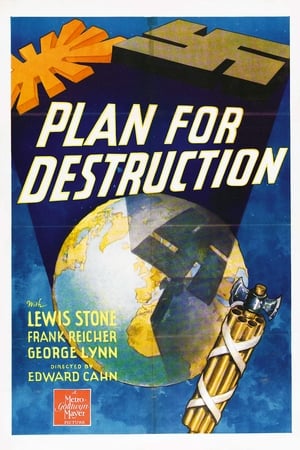
Plan for Destruction is a 1943 American short propaganda film directed by Edward Cahn. It looks at the Geopolitik ideas of the ex-World War I professor, General Karl Haushofer, who is portrayed as the head of a huge organization for gathering information of strategic value and the mastermind behind Adolf Hitler's wars and plans to enslave the world. The film was nominated for an Academy Award for Best Documentary Short.
Re-enactment of World War 2 Battle of Arnhem using the survivors from the battle.
President Franklin Delano Roosevelt once told the head of the Office of Strategic Services (precursor to the CIA), “Give my regards to the catcher.” The catcher was Moe Berg, who spent 15 seasons in the majors before taking up espionage for the government. Spyball tells the extraordinary story of Berg, a linguist/Ivy-educated lawyer/.243 lifetime hitter whom manager Casey Stengel called “the strangest man to ever play the game of baseball.” Berg walked in eclectic circles, counting Babe Ruth, Albert Einstein, and the Marx Brothers among his friends, but it was his service to his country that truly distinguished him. His surreptitious filming of Tokyo during a 1934 baseball tour helped develop strategies for the eventual bombing of the city during World War II, and his cloak-and-dagger mind games involving a German scientist helped prove that the Nazis were failing in their attempts to develop an atomic bomb.
Chapter 9 of the series 18 decades of life in Mexico in the twentieth century. Images of the cultural, social and political life in Mexico from 1940 to 1944. The presidency of Manuel Avila Camacho (1940-1946) in the context of the World War II.
Chapter 10 of the series 18 decades of life in Mexico in the twentieth century. Images of the cultural, social and political life in Mexico between 1945 and 1949.
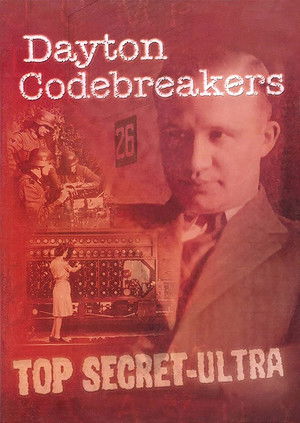
In 1942, German U-boats were sending American ships to the the bottom of the Atlantic. The US Navy took the problem to NCR in Dayton. There a lavatory was set up to design and build code breaking machine. This project was top priority and top secret.
He Has Seen War is a documentary featuring surviving veterans of Easy Company and the 1st Marine Division, whose stories are told in Band of Brothers and The Pacific. From their initial steps at reintegrating into civilian life to the lasting impact the war had on each of their lives, He Has Seen War features veterans and their families relaying their own unique stories. Complemented by renowned historian and author Donald L. Miller, as well as rarely seen archival and documentary footage, it captures the struggle and ultimate triumph of a generation who, after helping rescue the world from unprecedented calamity, reclaimed their lives and re-forged a country
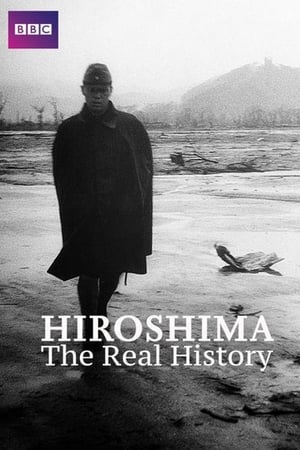
Brand new documentary marking the 70th anniversary of the Hiroshima and Nagasaki bombings which ended WWII and began the nuclear age. Features interviews with survivors from both sides.
The elderly inhabitants of a village in Vojvodina look back on the war and the partisan battles. The film also examines how collective memories and myths enter the individual consciousness.
Know Your Ally: Britain was a 45-minute propaganda film made in 1944. It was narrated by Walter Huston and produced by the United States War Department and Signal Corp to solidify Anglo-American solidarity within the ranks as well as counter Nazi propaganda aimed at weakening the Alliance.
Nicky's Family is a gripping documentary from the International Emmy Award winning producers Patrik Pass and Matej Minac about a rescue operation of the “British Schindler” - Sir Nicholas Winton who will celebrate this year 103rd birthday. His story has no parallel in modern history. Dramatic reenactments, some of the archive footage never seen before, rescued "children" together with Mr. Winton himself recount this unique story which even after 70 years continues to inspire people, especially children, to make this world a better place. World personalities His Holiness Dalai Lama and Nobel Prize winner Elie Wiesel also took part. ( - from the film's press kit)
For over a hundred years, Mărculești was a vibrant Jewish agricultural and mercantile community in Bessarabia (now present-day Moldova). In July 1941, the village was the site of an unimaginable atrocity. Seventy-three years later, few speak honestly or completely about what happened. ABSENT is a cinematic portrait of the ghost village of Mărculești, its current inhabitants, and their very complex relationship to their own history. Filmed entirely on location, the film documents one of Europe's poorest, most remote, and least-visited places.
The documentary explores the extraordinary story of Hitler and the Nazi Party's plans to win WWII by using an array of supernatural and occult superpowers.
For the men who fought perhaps the fiercest battle of WWII, seventy years have passed. But the memories of those 36 bloody days on Iwo Jima have not. In the spring of 2015, survivors of both sides of the battle returned for the last time to join a Reunion of Honor — a unique, now-peaceful fellowship first forged of fire and bullets.
Irina was only 3 years old when her mother, a worker at the Kirov Plant, decided to evacuate her from Leningrad. Working tirelessly at the tank production plant for weeks without a day off, her mother had no one to help care for her child. However, the train Irina was commuting in came under Nazi shelling. She was under the rubble for a day before she was rescued. Thus, the girl remained with her mother, enduring the most terrifying months in a city besieged by the Nazis. This is just one story among thousands of heroic Leningrad citizens. Despite hunger and constant shelling, they managed to donate 144 tons of blood over the years of the blockade to aid injured soldiers on the front lines, and never ceased the production of guns, which the soldiers of the Soviet Army desperately needed against the Nazis. In our new documentary, commemorating 80 years since the liberation of Leningrad from the Nazi blockade, witness the unwavering resilience of Leningraders like Irina and her mother.
Explores how Hitler’s personal library provides a look into his mind and how it significantly informed his worldview.
During the Nuremberg Trials, the victors of the Second World War judge those responsible for the Third Reich.
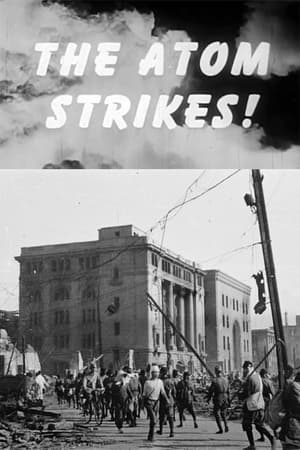
The U.S. Army Signal Corps Pictorial Division made this short documentary shortly after the end of WWII to look at the after-effects of the atomic bombs dropped on Hiroshima and Nagasaki. There is no credited crew or cast.
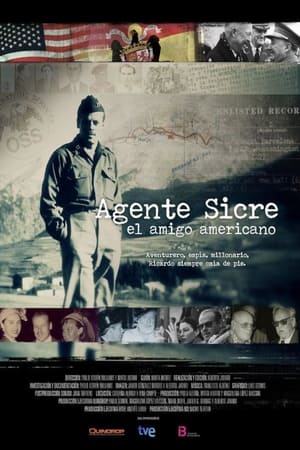
Agente Sicre, el amigo americano
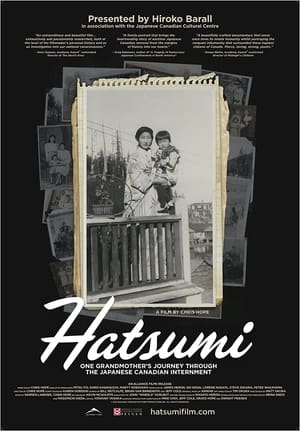
In Japanese, “shi kata ga nai” means “it can't be helped”. As a phrase, it represents the philosophical basis of the Japanese cultural reserve, through which adversity is never acknowledged. Nancy Okura is a Canadian of Japanese decent. During the Second World War, she was involuntarily removed from her home and relocated to an internment camp by the Government of Canada. Shi kata ga nai prevented Nancy Okura from ever speaking about her internment.