Walter Mittelholzer - Eine Schweizer Pioniergeschichte
Progress in South Australia manifests itself around the Flinders Range country in the industries of Whyalla, Port Pirie, Port Augusta, Leigh Creek and Aroona Dam. Wildflowers cover the countryside.
At the end of the 70s, punk promised rebellion and self-empowerment, also for women in the scene. They fought for their place on stage among the dominant punk top dogs, battling against social norms and long-outdated female role models. This is their story.
Nick and Anna are off to Switzerland for six months. Nick, a chef, wants to collect recipes of local cuisine and Anna hopes to write a new book. The journey can also be good for their relationship, because Anna suspects that Nick had an affair with other woman. Meanwhile, Mischa will take care of their Viennese apartment.
In rural Kosovo, identical houses are built for family members working abroad, in the hope that they will one day return to settle in their old homeland.
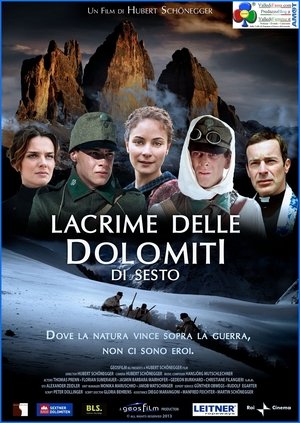
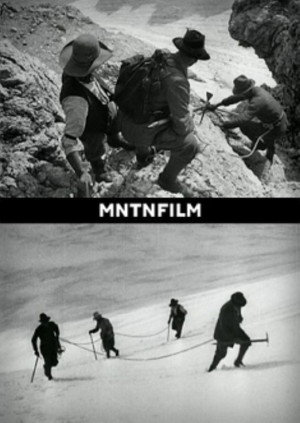
Stelvio: Crossroads of Peace
Venerdì Santo - Bronte
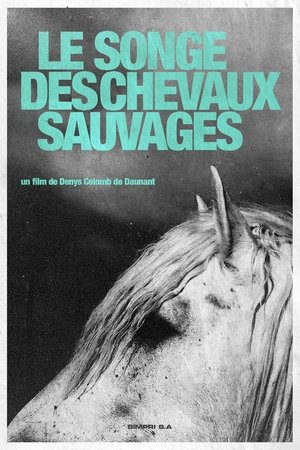
The horses in Denys Colomb Daunant’s dream poem are the white beasts of the marshlands of the Camargue in South West France. Daunant was haunted by these creatures. His obsession was first visualized when he wrote the autobiographical script for Albert Lamorisse’s award-winning 1953 film White Mane. In this short the beauty of the horses is captured with a variety of film techniques and by Jacques Lasry’s beautiful electronic score.
An American-born Jewish adolescent, Hannah Stern, is uninterested in the culture, faith and customs of her relatives. However, she begins to revaluate her heritage when she has a supernatural experience that transports her back to a Nazi death camp in 1941. There she meets a young girl named Rivkah, a fellow captive in the camp. As Rivkah and Hannah struggle to survive in the face of daily atrocities, they form an unbreakable bond.
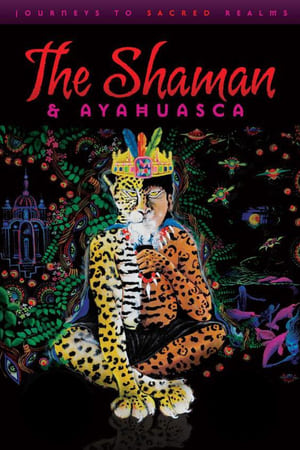
Filmed in the jungles of Peru, shaman Don Jose Campos introduces the practices and benefits of Ayahuasca, the psychoactive plant brew that has been used for healing and visionary journeys by Amazonian shamans for at least a thousand years.
It is 1 p.m. on June 30, 1982, when Christophe Profit, 24, shows up at the foot of Les Drus with his pof bag, his climbing shoes and nothing else. He will try the west face of Les Drus in "solo", in the Mont Blanc massif by "Directe Américaine", 1100 meters of vertical and smooth rock. Christophe will achieve the feat of climbing the wall in free solo, without using a rope or any belaying technique. At 4:10 p.m., barely more than three hours after the start of his ascent, the new climbing star can embrace the Virgin of the Drus at the same time as the career of a high-level mountaineer. Three years later, on July 25, 1985, he climbed the north faces of the Matterhorn, the Eiger and the Jorasses in the same day. Awarded at many mountain film festivals, this great documentary is a magnificent testimony to one man's passion for climbing, the mountains and adventure.
Heidi is an orphaned girl initially raised by her aunt Dete in Maienfeld, Switzerland. In order to get a job in Frankfurt, Dete brings 5-year-old Heidi to her grandfather, who has been at odds with the villagers for years and lives in seclusion on the alm. He at first resents Heidi's arrival, but the girl manages to penetrate his harsh exterior and subsequently has a delightful stay with him and her best friend, young Peter the goat-herd.
Astrophysicist Jean Surdej brings a small group of teenage pupils on a trip to the Lofoten islands in northern Norway, for a very special class on the solar system. Using the geography of the archipelago to illustrate the distances between the planets, they journey through space by car and ferry, with the picturesque landscapes standing in for the black emptiness that surround the heavenly bodies. A masterstroke of both pedagogy and filmmaking, Children of Stars is a captivating documentary about humanity's place in the grand scheme of things.
"Jolly Roger" could mean Roger Schawinski. But by definition, a "Jolly Roger" is the classic black pirate flag with skull and crossbones. This documentary tells the unvarnished story of the Swiss radio pirates who emerged in the 1970s. The focus is on Radio 24 in its wild years, when Schawinski's team broadcast from Italy, with the strongest FM station in the world at the time, straight down from Pizzo Groppera, 130 kilometers all the way to the Zurich area. Supported by numerous original documents from private filmmakers and from the SRG archives, the viewer relives the absurd radio war between David and Goliath that lasted almost four years, 24 years after this war between the radio pirates and the state power began on November 13, 1979. The many known and unknown fighters, who rallied behind their Radio Winkelried Schawinski in 1979 to help usher Switzerland into a new media age, remember the good and bad times, the demonstrations and the numerous threatened and actual closures.
A group of people converge on a barren Arctic island. They have their reasons for being there but when a series of mysterious accidents and murders take place, a whole lot of darker motives become apparent. Could the fortune in buried Nazi gold be the key to the mystery? Donald Sutherland and Vanessa Redgrave investigate
The Alps – wild mountains, extreme lives, but also a magical world. This majestic mountain range connects eight countries and reaches heights of up to 4,000 metres above sea level. At a length of 1,200 kilometres, the Alps form both a connecting bridge between western and eastern Europe and a high barrier between southern and central Europe. The mountains act as a mighty water reservoir and continental watershed, feeding innumerable rivers that flow into three different oceans. Their highest peak, Mont Blanc, is surrounded by long, soaring mountains with ice-covered slopes. These great summits are just one reason the so-called “Roof of Europe” continues to fascinate – across the continent and around the world. The incredible diversity of landscapes, flora and fauna makes the Alps a unique natural treasure at the heart of Europe.
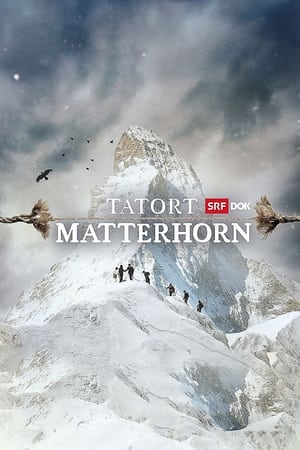
The first ascent of the Matterhorn was made on July 14, 1865 by Edward Whymper, Francis Douglas, Charles Hudson, Douglas Hadow, Michel Croz and two guides from Zermatt, Peter Taugwalder father and son. Douglas, Hudson, Hadow and Croz are killed on the descent after Hadow slips and drags the other three men down the north face. Whymper and the two Taugwalders, who survive, are later accused of having cut the rope that connected them to the rest of the group so as not to be dragged into the fall, but the ensuing investigation finds no evidence of their guilt and they are acquitted. The Matterhorn is the last great peak in the Alps to be conquered and its ascent marks the end of the golden age of mountaineering. One hundred and fifty years later, a team undertakes the same expedition in order to unravel the mystery.
The enigma of the personality cult is revealed in the grand spectacle of Stalin’s funeral. The film is based on unique archive footage, shot in the USSR on March 5 - 9, 1953, when the country mourned and buried Joseph Stalin.
A contemplation of art and adventure in the southern wilds of New Zealand by both a landscape photographer and an adventure filmmaker. This film is the unexpected result of their two unique perspectives.
Behind the scenes of the filming of a film on climbing a cliff by Patrick Berhault and Georges Unia on the parishes of the route "La Tête de Chien" in Monaco. Director Laurent Chevallier explains the difficulties of filming at height, the kind of shots that are suitable and the specifications of equipment suitable for filming on a cliff.