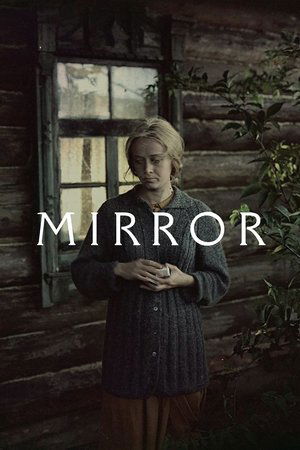
A dying man in his forties recalls his childhood, his mother, the war and personal moments that tell of and juxtapose pivotal moments in Soviet history with daily life.
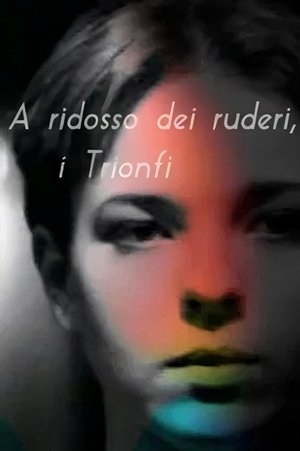
History as immersion and dispersion in the fragments of the past, a visionary journey accompanied by the voice of Patty Pravo. Presented at the Taormina Festival '97.
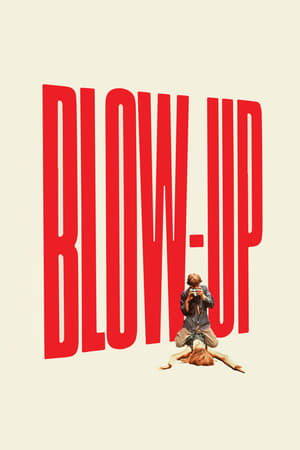
A successful mod photographer in London whose world is bounded by fashion, pop music, marijuana, and easy sex, feels his life is boring and despairing. But in the course of a single day he unknowingly captures a death on film.
An anthology of one-minute films created by 51 international filmmakers on the theme of the death of cinema. Intended as an ode to 35mm, the film was screened one time only on a purpose-built 20x12 meter public cinema screen in the Port of Tallinn, Estonia, on 22 December 2011. A special projector was constructed for the event which allowed the actual filmstrip to be burnt at the same time as the film was shown.
An obsessive Vine star goes down a road of surreal imagery, as his obsession with the application develops into murder.
SEELE orders an all-out attack on NERV, aiming to destroy the Evas before Gendo can advance his own plans for the Human Instrumentality Project. Shinji is pushed to the limits of his sanity as he is forced to decide the fate of humanity.
Eleven young film-makers got together to collaborate in this atypical project. Atypical not only because of its technical specs, but because of its narrative structure. There are several scenes with only the city in common, and more as a conceptual presence at that than as a precise geography. None of those scenes contains a single "story": Each one of them is part of a larger situation that we cannot see, as though the beginning and end of each "story" had to be filled in by the audience.
Based on the novel "Šta bi učinio Zobec?" (What Would Zobec Do?) by Svetozar Vlajković. It's a short movie about a young man who is afraid of being turned down by a girl.
A young Black man, raised in a White neighborhood, ridiculed for not being "Black enough" decides to go to the hood to hang out with his gangster cousin and discover what it really means to be "Black." He eventually faces the harsh reality of gang violence, drugs and police confrontation.
An experimental film that lifts the veil on the world of African American drag racing.
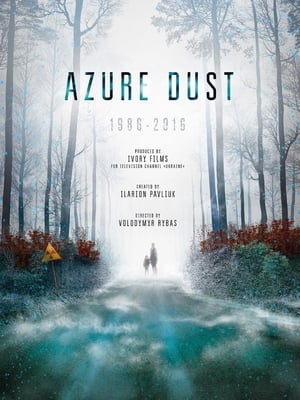
"Gerboise bleue", the first French atomic test carried out on February 13, 1960 in the Algerian Sahara, is the starting point of France's nuclear power. These are powerful radioactive aerial shots carried out in areas belonging to the French army. Underground tests will follow, even after the independence of Algeria. From 1960 to 1978, 30,000 people were exposed in the Sahara. The French army was recognized recognized nine irradiations. No complaint against the army or the Atomic Energy Commission has resulted. Three requests for a commission of inquiry were rejected by the National Defense Commission. For the first time, the last survivors bear witness to their fight for the recognition of their illnesses, and revealed to themselves in what conditions the shootings took place. The director goes to the zero point of "Gerboise Bleue", forbidden access for 47 years by the Algerian authorities
The young hero seems the essence of maleness, yet he's troubled by vaguely feminine objects. Soon his masculine and feminine selves are intercut, as each of his identities appears to look and gesture at the other. The film, at once melancholy and transcendent, consists of a shimmering, nearly plotless evocation of gender identity in flux through haunting, densely interlaced images.
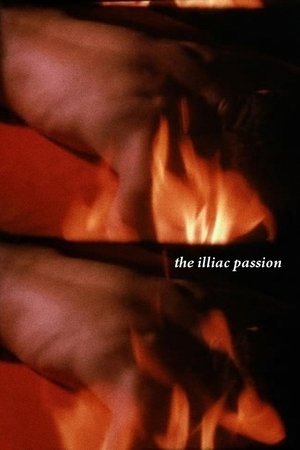
Structured in nine tableaux each a study of a simple action or situation involving a lone, naked figure, the blind Eros, searching for fulfilment, for self. The objects he touches - books, paintings - can be seen as icons of the creative spirit; there is also a motor cycle and film equipment. In succeeding scenes he appears to try on identities offered by institutional doctrines of religion and social traditions of (overt) masculinity. Much of the film was constructed in-camera with a small amount of editing afterwards. An innovation was the use of in-camera fade-outs as phrase markers, not as terminal points, within a single set-up or shot.
Psyche 1947, made while a student at USC, shows Markopoulos’ developing style and his sensuous use of colour and composition. Shot in the Hollywood hills, the film was inspired by an unfinished novella by Pierre Louÿs. - Tate Modern
Markopoulos called Lysis “a study in stream-of-consciousness poetry of a lost, wandering, homosexual soul” and felt that the film foreshadowed The Illiac Passion.
Based on Plato's dialogue Charmides.
Each day after work, Carlos, a language school teacher, frequents the heady surroundings of his local cruising ground. One evening he encounters a teenage boy from his class named Toni, and the two engage in a brief sexual tryst. As the relationship between teacher and student begins to develop, some dark truths emerge about the young man and his mysterious group of friends.
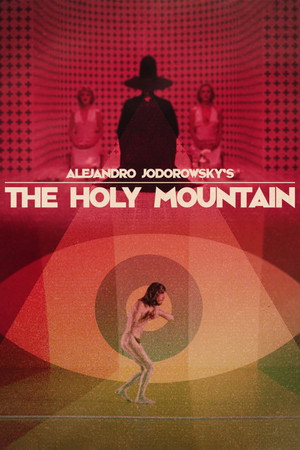
A former circus artist escapes from a mental hospital to rejoin his armless, cult leader mother, and is forced to enact brutal murders in her name.
A woman gets lost in the woods.
In 1950s rural Idaho, a young boy watches helplessly as his friends and brother fall under the spell of a mysterious widow living up the road and becomes convinced that she is a vampire.