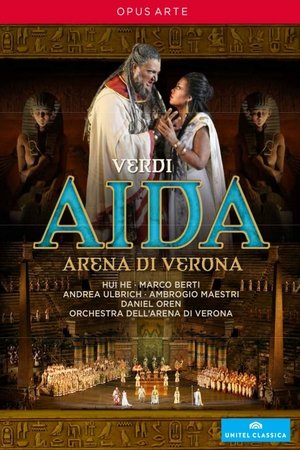
Written for exceptional singers, Il Trovatore has remained popular ever since its first performance at the Teatro Apollo in Rome on 19 January 1853, when even the toughest critics were convinced of its place in the repertoire. People are attracted to Il Trovatore because of its rousing melodies, its brutal, powerful plot, and its simple structure: elements that make it one of the best examples of Verdi’s theatre pieces. Recorded live at the Sferisterio theatre of Macerata in the summer of 2016, under conductor Daniel Oren's vibrant and incisive direction, this production boasts a first-rate cast and elegant direction from Francisco Negrin. The sets and costumes by Louis Désiré and lighting by Bruno Poet were well received by the Sferisterio audience.
In Baden-Baden, Nayo Titzin follows the producers of the opera Don Giovanni, created for the Innsbruck Festival of 2006. He is looking for a musical truth... What if Mozart's masterwork Don Giovanni had been interpreted in a wrong way for more than two centuries? Conductor René Jacobs, famous for his performance of Così fan tutte and laureate of a Grammy Award for his innovative recording of The Marriage of Figaro, comes back with new ideas on the comprehension of one of the greatest operas of all times. In this relevant documentary, Nayo Titzin clarifies and highlights all the brightness of those melodies and recitatives. Rewarded with many praises in the international press, this production shows the dramaturgical perfection of the "opera of the operas," the absolute of the genre, as Wagner once said. Once more, the Bulgarian director offers a fun and subtle report, and makes sure that everyone will understand this myth.
A biopic of Italian operatic tenor Luciano Pavarotti, who broadened the audience for opera and became a global pop culture icon.
A collectively made filmic opera in 35 parts. The Black and predominantly queer art collective, an evolving line up of poets and artists from across the world, abstracts and reimagines opera in any traditional conception. Set to hip-hop, blues, noise, R&B and electronica, the piece uses the voice (chanting, singing, screaming; written by poet and activist Dawn Lundy Martin) as its primary tool, verbalising centuries of alienation, vulnerability and protest in the global African diaspora through its disruptive libretto.
Although he is unanimously credited with having democratised opera, making it accessible to the greatest number, focus is rarely put on the strategy he devised and implemented in order to carry out his actions, nor what his actions reveal of the man and artist, and of the resulting metamorphosis from opera singer to pop artist. Through this angle, this film sets out to pay tribute to the man who summed up his credo, obsession and life’s work, in the following way: “They led the public to believe that classical music belonged to a restricted elite. I was the way to prove to the world that was wrong.
The story of the star crossed love between Manon Lescaut and Des Grieux.
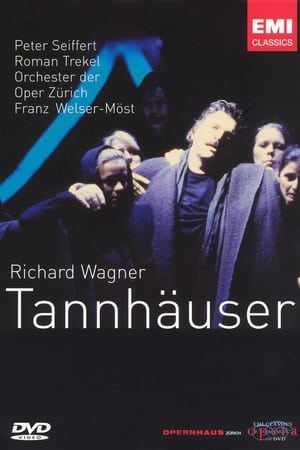
This Wagner opera is rarely performed because of the scandals that engulfed the Magdeburg Theatre when it was performed in 1836 under the title The Novice of Palermo, and became known as a cursed opera from which the composer had to distance himself. Wagner's adaptation of the story reflects the rebellious mood of a Revolutionary Germany, vindicating sensual love and attack the fanatical repression of sexuality by a puritanical and hypocritical authority. As the prose says, "Shame to him whose cruel striking/Kills for faults of his own liking!". One of the most extraordinary musicals based on a text by Shakespeare, especially worthy of a new performance as it is four hundred years since the death of the Bard.
Shostakovich’s satirical opera adapted from the classic short story by Nikolai Gogol. Baritone Eduard Akimov leads the cast as Kovalyov, the hapless bureaucrat whose nose has mysteriously gone missing.
One of the greatest revolutions in the history of mankind happened around 3000 years ago: the transition from polytheism to monotheism through the prophet Moses. God revealed himself directly to Moses, instructing him in absolute truth. Moses was charged with leading the people of Israel to the Promised Land and escaping from Egyptian slavery. Moses came to embody the relationship between the human and divine truth. God’s call to Moses presented a new idea that exploded all previous religious concepts: ‘One God – unique, eternal, intangible, inconceivable’. Moses understands this concept, but is unable to express it, and therefore God appoints Moses’ brother Aaron as his spokesman. They are bound to fail: Aaron can only approach sharing the idea by compromising its meaning, whilst Moses is left to search fruitlessly for “the word I lack …” This production of Arnold Schoenbergs opera was filmed during the Ruhrtriennale 2009.
Tosca, suspecting his lover is seeing anothe woman, turn him, painter Mario Cavaradossi, to Baron Scarpia.
Philippe Jaroussky as Ruggiero is in thrall to Patricia Petibon as the sorceress Alcina in Katie Mitchell’s virtuosic production of Handel’s opera from the 2015 Aix-en-Provence Festival, described by Bachtrack as “a night of a thousand delights”. Conducted by Andrea Marcon, this was, in the words of Opera News, “musically … a performance of the highest festival level”. The production of Alcina, by the British director Katie Mitchell, was welcomed by the Financial Times as “meticulously executed …, rich in detail, consummately polished”. As the New York Times wrote: “It involves a huge sorcery machine for turning people into animals (or whatever). And Ms. Mitchell works magic of her own onstage, constantly showing the enchantresses Alcina and Morgana alternating between glamorous public personas and their ‘real life’, older, private selves …There are also bits of simulated sex, mingling genders and suggesting, among other things, inventive new ways to hit high notes.”
Since its premiere on 2 June 1937 in Zurich, Alban Berg's second opera "Lulu" has the reputation of being surrounded by scandals. On the one hand, this is due to the dubious character of the subject, the man-eating femme fatale, which Berg had taken from Frank Wedekind's two Lulu tragedies – "The Earth Spirit" and "Pandora's Box" – and combined into one opera libretto. On the other hand, Berg's widow had (for personal reasons) repeatedly refused to have the opera completed, which was unfinished when Berg died. This video is of the unfinished two-act torso of "Lulu."
The life and career of Italian opera singer Farinelli, considered one of the greatest castrato singers of all time.
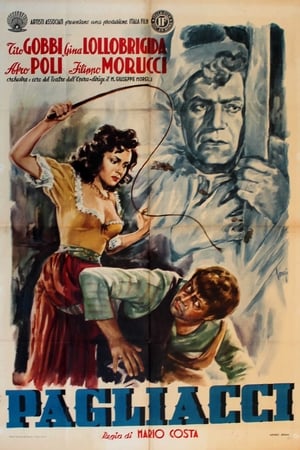
Franco Zeffirelli directs these two legendary La Scala productions telling tragic tales of jealousy. Mascagni's Cavalleria Rusticana features performances by Elena Obraztsova, Plácido Domingo, and Renato Bruson. Leoncavallo's I Pagliacci stars Teresa Stratas, Plácido Domingo, and Juan Pons. Both are conducted by George Pretre. This production of Pagliacci earned director Franco Zeffirelli the coveted Emmy as Best Director in the category of Classical Music Programming.
Director Carrie Cracknell makes her Met debut, reinvigorating the classic story with a staging that moves the action to the modern day, in a contemporary American industrial town.
Puccini’s bittersweet love story returns to cinemas, with soprano Angel Blue starring as the French courtesan Magda, opposite tenor Jonathan Tetelman as Ruggero, an idealistic young man who offers her an alternative to her life of excess. Maestro Speranza Scappucci conducts Nicolas Joël’s Art Deco–inspired staging, which transports audiences from the heart of Parisian nightlife to a dreamy vision of the French Riviera. Soprano Emily Pogorelc and tenor Bekhzod Davronov complete the sterling cast as Lisette and Prunier.
Extraordinary soprano Asmik Grigorian tackles the demanding role of Cio-Cio-San, the loyal geisha at the heart of Puccini’s devastating tragedy. Tenor Jonathan Tetelman stars as the callous American naval officer Pinkerton, whose betrayal destroys her. Mezzo-soprano Elizabeth DeShong reprises the role of the steadfast maid Suzuki, and baritone Lucas Meachem is the American consul Sharpless. Acclaimed maestro Xian Zhang takes the podium to conduct Anthony Minghella’s vivid production.
Two singers at the height of their powers—radiant soprano Nadine Sierra and tenor sensation Benjamin Bernheim—come together as the star-crossed lovers in Gounod’s sumptuous Shakespeare adaptation, with Met Music Director Yannick Nézet-Séguin on the podium to conduct one of the repertoire’s most romantic scores. Bartlett Sher’s elegant staging also features baritone Will Liverman and tenor Frederick Ballentine as the archrivals Mercutio and Tybalt, mezzo-soprano Samantha Hankey as the mischievous pageboy Stéphano, and bass-baritone Alfred Walker as Frère Laurent.
American composer Jake Heggie’s compelling masterpiece, the most widely performed new opera of the last 20 years, arrives in cinemas in a haunting new production by Ivo van Hove. Based on Sister Helen Prejean’s memoir about her fight for the soul of a condemned murderer, Dead Man Walking matches the high drama of its subject with Heggie’s beautiful and poignant music and a brilliant libretto by Tony and Emmy Award–winner Terrence McNally. Met Music Director Yannick Nézet-Séguin takes the podium, with mezzo-soprano Joyce DiDonato starring as Sister Helen. The outstanding cast also features bass-baritone Ryan McKinny as the death-row inmate Joseph De Rocher, soprano Latonia Moore as Sister Rose, and legendary mezzo-soprano Susan Graham—who sang Helen Prejean in the opera’s 2000 premiere—as De Rocher’s mother.
The success of Verdi’s third opera, a stirring drama about the fall of ancient Jerusalem at the hands of Nebuchadnezzar (Nabucco), catapulted the 28-year-old composer to international fame. The music and Verdi himself were subsumed into a surge of patriotic fervor culminating in the foundation of the modern nation of Italy. Specifically, the Chorus of the Hebrew Slaves ('Va, pensiero'), in which the Israelites express their longing for their homeland, came to stand for the country’s aspirations for unity and that exciting era in Italian history, the Risorgimento, or 'Resurgence'.