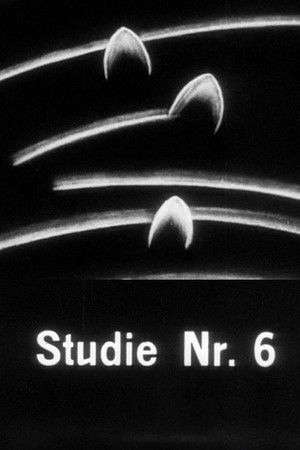
Commissioned by David Bienstock, creator of the New American Film Series at the Whitney Museum of Art to raise funds for the second season of the series. The film was projected at the end of each program and a box to receive donations was placed at the exit of the theater. Whitney Commercial ran for two or three years until the Museum agreed to sponsor the series on its own which has continued to the present season. Preserved by the Academy Film Archive in 2015.
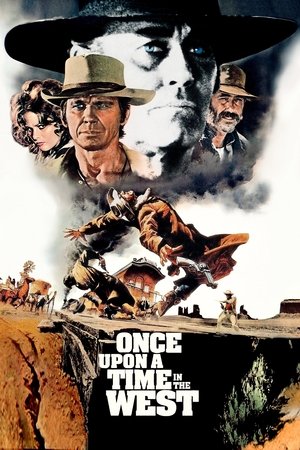
As the railroad builders advance unstoppably through the Arizona desert on their way to the sea, Jill arrives in the small town of Flagstone with the intention of starting a new life.
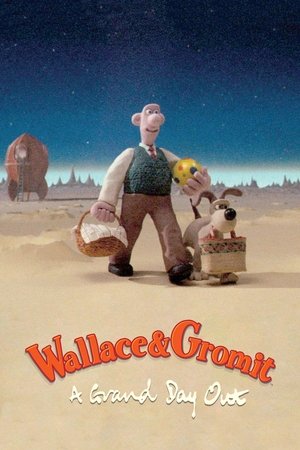
Wallace and Gromit have run out of cheese, and this provides an excellent excuse for the duo to take their holiday to the moon, where, as everyone knows, there is ample cheese. Preserved by the Academy Film Archive.
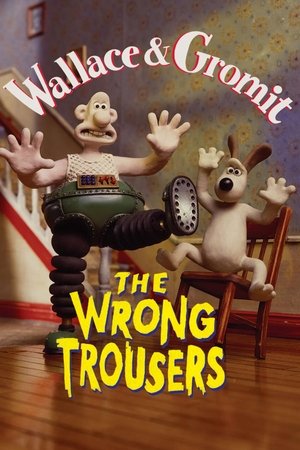
Wallace rents out Gromit's former bedroom to a penguin, who takes up an interest in the techno trousers created by Wallace. However, Gromit later learns that the penguin is a wanted criminal.
Wallace's whirlwind romance with the proprietor of the local wool shop puts his head in a spin, and Gromit is framed for sheep-rustling in a fiendish criminal plot.
Jerry Martin quits his dull job as a bank clerk and falls in with a band of hobos. He takes on the guise of Bachelor, the "king of the market," and finds himself pursued by dangerous men who are after the real Bachelor. *Only fragments are known to exist. Preserved by the Academy Film Archive in 2010.
Produced by the Army Pictorial Service, Signal Corps, with the cooperation of the Army Air Forces and the United States Navy, and released by Warner Bros. for the War Activities Committee shortly after the surrender of Japan. Follow General Douglas MacArthur and his men from their exile from the Philippines in early 1942, through the signing of the instrument of surrender on the USS Missouri on September 1, 1945. Preserved by the Academy Film Archive in 2013.
A description and enactment of the discovery of gold by James Marshall, and the role played by John Sutter. Preserved by the Academy Film Archive.
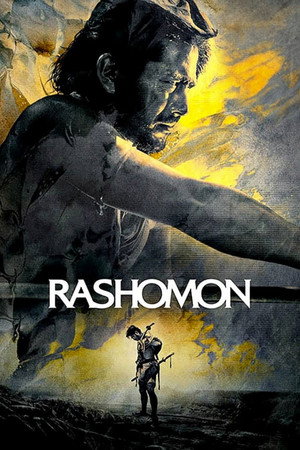
Four people recount different versions of the story of a man's murder and the rape of his wife.
A deer, disillusioned by the consumerism that defines his life. A lizard, ostracized from society, forever wandering. A chance meeting in the middle of a field. Who will survive? And who will transcend existence? Preserved by the Academy Film Archive in 2009.
A stop-motion animated account of the 1942 Battle of Guadalcanal in World War II. Preserved by the Academy Film Archive in 2004.
Documentary examining the steel industry in Youngstown, Ohio during World War II. Focuses on steel production, including the smelting process, slagging and the blast furnace. Workers reflect upon their lives and the importance of their jobs. Emphasizes the importance of teamwork in the mills and on the plant's labor relations committee to help win the war. Preserved by the Academy Film Archive in 2012.
Del is a song writer for the obnoxious Mr. Mega, and in love with Didi, Mega's secretary. His quest to write a hit tune brings him to the wacky world of Flooby Nooby, where he just might learn to write songs from the heart.
Jury foreman Edward Weldon's questioning leads to the death sentence for Ethel Saxon. His daughter Stella claims to have killed her lover, the gangster Garboni, just as Saxon was to sit in the electric chair.
A bored insurance salesman quits his job to go into politics. He first starts preaching about how man is greater than he thinks and that man can live forever. He ends up forming his own political party, "The Eternal Man" party. He begins to be referred to as "God". Then he starts having doubts about the eternalness of man.
Many times during his presidency, Lyndon B. Johnson said that ultimate victory in the Vietnam War depended upon the U.S. military winning the "hearts and minds" of the Vietnamese people. Filmmaker Peter Davis uses Johnson's phrase in an ironic context in this anti-war documentary, filmed and released while the Vietnam War was still under way, juxtaposing interviews with military figures like U.S. Army Chief of Staff William C. Westmoreland with shocking scenes of violence and brutality.
Don Diego Vega pretends to be an indolent fop as a cover for his true identity, the masked avenger Zorro. Preserved by the Academy Film Archive in 2012.
The Amazon rain forest, 1979. The crew of Fitzcarraldo (1982), a film directed by German director Werner Herzog, soon finds itself with problems related to casting, tribal struggles and accidents, among many other setbacks; but nothing compared to dragging a huge steamboat up a mountain, while Herzog embraces the path of a certain madness to make his vision come true.
Three stories with three central female characters linking the stories together. The first one concerns an orphan girl who grows attached to the postmaster she is caring for after he teaches her to read and write. The second one is a supernatural tale about a woman obsessed with the jewels her husband buys for her. The final one follows a young man who falls for an unconventional girl from his new village instead of his arranged bride, the daughter of a respectable family.
A devout upper-class Hindu has a vision in a dream that his daughter-in-law is the human incarnation of the Goddess Kali and begins worshipping her.