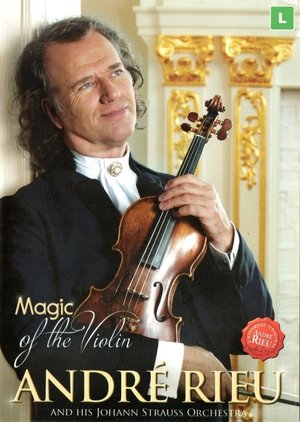
André Rieu - Magic of The Violin
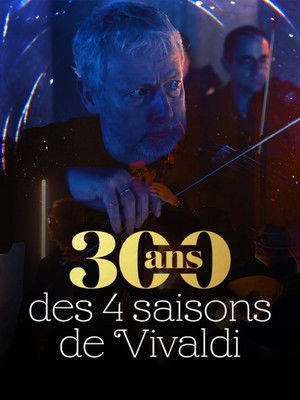
300 ans des 4 saisons de Vivaldi
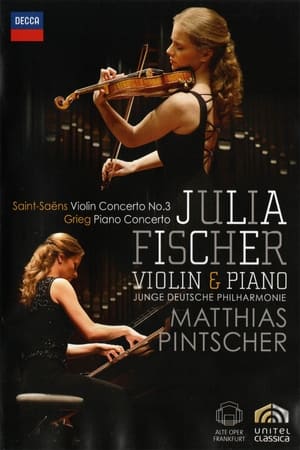
German virtuoso Julia Fischer performs violin and piano concertos by Saint-Saens and Grieg, accompanied by the Junge Deutsche Philharmonie under the baton of Matthias Pintscher.
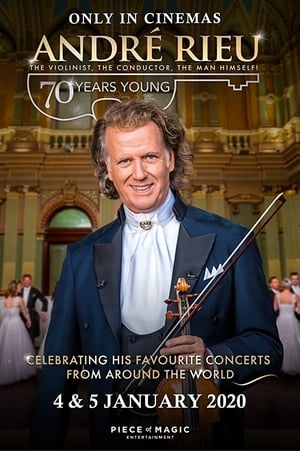
70 Years Young is André Rieu’s ultimate concert featuring musical highlights chosen by the maestro himself from his illustrious career so far. This unique commemorative celebration will take you on an unbelievable journey around the world to André Rieu’s most amazing concert locations, including Schönbrunn Vienna, Radio City Music Hall New York and the Coronation Concert in Amsterdam.
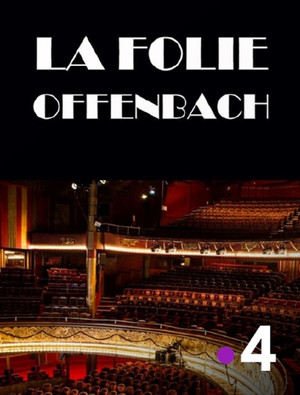
La folie Offenbach
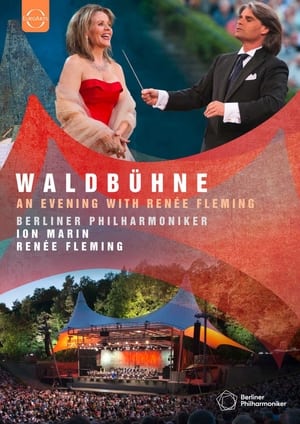
Repertoire Modest Mussorgsky: Night on Bald Mountain; Antonín Dvořák: Song to the Moon from “Rusalka”, Op. 114; Aram Chatschaturjan: Adagio from “Spartacus”; Richard Strauss: Final Scene from “Capriccio”, Op. 85; Richard Wagner: Overture to “Rienzi, der Letzte der Tribunen”; E. W. Korngold: Mariettas Lied from “Die tote Stadt”; Richard Strauss: Zueignung, Op. 10 No. 1; Sir Edward Elgar: Salut d’amour; Giacomo Puccini: Donde lieta uscì from “La bohème”; Tu che di gel sei cinta from “Turandot”; Ruggero Leoncavallo: Musette svaria sulla bocca viva from “La bohème”; Mimì Pinson, la biondinetta from “La bohème”; Piotr Tchaikovsky: “Romeo and Juliet” (Fantasy Overture)
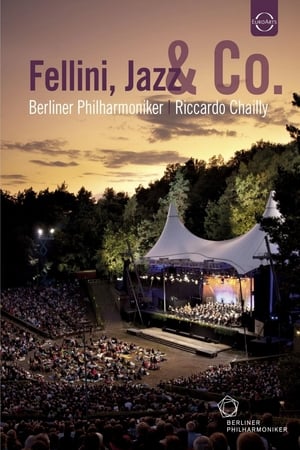
The Waldbühne in Berlin, one of the most appealing outdoor amphitheatres on the European continent, is the home of the Berliner Philharmoniker’s summer concerts. With audiences of more than 20,000, these are some of the most popular classical music concerts in the world. Riccardo Chailly is famous for having one of the broadest and most eclectic repertoires. Here, under his baton, the orchestra presents perennial favourites by Shostakovich, Rota and Respighi. Live recording from the Waldbühne, Berlin, 23 August 2011, directed by Kasten Henning, produced by Jan Bremme. TV Producer: Dorothea Diekmann, RBB. Repertoire Dmitry Shostakovich: Suite No. 2 for Jazz Orchestra (Suite for Variety Orchestra), Lady Macbeth of Mtsensk Suite – Allegretto; Nino Rota: ‘La Strada’ Ballet Suite; Ottorino Respighi: Fountains of Rome • Pines of Rome • Danza gueresca ‘Belkis’; Paul Lincke: Berliner Luft
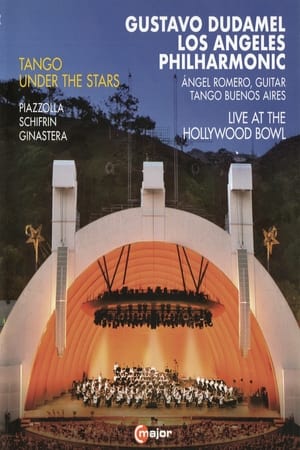
Gustavo Dudamel and the LA Philharmonic accentuate the colors, rhythms and passion of the music of Argentina's leading composers on this invigorating evening at the Hollywood Bowl: Astor Piazzolla, the master of the New Tango, whose four tangos the Tango Buenos Aires dance company performs on stage, known worldwide as the most authentic and uncompromising representative of the tango, Alberto Ginastera, one of the most important classical composers of the Americas in the 20th century and Piazzolla's first teacher, and Lalo Schifrin, who, in addition to his concert music, is the composer of the famous soundtracks for Mission: Impossible and Dirty Harry. His "Concerto for Guitar and Orchestra", a world premiere recording, is composed by Ángel Romero, an iconic master of the classical guitar.
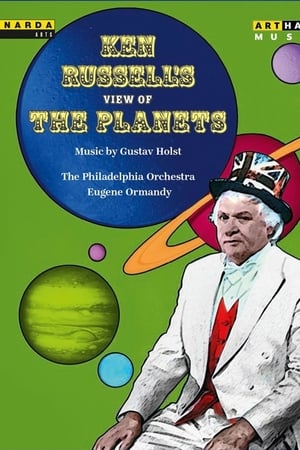
Based on the famous Gustav Holst musical suite, Ken Russell's musical delight takes viewers on a magnificent journey of the planets of the Solar System.
Anton Bruckner’s 6th Symphony was written between 1879 and 1881: a very happy time in his life. Unlike most of Bruckner’s symphonies, the 6th was not revised. Of all his works, this one seems to come from a single source of inspiration. Bruckner himself called it his “boldest” symphony – probably due to its extreme degree of motivic, rhythmic and harmonic originality. This live recording of the seldom-performed 6th Symphony is the next instalment of the acclaimed Bruckner cycle by the Staatskapelle Berlin and Daniel Barenboim. Anton Bruckner Symphony No. 6 in A major (original version) Daniel Barenboim, Conductor Staatskapelle Berlin Recorded live at the Philharmonie Berlin, 22 June 2010
“Clarity was one thing that made this performance a marvel. Another was the flexibility of Barenboim’s speeds…. The flexibility of Barenboim’s tempi meant that Bruckner’s charm – an often overlooked aspect of his genius – shone through, especially in the genial Trio.” (The Telegraph) Bruckner’s 8th is the last symphony completed by the Austrian composer. Many of his contemporaries regarded the symphony as “the pinnacle of 19th century music”. Even today, this monumental work fascinates listeners with its virtuoso orchestral technique, its immensity of sound, and its inexhaustible richness of detail. Symphony No. 8 in C minor (second version 1887-90, Robert Haas Edition) Daniel Barenboim, Conductor Staatskapelle Berlin Recorded live at the Philharmonie Berlin, 26 June 2010
In Anton Bruckner’s 7th Symphony, the listener encounters a music characterized by great spaciousness and profound solemnity, a music which speaks of grief and lamentation, but also of their transcendence. With its monumental architecture and intensity of sound, the symphony has moved listeners ever since its triumphal premiere in 1884. The Guardian calls Daniel Barenboim’s London interpretation “Tremendous … Barenboim and the Staatskapelle seem to have this work in their systems, and the overall impression was of music unfolding organically at its own pace rather than of a work being self-consciously interpreted or led.” Anton Bruckner Symphony No. 7 in E major (original version) Daniel Barenboim, conductor Staatskapelle Berlin Recorded live at the Philharmonie Berlin, 25 June 2010
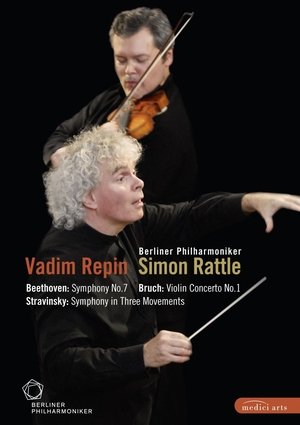
The Berliner Philharmoniker’s European Concert, held each year on 1 May, is invariably an international highlight. Performing in 2008 in Moscow's renowned Tchaikovsky Conservatory, the orchestra under Sir Simon Rattle presented outstanding performances of works by Beethoven, Stravinsky and Bruch, whose Violin Concerto featured one of today’s most fascinating artists, the Russian violinist Vadim Repin. Stravinsky: Symphony in Three Movements Bruch: Concerto for Violin No.1, op.26 Beethoven: Symphony No.7 in A major, op. 92
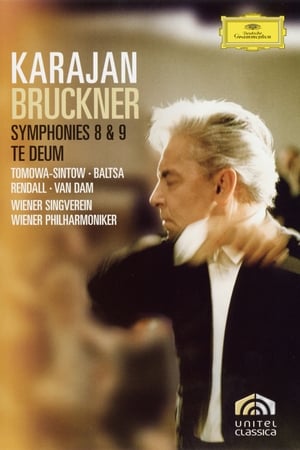
Karajan - Bruckner - Symphonies No. 8 & 9
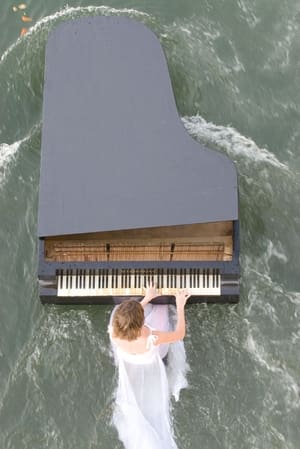
This music-video piece denounces the declining state of classical music by throwing a piano into the sea as a symbol of high culture submerging. The experiment focuses a grand piano floating and drifting until it sinks. This video questions the artist's role in today's society and the piano as an icon that submerges, subverted by mass culture.
The King of the Waltz stages a spectacular anniversary concert in the Netherlands' most romantic city square. Hugely popular Dutch violinist and composer Andre Rieu regularly features alongside top rock and pop bands
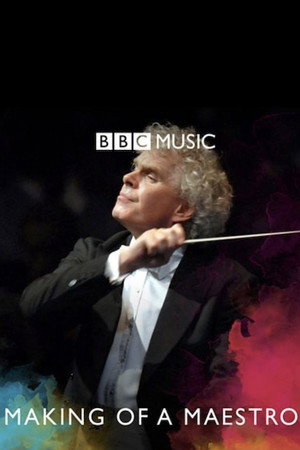
This documentary portrait, the first television biography of Rattle for 15 years, follows him through an extraordinary year of concerts, oratorios and opera with five different orchestras. We see his rigorous preparation and experience his irresistible dynamism in rehearsal and performance. We will watch him at work with the Berliner Philharmoniker, often described as the world’s leading orchestra. We will also see him with the Orchestra Of The Age Of Enlightenment and with the City of Birmingham Symphony Orchestra. We see him preparing a score for performance, share his experiences with the players and gain privileged insights into the day-to-day life of a conductor
Very few people really knew Herbert von Karajan. The conductor gave access to his private life only a little circle of strictly loyal people who kept their secrets even long after the maestro’s death. This documentary for the first time shows in the whole dimension the real man Karajan: not only the image of a dandy that he himself had shown to the public, but the unfiltered image of his personality. Newly discovered original film footage from the inner circle shows Karajan’s private life like it really was.
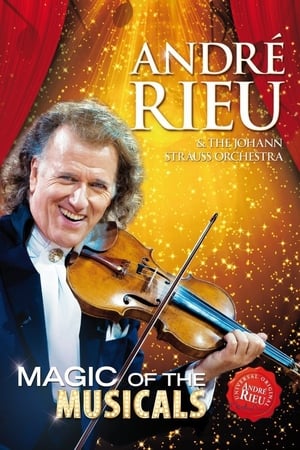
The Dutch violinist and the Johann Strauss Orchestra perform a number of musical hits. André Rieu is one of the bestselling modern classical artists, with over 20 million sales worldwide and a string of successful tours behind him. Rieu set up the Johann Strauss Orchestra in 1987 with the dual aim of promoting the waltz music he loves while introducing a wider audience to the pleasures of classical music. Here Rieu and his orchestra turn their attention to memorable songs from stage musicals, providing their own take on a number of popular tunes.
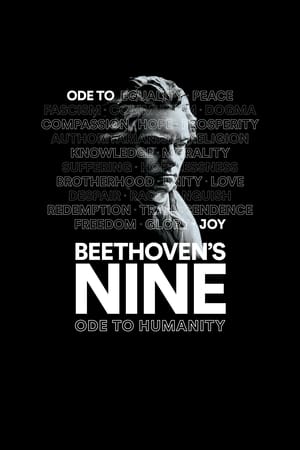
Can a work of art remain relevant 200 years after its creation? Ludwig van Beethoven’s last completed symphony proves it’s possible.