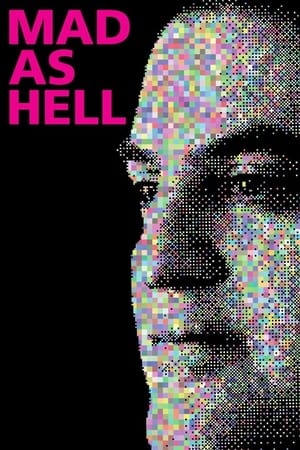
In an era of activism, filmmaker Connor Luke Simpson enters the world of Fat Acceptance, a provocative social movement that is seeking to change the negative perception of obesity. Is everything we know about obesity wrong, or, will this movement just become a footnote in the history books?
Few places symbolise the dawn of modernity with its expectations and upheavals better than the Jelmoli department store. The director documents the 125-year history from its foundation to its closure at the end of 2024.
Manguaba
In March 2018, oncologist Andrey Pavlenko learned that he had stomach cancer. For almost two years, Andrey struggled with the disease and simultaneously performed operations, created his own department in the clinic, and launched his own charitable foundation. All this time, it was filmed by the team of special projects of the portal "Such things". Andrey's chances of recovery were about 50-50. Eight rounds of chemotherapy, stomach removal, recovery, community service, and depression are what he went through during the treatment. On January 5, 2020, Andrey died. Before his death, realizing that there was not much time left, he gave one last interview. It became the basis of the film.
The film is based on a series of videos for the Internet dedicated to front-line operators of the Great Patriotic War.
This discovery film, based on the real events of the life of Alexander Pushkin, will completely change the idea of who we used to call "our everything", without suspecting to what extent it is true.
Who promised Muscovites that the war of 1812 would not affect them? How was it punished for retelling news to friends in the XIX century? How did Napoleon and the French behave in captured Moscow? And the main question is: who really burned Moscow?
The village of Soiga was founded by monks 400 years ago. At the beginning of the twentieth century, deforestation was organized in the Arkhangelsk region. In the 1950s, a narrow-gauge railway was built to transport timber to the Severnaya Dvina River. Now the village of Soiga is surrounded by swamps and is located 38 kilometers from the nearest highway. After the reduction of the forest fund, financial support for the road and the settlement stopped. The only way to get there is by a narrow - gauge railway, which has existed there since 1958. For about 40 years, local residents and the locomotive driver Boris Petrovich Skumin have maintained the road in good condition.
Settled on earthen counters, lying under the endless steps of buyers and onlookers, the history of the country for the last 100 years in the stories of the inhabitants of the flea market on Udelnaya.
According to statistics, every third Russian in the summer-autumn season becomes a real mushroom picker. And we are not looking for mushrooms for food, but because we love to do it, because for many it is a real passion called "silent hunting". At the same time, many mushroom pickers do not even know what these unique creatures of nature are, appearing and disappearing completely suddenly. This amazing, third kingdom of wildlife is still largely a mystery, even for scientists.
How is science done? What is behind the scenes of popular lectures and speeches? The film shows three days in the life of the famous popularizer of science Stanislav Drobyshevsky. The film crew visited together with him on archaeological excavations in the village of Khotylevo, Bryansk region, at the Lomonosov Moscow State University at the Department of Anthropology and at the conference "Scientists against Myths".
A short documentary film featuring Aleksander Lavrič.
The art of calligraphy refers to the Islamic heritage, culture and tradition. At the dawn of Islam, the use of Arabic script was considered sacred, and sacred texts gave rise to a rich abundance of manuscripts and initiated the tradition of calligraphy, which for more than a thousand years was preserved and developed not only for the design of manuscripts, but also in the art of architecture, ceramics and miniatures.
The camera loved her face, it was made for close-ups. And Romy Schneider loved and needed the camera - the film camera as well as the cameras of photographers and paparazzi. Julia Benkert's cinematic exploration of Romy Schneider's many faces shows that the actress's fascinating camera presence has lost none of its intensity even 27 years after her death - regardless of whether she was stylized as a veiled bride and glamorous diva, as in the French film "L'enfer" (1964), or whether she exposed herself to the camera without make-up, as in Hans Jürgen Syberberg's documentary "Portrait of a Face" (1966). Without make-up and in close-up, she talks about her fears and doubts - to this day, the film is an authentic testimony to Romy Schneider's deep inner turmoil. Her husband Harry Meyen had it extensively censored because he thought his wife was too sad.
Based on eight years of continued prosperity, presidents and economists alike confidently predicted that America would soon enter a time when there would be no more poverty, no more depressions -- a "New Era" when everyone could be rich. But when reality finally struck, the consequences of such unbound optimism shocked the world.
The profound story of Lucy Temerlin, a female chimpanzee raised as human from birth in a domestic environment, and Janis Carter, the woman who took on the seemingly impossible task of giving her a new life in the wild.
A Nazi propaganda movie produced under the aegis of the Nazi party's Office of Racial Policy aimed at legitimizing the Law for the Prevention of Hereditarily Diseased Offspring which allowed for sterilization.
BBC The Natural World. In 2004, a team from the Planet Earth series captured the first ever film of a wild snow leopard in the mountains of Pakistan. For Nisar Malik, who led the expedition, these images sparked a passion that compelled him to return. With cameraman Mark Smith, he spent two years documenting the snow leopard's daily life, finally lifting the veil on the most elusive of all cats.
A structuralist work composed of static, long-duration shots of Roman ruins and architectural details, all filmed on Super 8. The film operates without a traditional narrative or dialogue, relying on fixed compositions to document the interplay of light and shadow across ancient stone. By framing monuments through windows and doorways, Jean-Claude Rousseau explores the relationship between historical space and the act of observation.
Jean-Claude Rousseau's Jeune femme à sa fenêtre lisant une lettre is not only his first medium-length film, but a chance to discover this filmmaker whom Jean-Marie Straub has called, along with Frans Van de Staak and Peter Nestler, the greatest working in Europe. With this newly restored print there is also a possibility to discover the relationship between Rousseau's art of filming and Jan Vermeer's famous painting. As Prosper Hillairet wrote in 1988, four years after Rousseau had finished Jeune femme ... (for the first time as we know today): «Without adopting the usual systematic spirit and form of cinéma structurel, Rousseau presents us with simple images and leaves it at that. Keeps the image in hand. A minimalist and ascetic expression of cinema: a shot that lasts.»