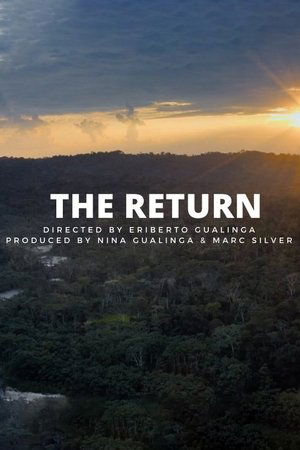
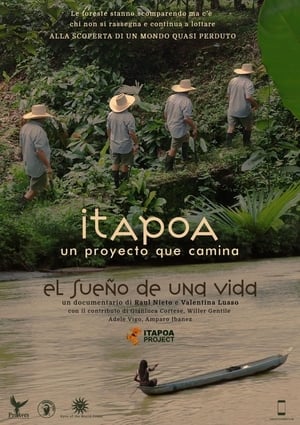
A botanical expedition in Ecuador's Amazon becomes a medium for an indigenous Huaorani community to remember the genocidal colonization it suffered in the 1960s. Meanwhile, a group of ecologists from the capital tries to stop oil exploitation in the last remaining forests where the isolated Huaoranis still live, who to this day refuse to come into contact with civilization.
Guyane, vivre avec le jaguar
Back in 2012 I had my very first Ayahuasca ceremony and, needless to say, I was terrified. But it ended up entirely changing my life and that of my future family. Which is why I decided to revisit the medicine in 2018, participating in three Ayahuasca ceremonies over the course of one week in Costa Rica, and document the process. In the film, we tackle my personal story of trying to build London Real into a global media and transformation company while also struggling with my own disconnection from friends, family and my own species. We also dive deep into the division and tribalism currently facing all of us around the world.
Hamilton Souther is the founder of Blue Morpho Tours, a company that caters to ayahuasca tourists in the Peruvian Amazon. Souther talks about the events that led him to Amazonian shamanism. Five first-time ayahuasca drinkers on a nine-day retreat with Blue Morpho relate their experiences.
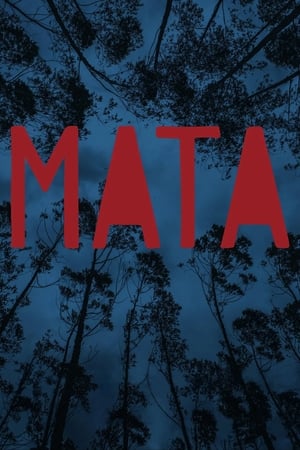
Faced with the advancement of eucalyptus plantations, a farmer and an indigenous community stand as resistance and reveal the impact of monoculture on the environment, in contrast to traditional ways of life. The enemy can also be green.
On the border of Surinam and French Guyana, indigenous Wayana territory is overrun by intruders. Illegal gold miners poison the river, missionaries repress indigenous identity, and even doctors with the best intentions leave marks that are often silently violent. The Wayana call these intruders Parasisi.
Back from war in Afghanistan, a young British soldier struggling with depression and PTSD finds a second chance in the Amazon rainforest when he meets an American scientist, and together they foster an orphaned baby ocelot.
Don Emilio is a humble, 63-year-old man who lives in the Amazon rainforest, seven miles from the city of Iquitos, Peru. For all of his adult life he has worked as a curandero and vegetalista, a traditional healer. He estimates that in his career he has treated more than 2,500 clients. Through the camera lens of anthropologist Luis Eduardo Luna, Don Emilio tells us about his practice, his beliefs, his community, and his life. He shows us how he prepares ayahuasca and other herbal medicines. Finally, we see Don Emilio treat a man who has come to him for help, and hear from a poor woman who has brought her infant son for medical care.
After a plane crash, four indigenous children fight to survive in the Colombian Amazon using ancestral wisdom as an unprecedented rescue mission unfolds.
Explore the mysterious Amazon through the amazing IMAX experience. Amazon celebrates the beauty, vitality and wonder of the rapidly disappearing rain forest.
The imagination of history in Ecuador never thought that oil, “its redeeming hope”, discovered in the Lago Agrio No. 1 well, was going to mean the beginning of the worst environmental catastrophe on the planet. Thirty years of operation and exploitation of the Texaco company, forever transformed the rivers and estuaries, the forests and the life of the indigenous communities in the northern Amazon of Ecuador.
Across the Amazon, Indigenous guards are unarmed patrols that peacefully defend ancestral territories against threats like oil, mining and poaching. They use diverse technologies to monitor their lands, and when necessary, force out illegal operations and actors. Most of this daily work, which involves lengthy hikes and patient observation, goes unseen. This film depicts the process of the Indigenous Guard: its patrols, its watchful vigilance over the landscape, and its support of the community. Their work as guards helps ensure that destruction in the Amazon doesn’t advance, and that their community has the vital space it needs to live life on their own terms.
Documentary by Portuguese Silvino Santos, about the Amazon, its flora, fauna, its inhabitants and among other wonderful images from the beginning of the 20th century with alternating close-up shots of caimans, jaguars and tropical flora with footage of Indigenous rituals--including some of the earliest known moving images of the Indigenous Witoto people--and longer sequences showcasing the region’s extractive industries: rubber, the Brazil nut, timber, fishing, even the egret feathers that were a staple of women’s fashion at the time.
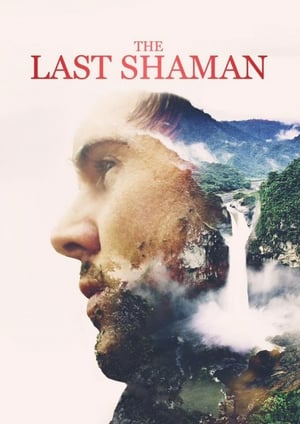
James, giving himself 12 months before he has "a license to kill himself," sets off to the Amazon rainforest with hopes of finding a shaman who can save his life.
Follows Martin Strel as he attempts to cover 3,375 miles of the Amazon River in what is being billed as the world's longest swim.
In these interviews, Dennis McKenna, Alex Grey, Rick Strassman, and other champions of psychedelics share their views on the value of psychedelic medicine, and its neglect in Western society.
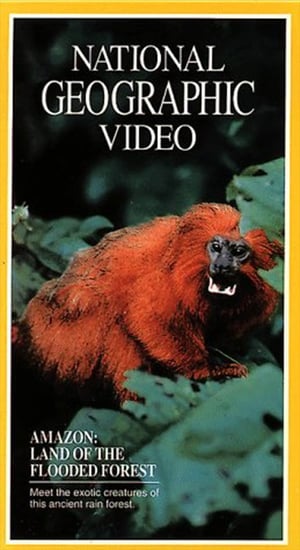
Explore an extraordinary region where water and land life intermingle six months out of the year.
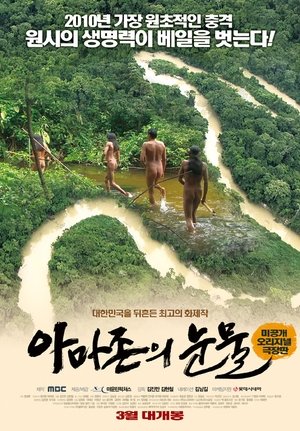
A documentary about environment destruction in the Amazon and the tribes living there. Produced for the 48th anniversary of MBC, Korea. A brilliant records of the itinerary for 250 days through the Amazon.
The Amazon rain forest, 1979. The crew of Fitzcarraldo (1982), a film directed by German director Werner Herzog, soon finds itself with problems related to casting, tribal struggles and accidents, among many other setbacks; but nothing compared to dragging a huge steamboat up a mountain, while Herzog embraces the path of a certain madness to make his vision come true.
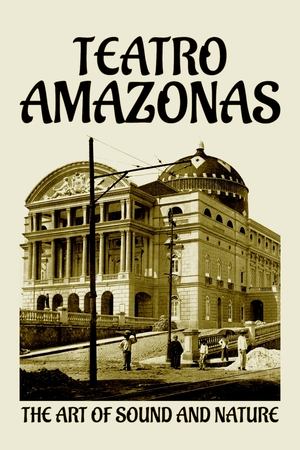
The history of the Teatro Amazonas in Manaus, an opera house located in the middle of the Amazon rainforest, whose construction, between 1884 and 1896, depended on the labor exploitation of the local indigenous populations, provides an insight into the cultural, social and political situation in Brazil.