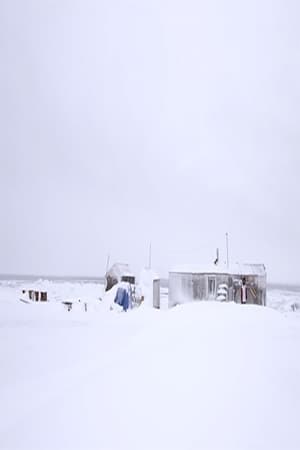
Documentary about filmmaker Bonnie Ammaaq's memories of life on Baffin Island, where her family moved for eleven years during her childhood from the hamlet of Igloolik to return to the traditional Inuit way of life.
This film takes us into the harsh realm of BC's early coal mines, canneries, and lumber camps; where primitve conditions and speed-ups often cost lives. Then, the film moves through the unemployed' struggles of the '30s, post WWII equity campaigns, and into more recent public sector strikes over union rights.
Recently diagnosed with ADHD, a symphony conductor uses the career shutdown of the 2020 pandemic to dive into her mental health. She looks for ways to face the challenges and honour the gifts of being neurodiverse.
NiiSoTeWak means “walking the path together.” Tapwewin and Pawaken are 10-year-old brothers trying to make sense of the world, their family and each other. They’re already grappling with some heady questions about identity. What does it mean to be a twin? What does it mean to be Cree? How do you define yourself when you’re forever linked to someone else? The twins discuss these questions with their two elder brothers — 22-year-old actor Asivak and 20-year-old basketball player Mahiigan — and their parents, Jules and Jake.
Yagorihwanirats, a Mohawk child from Kahnawake Mohawk Territory in Quebec, attends a unique and special school: Karihwanoron. It is a Mohawk immersion program that teaches Mohawk language, culture and philosophy. Yagorihwanirats is so excited to go to school that she never wants to miss a day – even if she is sick.
Superfan David Whiteley celebrates how an unassuming band of designers and factory workers in Leicestershire created the toys which were to define a generation.
Since the late 18th century American legal decision that the business corporation organizational model is legally a person, it has become a dominant economic, political and social force around the globe. This film takes an in-depth psychological examination of the organization model through various case studies. What the study illustrates is that in the its behaviour, this type of "person" typically acts like a dangerously destructive psychopath without conscience. Furthermore, we see the profound threat this psychopath has for our world and our future, but also how the people with courage, intelligence and determination can do to stop it.
Wisconsin's tribe's ongoing fight to protect Lake Superior for future generations. "Bad River" shows the Bad River Band of Lake Superior Chippewa's long history of activism and resistance in the context of continuing legal battles with Enbridge Energy over its Line 5 oil pipeline. The Line 5 pipeline has been operating on 12 miles of the Bad River Band's land with expired easements for more than a decade. The Band and the Canadian company have been locked in a legal battle over the pipeline since 2019.
Every winter for decades, the Northwest Territories, in the Canadian Far North, changes its face. While the landscape is covered with snow and lakes of a thick layer of ice, blocking land transport, ice roads are converted to frozen expanses as far as the eye can see.
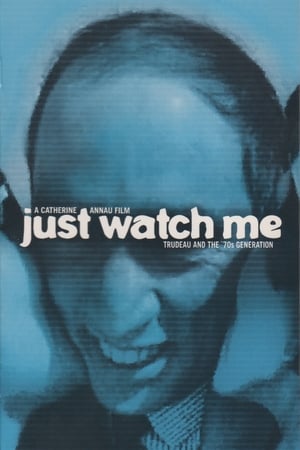
Canadian director Catherine Annau's debut work is a documentary about the legacy of Pierre Trudeau, the long-running Prime Minister of Canada, who governed during the 1970s. The film focuses particularly on Trudeau's goal of creating a thoroughly bilingual nation. Annau interviews eight people in their mid-30s on both sides of the linguistic divide. One tells of her life growing up in a community of hard-core Quebec separatists, while another, a yuppie from Toronto, recalls believing as a child that people in Montreal got drunk and had sex all day long. Annau has all of the interviewees discuss how Trudeau's policies affected their lives and their perceptions of the other side, in this issue that strikes to the heart of Canada's national identity.
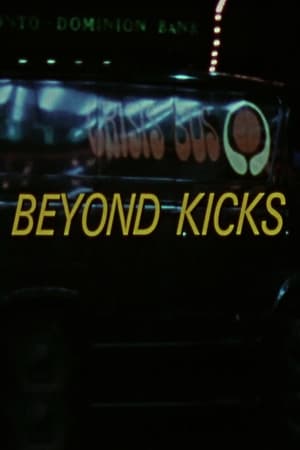
In the early 1970s, a group of young volunteers, the Free Youth Clinic of Winnipeg, operated a "crisis bus" to rescue young people experiencing bad drug trips, usually from LSD.
This feature documentary retraces the century of haggling by successive federal and provincial governments to agree on a formula to bring home the Canadian Constitution from England. This film concentrates on the politicking and lobbying that finally led to its patriation in 1982. Five prime ministers had failed before Prime Minister Pierre Elliott Trudeau took up the challenge in the early 1970s. Principal players in this documentary are federal Minister of Justice Jean Chrétien, Prime Minister Trudeau, 10 provincial premiers and a host of journalists, politicians, lawyers, and diplomats on both sides of the Atlantic.
When Jennifer Pan calls 911 to report that her parents have been shot, she becomes the primary focus of a captivating criminal case.
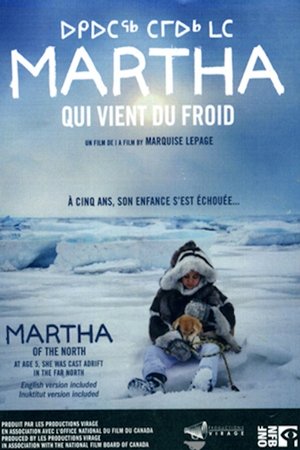
In the mid-1950s, lured by false promises of a better life, Inuit families were displaced by the Canadian government and left to their own devices in the Far North. In this icy desert realm, Martha Flaherty and her family lived through one of Canadian history’s most sombre and little-known episodes.
Two Canadians, one Liberal and one Conservative, attend a U.S. convention focused on depolarizing politics, determined to engage in tough conversations for a healthier democracy.
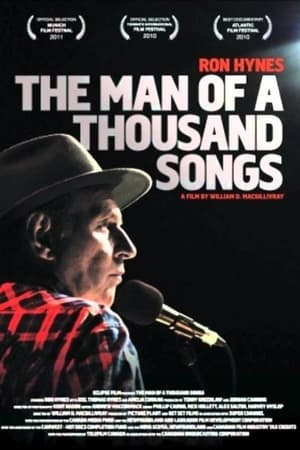
A feature length documentary about extraordinary Canadian singer songwriter, Ron Hynes... an insightful and entertaining exploration of the creative process, the genesis of song, the meaning of performance and the vulnerability of an artist compelled to bare his soul through his music. The film is comprised of Ron performing his music (distinct and live for the camera), interwoven with very intimate black box 'interviews' with Ron (shot tightly and directly addressed to the camera), in which he discusses the songs and the life that informed them: late nights, dark alleys, marriage, children, divorce, his near death and recovery from drug addiction... and punctuated with back stage moments, insight from the street, and Ron's nephew author Joel Thomas Hynes, taking the role of 'chorus of the people'.
Filmed on location in Saskatchewan from the Qu'Appelle Valley to Hudson Bay, the documentary traces the filmmaker's quest for her Native foremothers in spite of the reluctance to speak about Native roots on the part of her relatives. The film articulates Métis women's experience with racism in both current and historical context, and examines the forces that pushed them into the shadows.
In the 1940's American-born Willard MacDonald jumped his troop train heading to WWII. Fearing authorities he lived as a hermit deep in the northern wilderness of Nova Scotia, Canada for more than 60 years inspiring folklore for generations.
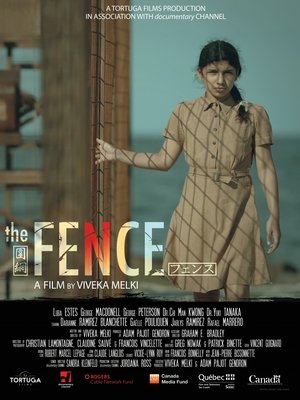
After the Japanese attack on Pearl Harbor, all persons of Japanese descent in Canada were sent to internment camps. The former Asahi members survived by playing ball. Their passion was contagious and soon other players joined in, among them RCMP officials and local townspeople. As a result, the games helped break down racial and cultural barriers.
An examination of the issue of missing and murdered Indigenous women, the film explores the reasons why Indigenous women are uniquely vulnerable to violence by juxtaposing the stories of some missing or murdered women with the personal testimonies of women who are doing activism on the issue and women who have personally survived incidents of violence.