Cyrille, a young gay farmer from Auvergne, has only one friend, a homosexual like him. One day, he goes on vacation to a beach in Charente Maritime. He cannot swim and sees the sea for the first time. It was there that he met the director Rodolphe Marconi who decided to devote this sensitive and gentle portrait to him, plunging us into an agricultural world in crisis and into a life often lonely and made up of hard work rarely pays off.
These are the first images shot in the ALN maquis, camera in hand, at the end of 1956 and in 1957. These war images taken in the Aurès-Nementchas are intended to be the basis of a dialogue between French and Algerians for peace in Algeria, by demonstrating the existence of an armed organization close to the people. Three versions of Algeria in Flames are produced: French, German and Arabic. From the end of the editing, the film circulates without any cuts throughout the world, except in France where the first screening takes place in the occupied Sorbonne in 1968. Certain images of the film have circulated and are found in films, in particular Algerian films. Because of the excitement caused by this film, he was forced to go into hiding for 25 months. After the declaration of independence, he founded the first Algerian Audiovisual Center.
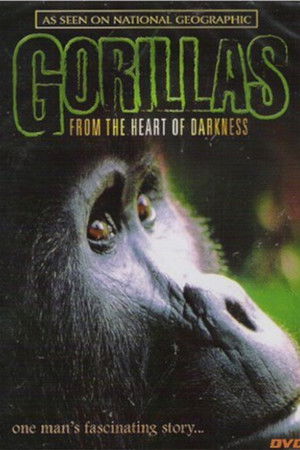
This fascinating film tells the story of one man's struggle to protect a small population of gorillas on the slopes of Mount Kahuzi in Zaire and of his incredible relationship with Kasimir, the great silver-backed male, and his family.
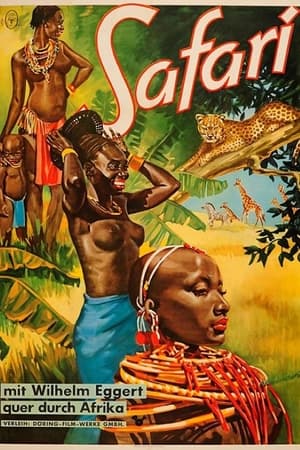
This film speaks of archaic peoples, their customs and mores, in an attempt to make the last snapshots of their traditional lifestyles before they are gone for good.
Mögöbalu, Les Maîtres des Tambours d'Afrique
Frantz Fanon alone embodies all the issues of French colonial history. Martinican resistance fighter, he enlisted, like millions of colonial soldiers, in the Free Army out of loyalty to France and the idea of freedom that it embodies for him. A writer, he participated in the bubbling life of Saint-Germain with Césaire, Senghor and Sartre, debating tirelessly on the destiny of colonized peoples. As a doctor, he revolutionized the practice of psychiatry, seeking in the relations of domination of colonial societies the foundations of the pathologies of his patients in Blida. Activist, he brings together through his action and his history of him, the anger of peoples crushed by centuries of colonial oppression. But beyond this exceptional journey which makes sensitive the permanence of French colonialism in the Lesser Antilles at the gates of the Algerian desert, he leaves an incomparable body of work which has made him today one of the most studied French authors across the Atlantic.
"Africa Light" - as white local citizens call Namibia. The name suggests romance, the beauty of nature and promises a life without any problems in a country where the difference between rich and poor could hardly be greater. Namibia does not give that impression of it. If you look at its surface it seems like Africa in its most innocent and civilized form. It is a country that is so inviting to dream by its spectacular landscape, stunning scenery and fascinating wildlife. It has a very strong tourism structure and the government gets a lot of money with its magical attraction. But despite its grandiose splendor it is an endless gray zone as well. It oscillates between tradition and modernity, between the cattle in the country and the slums in the city. It shuttles from colonial times, land property reform to minimum wage for everyone. It fluctuates between socialism and cold calculated market economy.
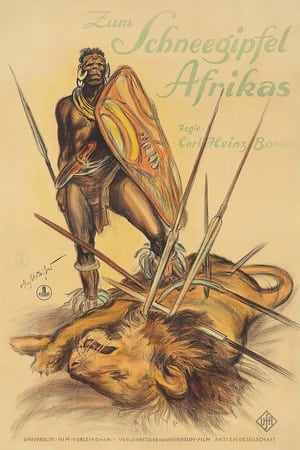
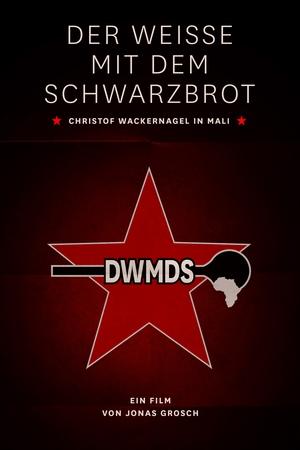
Die weiße Gefahr
While millions of birds migrate freely in the skies above, Fadia, a Palestinian refugee stranded in Lebanon, yearns for the ancestral homeland she is denied. When a chance meeting introduces her to the director, Sarah, she challenges her to find an ancient mulberry tree that once grew next to her grandfather’s house in historic Palestine, a tree that stands witness to her family’s existence.
By land, by air, and by sea, viewers can now experience the struggle that millions of creatures endure in the name of migration as wildlife photographers show just how deeply survival instincts have become ingrained into to the animals of planet Earth. From the monarch butterflies that swarm the highlands of Mexico to the birds who navigate by the stars and the millions of red crabs who make the perilous land journey across Christmas Island, this release offers a look at animal instinct in it's purest form.
Tears of Africa
In the heart of Gorongosa National Park, Mozambique, the waters of Lake Urema explode with the thrashing of a giant crocodile tail. Gorongosa was once known as the place where Noah left his ark: 1,500 square miles of lush floodplains in central Mozambique, packed with wild animals. All around, enormous buffalo, soaring fish eagles, and countless antelopes roam freely. But on closer look, something strange is going on. Fifteen years of civil war has taken a heavy toll and many species have been almost completely wiped out. All the usual top predators and prey are virtually missing, except for one - giant crocodiles and thousands of them. Discover what is being done to bring this African oasis back to its former glory, including perhaps the most ambitious restoration effort ever attempted, with elephants, hippos and scores of zebra, wildebeest, impala and buffalo, being relocated into the park.
Kibera is the largest slum area in Nairobi, and the largest urban slum in Africa. This documentary depicts three important problems; violence, drugs (miraa) and albinos killing.The 2009 Kenya Population and Housing Census reports Kibera's population as 170,070, contrary to previous estimates of one or two million people .Most of Kibera slum residents live in extreme poverty, earning less than $1.00 per day. Unemployment rates are high. Persons living with HIV in the slum are many, as are AIDS cases. Cases of assault and rape are common. There are few schools, and most people cannot afford education for their children. Clean water is scarce. Diseases caused by poor hygiene are prevalent.
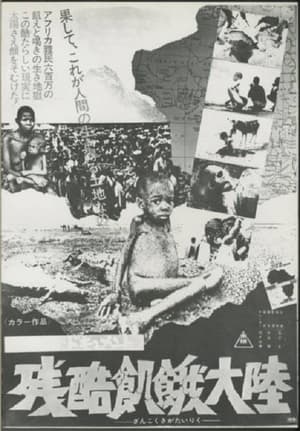
The film documents modern slave trade through a number of African countries, under dictatorship rule. The filming was conducted both in public places, and sometimes with the use of hidden cameras, for high impact scenes of nudity, sex, and violence - and a few surprises, as slaves made out of peregrins to Asia, and slave traders paid in traveller checks.
Libya: No Escape from Hell
When a massive Chinese factory complex attempts a high-stakes expansion in rural Ethiopia, three women in search of prosperity have their faith in industrialization tested to the limit. Filmed over four years with singular access, Made in Ethiopia lifts the curtain on China’s historic but misunderstood impact on Africa, and explores contemporary Ethiopia at a moment of profound crisis. The film was awarded the Jury Special Mention at Tribeca Festival.
In 2004 X1 Sports took a band of intrepid climbers to Croatia . Their mission was to find some of the best and unknown rock in the Europe ; the reason, well to see if they could Deep Water Solo off it of course. With some of the best climbers in the world, Chris Sharma, Steve McClure, Leo Holding, Depth Charge charts their progress and antics as they look to challenge their limits each and every day. Depth Charge is an on the wall documentary of their every move and allows the viewer to see exactly what makes a climber tick.
Hosted by Val Kilmer, the documentary follows playwright Nicholas Ellenbogen as he travels to remote communities in six different African countries. In each community, the residents have taken an holistic and somewhat controversial approach to managed wildlife care.
KÖY (Turkish for village) is about the longing for home, for belonging and the freedom of the self. Three women from three generations are united by their Kurdish roots.
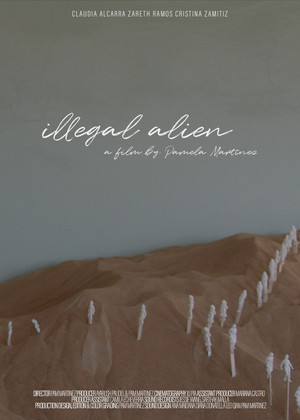
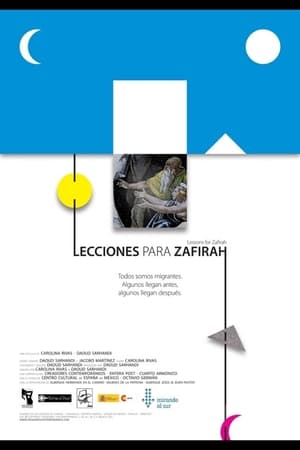
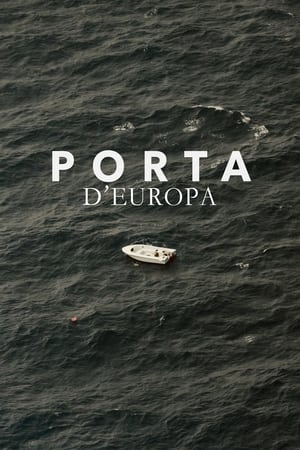
On the border, the line as principle of property and belonging reaches an extreme dimension where it physically defines the sphere of its relations. Those who transgress it reconstruct these imaginary lines on a daily basis, redefining the traditional geography and occupying the non-spaces where others live in a temporary form of existence. These others, the non-citizens, are phantasmtic, exchangeable parts of a flexible market. Made invisible, they are permanently controlled persons. Under the pretext of a greater civilian security, they are kept clear from the public spaces reserved for the citizens with rights and pushed into non-public spaces, which are run by state and military surveillance, multinational operations servicing a European market and non-governmental organisations.