One of the world's most acclaimed comedies, M*A*S*H focuses on three Korean War Army surgeons brilliantly brought to life by Donald Sutherland, Tom Skerritt and Elliott Gould. Though highly skilled and deeply dedicated, they adopt a hilarious, lunatic lifestyle as an antidote to the tragedies of their Mobile Army Surgical Hospital, and in the process infuriate Army bureaucrats. Robert Duvall, Gary Burghoff and Sally Kellerman co-star as a sanctimonious Major, an other-worldly Corporal, and a self-righteous yet lusty nurse.
From the moment she glimpses her idol at the stage door, Eve Harrington is determined to take the reins of power away from the great actress Margo Channing. Eve maneuvers her way into Margo's Broadway role, becomes a sensation and even causes turmoil in the lives of Margo's director boyfriend, her playwright and his wife. Only the cynical drama critic sees through Eve, admiring her audacity and perfect pattern of deceit.
I'm invited into a room. Someone is talking to me. I keep getting sucked into another place.
A surrealist translation of Catholic devotional postcard imagery set into unsettling motion. Preserved by the Academy Film Archive in 2008.
An aging, decadent landlord’s passion for music becomes the undoing of his legacy as he sacrifices his wealth in order to compete with the opulent music room of his younger, richer neighbour.
Les Blank's poetic documentation of 1967's Los Angeles Easter Sunday Love-In. Preserved by the Academy Film Archive in 2002.
'Afloat' is an experimental film that paints a portrait of Japanese performance artist: Ayumi Lanoire. The film opens as a telephone call between Ayumi and Person X, which meanders the audience through the various layers that make up her personas leading one to wonder whether she is in fact a myth or reality.
Retired wealthy sea captain Jim McKay arrives in the Old West, where he becomes embroiled in a feud between his future father-in-law, Major Terrill, and the rough and lawless Hannasseys over a valuable patch of land.
Is it happening in the screening room or on the screen; in a snowstorm or inside; what isn't surrounding and what is? From filming Ann sewing, on a grey winter day. Preserved by the Academy Film Archive in 2016.
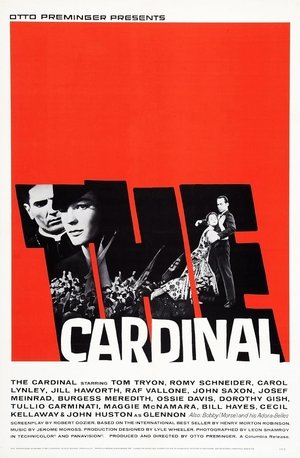
A young Catholic priest from Boston confronts bigotry, Nazism, and his own personal conflicts as he rises to the office of cardinal.
"Taken between September 1970 and May 1971, with the unmoving camera apparently bolted to the window ledge, this film, a ten-minute eternity, chronicles what takes place within view of the lens. The backdrop is a typical New York pizza stand, the actors are selected New Yorkers who happened to be there during the half year, the plot is the somewhat sinister aimlessness of life itself." - Donald Ritchie, Museum of Modern Art, NY. Preserved by the Academy Film Archive in 2014.
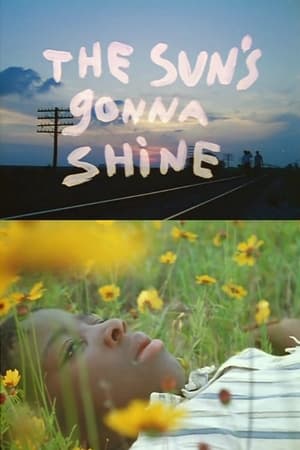
A lyrical recreation of Lightnin’ Hopkins’ decision at age eight to stop chopping cotton and start singing for a living. Preserved by the Academy Film Archive in 2013.
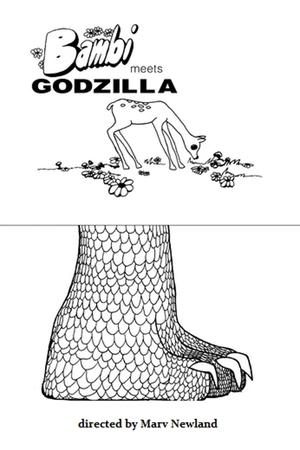
A deer, disillusioned by the consumerism that defines his life. A lizard, ostracized from society, forever wandering. A chance meeting in the middle of a field. Who will survive? And who will transcend existence? Preserved by the Academy Film Archive in 2009.
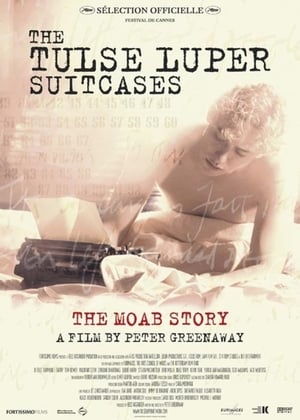
A comic study of 20th-century history, reconstructing the life of writer, creator and professional prisoner Tulse Luper. Born in 1911 Newport and last heard of in 1989, Luper’s life is pieced together from the evidence found in 92 suitcases scattered across the globe. In the first of three parts, we follow Luper through three distinct episodes: as a child during the First World War; as an explorer in Mormon Utah; and as a writer in Belgium during the rise of fascism.
‘A beautiful, mysterious yet satisfying optical illusion…celebrates the early passing of a steam on the Thames. Using freeze-frame techniques, elaborate dissolves, and most of the resources on the optical table, this picture is, amongst other things, a Turner come to life. Rimmer’s concern with the surface nature of the film is most evident in this work which, in spite of its filmic complexity, is incredibly simple.’ — Donald Richie. Preserved by the Academy Film Archive in partnership with Pacific Cinematheque in 2013.
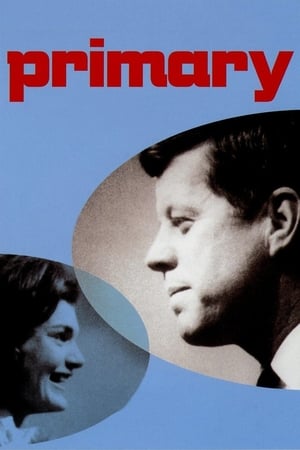
Primary is a documentary film about the primary elections between John F. Kennedy and Hubert Humphrey in 1960. Primary is the first documentary to use light equipment in order to follow their subjects in a more intimate filmmaking style. This unconventional way of filming created a new look for documentary films where the camera’s lens was right in the middle of what ever drama was occurring. Preserved by the Academy Film Archive in partnership with The Film Foundation in 1998.
Nelson sets minimal, repetitive imagery against a looping recording of his daughter Oona, which goes gradually from sweet to curious to mysterious to cacophonous as the loops overlap each other. Since its premiere alongside The Great Blondino and other shorts in April 1967, the film has rarely been seen. It stands out as a more textural piece from Nelson, which, rather than retreating into pure abstraction or bland trippiness, subtly transmits an undercurrent of its ominous source material. —Mark Toscano. Preserved by the Academy Film Archive in 2010.
Coming in the wake of a whole movement of wild, ecstatic, psychedelic films loaded with unchecked energy and abandon, Throbs demonstrates a remarkable subtlety and restraint, as Fred explores variations in loops and cycles, weaving unlikely combinations of found and original footage to envelop us in a free associative dream world. —Mark Toscano. Preserved by the Academy Film Archive in 2008.
"I relocated to the Redwoods of Sonoma County upon graduation and in that relocation process the animation for Sonoma began. The design was built around the concept of the long wide horizontal 'pan' shot to express the concept of a dynamic landscape that passes across the screen like a traditional Chinese Scroll Painting. The deep personal meaning relates to the 'relocation' that was occurring within my own being after having done 2½ terms of active combat in the jungle as a carrier enlisted with the 82nd Airborne Division of the Army" -D. Pies. Preserved by the Academy Film Archive in 2012.
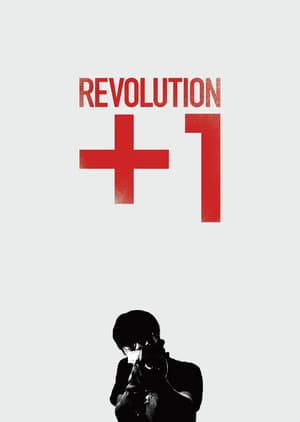
Tatsuya Kawakami's mother becomes a member of a religious group after her husband commits suicide, and makes a large donation to the organization. Her three children are forced to live in poverty, and her eldest son, who is blind in one eye due to illness, takes his own life. Kawakami comes to believe that the religious group has ruined his life, so he creates a homemade gun and carries out an assassination plot against former prime minister Shinzo Abe, who has close ties to the religious group, which has been accused of siphoning off money from its members.