A ritual of grids, reflections and chasms; a complete state of entropy; a space that devours itself; a vertigo that destroys the gravity of the Earth; a trap that captures us inside the voids of the screen of light: «That blank arena wherein converge at once the hundred spaces» (Hollis Frampton).
In 1949, philosopher and novelist Simone de Beauvoir wrote the groundbreaking The Second Sex, launching a disruptive discourse on women’s oppression and second-class citizenship. This film dissects the origins and relevance of this bible of feminism, charting de Beauvoir’s fact-finding journey across the US to research her book. The timely and fascinating film honors de Beauvoir’s brilliance and limitations, connecting her revolutionary ideas to the pressing issues women face today.
Published in 1949, The Second Sex became the bible of global feminism. An essential work that passionately advocates for gender equality, women's independence, and the liberation of morals. Today, how does this seminal work continue to resonate in our contemporary world? Conceived as an initiatory journey to the origins of Simone de Beauvoir's thinking, the film The Second Sex: In the Footsteps of Simone de Beauvoir takes us to the United States, to the places that inspired the philosopher and nourished her theories. An American road trip bringing together the worst and the best, predatory capitalism and mad love. A unique reinterpretation in the company of the great thinkers of our century.
In a time of resurgence of social protests, political radicalization and distrust of power, Arendt's thought has never been more relevant: A critical thinker according to some or a conservative according to others, this great figure of the intellectual world remains, in many ways, an enigma. Who was Hannah Arendt?
The documentary focuses on the annual Mani Rimdu festival of Tibet and Nepal, an event which encapsulates the Himalayan Buddhist experience.
A documentary about the technological progress responsibility in employment destruction, analyzed by philosopher Zygmunt Bauman and others.
The innovative and influential British filmmaker Derek Jarman was invited to direct the Pet Shop Boys' 1989 tour. This film is a series of iconoclastic images he created for the background projections. Stunning, specially shot sequences (featuring actors, the Pet Shop Boys, and friends of Jarman) contrast with documentary montages of nature, all skillfully edited to music tracks.
A dream where obsession for German as a second language mixes up with an obsession for neatness and cleanliness as a distinctive feature of the national culture in question seen from the perspective of a foreigner. The dream is not a nightmare only because the set it is dreamt into is the seashore of the mare nostrum, where the dreaming subject is perfectly at home. A homeland which she, in turn, in her more secret thus naïf dreams would dream of being cleaner and tidier as in the reality, especially in front of such beauty of nature. As is right and proper.
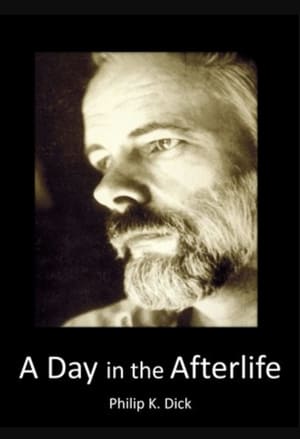
A poetic look at the life and legacy of legendary author Philip K. Dick (1928-1982), who wrote over a hundred short stories and 44 novels of mind-bending sci-fi, exploring themes of authority, drugs, theology, mental illness and much more.
This refreshingly frank and impartial study of the discovery and development of the notorious hallucinogenic drug is notably free of moral judgmental, and features contributions from such legendary heroes of psychedelia as Albert Hoffman - the Swiss scientist who discovered the drug - Aldous Huxley - author of 'The Doors of Perception' - Ken Kesey - author of 'One Flew Over the Cuckoo's Nest.
Examined Life pulls philosophy out of academic journals and classrooms, and puts it back on the streets. Offering privileged moments with great thinkers from fields ranging from moral philosophy to cultural theory, Examined Life reveals philosophy's power to transform the way we see the world around us and imagine our place in it.
Musings on life and literature in this student drama made by the Cambridge Film Unit.
A kinetic prayer and structuralist intervention. Shot entirely on an iPhone 11 in a desolate Midwest laundromat, 108 spin documents the mechanics of impermanence. The film shifts from heavy turbulence to suspended repetition—not as a path to completion, but as a study of the loop itself. Featuring a layered soundscape, the work asks the viewer to stare into the rotation until the noise becomes a mantra.
IDFA and Canadian filmmaker Peter Wintonick had a close relationship for decades. He was a hard worker and often far from home, visiting festivals around the world. In 2013, he died after a short illness. His daughter Mira was left behind with a whole lot of questions, and a box full of videotapes that Wintonick shot for his Utopia project. She resolved to investigate what sort of film he envisaged, and to complete it for him.
In Junior War, a throng of highschoolers congregate at night for a party in the woods sometime in the year 2000. A band plays, the kids get drunk, the boys and girls tepidly flirt, and groups deploy into cars for the purpose of destroying mailboxes, tee-peeing houses, breaking lawn ornaments, and sparring with the police. The film is composed entirely of footage Trecartin took during his senior year of high school in exurban Ohio; as such, it baits the viewer with genealogical significance.
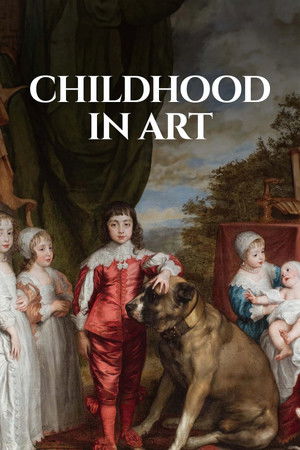
How have the changing views on children been reflected in their representation in art? From Baby Jesus to the first photographic portraits, an exploration of six centuries of art history through the prism of childhood.
This remastered, rare, local production from the 80s is an unfiltered look into the mind and heart of the world-renowned folk artist Howard Finster. Walking and talking in his Paradise Garden, Finster gives insight into his visions, Faith, and artwork. He even sings and plays the banjo. Dr. George Pullen interviews Finster. And in this case, the word "interview" means that Dr. Pullen just lets Finster talk. And it's pure gold.
After concluding the now-legendary public access TV series, The Pain Factory, Michael Nine embarked on a new and more subversive public access endeavor: a collaboration with Scott Arford called Fuck TV. Whereas The Pain Factory predominantly revolved around experimental music performances, Fuck TV was a comprehensive and experiential audio-visual presentation. Aired to a passive and unsuspecting audience on San Francisco’s public access channel from 1997 to 1998, each episode of Fuck TV was dedicated to a specific topic, combining video collage and cut-up techniques set to a harsh electronic soundtrack. The resultant overload of processed imagery and visceral sound was unlike anything presented on television before or since. EPISODES: Yule Bible, Cults, Riots, Animals, Executions, Static, Media, Haterella (edited version), Self Annihilation Live, Electricity.
A film essay on origin, life, religion, decay and more.
An exploration of the link between science and beauty through the work of scientists at CERN, in Geneva.