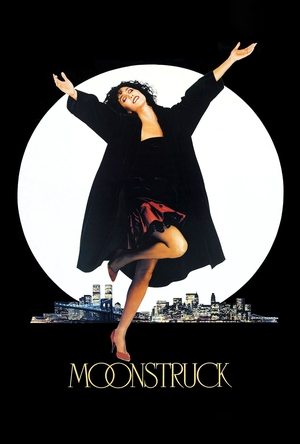
A famous opera singer, Giorgio Fini, loses his voice during an American tour. He goes to a female throat specialist, Pamela Taylor, whom he falls in love with.
Arabella, Op. 79, is a lyric comedy or opera in three acts by Richard Strauss to a German libretto by Hugo von Hofmannsthal, their sixth and last operatic collaboration. Arabella is determined to marry for love, not wealth - against the wishes of her impoverished aristocratic parents. When she gives her heart to the mysterious Mandryka, a series of misunderstandings puts their love to the test.
Paris in the 1920s. Marguerite Dumont is a wealthy woman with a passion for music and the opera. For years, she has performed regularly for a circle of guests. But Marguerite sings tragically out of tune and no one has ever told her. Her husband and her close friends have always encouraged her in her illusions. Things become very complicated the day she gets it into her head to perform in front of a genuine public, at the Opera.
An American tourist on a day trip to Sussex from London inadvertently finds himself at Glyndebourne Opera House in Sussex where he learns to appreciate Opera.
In 1879 Paris, a young orphan dreams of becoming a ballerina and flees her rural Brittany for Paris, where she passes for someone else and accedes to the position of pupil at the Grand Opera house.
Celebrated Swedish opera star Karin Anderson is slated to appear in an internationally-telecast production of Tannhauser. Ms. Anderson balks at the notion of working with obscure Hungarian conductor Zoltan Szanto. The much-anticipated production may never get off the ground, thanks to labor-management difficulties, intramural jealousies, and clashing egos. Amidst all this chaos, the mismatched Anderson and Szanto fall in love.
Lively scenes of Paris, all narrated by Maurice Chevalier, link together four dramatic ballet choreographies by Roland Petit: La Croqueuse de diamants (The Gold Digger), Cyrano de Bergerac, Deuil en 24 heures (A Merry Mourning), and Carmen.
Performances from Pamela Coburn, Brigitte Fassbaender, Janet Perry, Eberhard Wachter, the Choir und Ballet der Bayerischen Staatsoper, and the Bayerisches Staatsorchester. Rosalinde, wife of Eisenstein, is having an affair with Alfred. Eisenstein is due to begin a prison sentence the next morning, and the prison governor, Frank, is expected to collect him at any moment. However, Eisenstein allows himself to be talked into attending a fancy dress ball by Dr Falke, and when Frank arrives to find Alfred with Rosalinde, he assumes him to be Eisenstein and carts him off to prison.
Ten short pieces directed by ten different directors, including Ken Russell, Jean-Luc Godard, Robert Altman, Bruce Beresford, and Nicolas Roeg. Each short uses an aria as soundtrack/sound, and is an interpretation of the particular aria.
Most opera houses ring in the New Year with Johann Strauss Jr.'s most popular operetta--the festiveness of which is appropriate for the occasion--and this December 31, 1983, Covent Garden performance follows suit. An exceptional cast--led by Hermann Prey and Kiri Te Kanawa as the couple whose marriage survives the comic indiscretions of three long acts--obviously has as much fun as the audience. Plácido Domingo leads the Orchestra of the Royal Opera House through its paces with panache. Prince Orlofsky's Act II party is always a splendid opportunity to pull out all the stops with surprise "guests," and this performance makes the most of its chance: entering the proceedings to sing one of his tailor-made chansons, "She," is French crooner Charles Aznavour, who is followed by dancers Merle Park and Wayne Eagling, their delightful pas de deux flashily choreographed by Sir Frederick Ashton.
Tamino, a handsome prince, and Papageno, a bird-catcher, are sent by the Queen of Night to rescue her daughter Pamina from captivity under the high priest Sarastro. Julie Taymor's abridged, English-language production of the classic Mozart opera.
Hubička
LA PIETRA DEL PARAGONE (The Touchstone) concerns the Count Asdrubale who is wealthy and therefore of great interest to many women – notably Aspasia, Fulvia, and Clarice. Only Clarice, however, loves him for something other than his riches. There are also male hangers-on: the corrupt journalist Macrobio, the poetaster Pacuvio, and Giocondo, who is Asdrubale's true friend, but who has his own eyes on Clarice. To test his friends and would-be fiancées, Asdrubale pretends that he has been bankrupted. Sure enough, only Clarice and Giocondo stand by him, and when his fortune is "miraculously" saved, the three have the last laugh on everyone else... or do they? This production is set in what looks like the early 1960s. But the real innovation is the use of blue screen technology: using tiny cameras and sets, along gigantic screens hanging over the stage, a kind of video mixing makes the singers appear to inhabit any number of fanciful settings and perform a myriad of improbable actions.
Bugs Bunny vs. a famous opera singer at the Hollywood Bowl.
Ageing misfit Sir Morosus lives alone in an old-style apartment in Charlottenburg in Berlin. He is wealthy, but also lonely and a bit grumpy. Then his nephew Henry moves in with him and his life takes a turn for the better. Director Jan Philipp Gloger homes in on two of the most pressing problems of the day: loneliness and the housing shortage. The Staatskapelle Berlin is conducted by Christian Thielemann.
Opera in three acts, a prologue and an epilogue, by Jacques Offenbach (1819-1880), with a libretto in French by Jules Barbier (1825-1901), based on a work that Barbier himself and Michel Carré (1821-1872) had written based on stories by E.T.A. Hoffmann (1776-1822). Approximate duration: 2 h 45 min Recommended for those over 15 years old. The young poet Hoffmann, accompanied by Nicklausse, his alter ego and confidant, is in a tavern next to the theatre where Mozart's Don Giovanni is being performed. During the opera's intermission, some diners arrive at the bar who, upon seeing the poet, encourage him to sing and tell them the story of his famous love affairs. Hoffmann finally gives in and shares with them the stories of Olympia, Antonia and Giulietta. They, absorbed in the poet's stories, remain in the tavern, forgetting about the opera performance.
Sylvester sings opera and popular tunes while standing on a back alley fence; Elmer, who wants to sleep, tries to thwart him.
After he is rejected by the Great Poochini as an opening act, Mysto the Magician gets his revenge by conducting his next operatic performance.
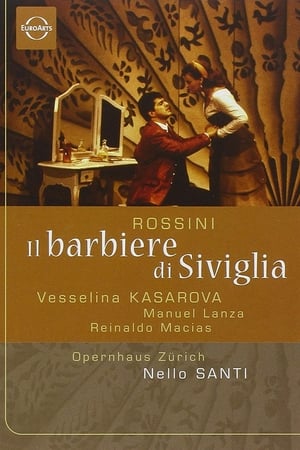
Live performance from Schwetzinger Festspiele, 1988. What sets this IL BARBIERE DI SIVIGLIA apart from all others available is its elegant realism. None of its visuals are the least bit cartoonish or blatantly designed for comedy. Dr. Bartolo’s house is a stark, stern-looking structure of plastered brick with a comfortable yet plain, white-curtained interior, while the costumes are highly realistic 18th century garb in subdued colors. Yet despite its fairly austere appearance the production is delightful, thanks to its performers and staging. The stage business is lively, witty and free of excessive slapstick, and every singer brings his or her character to life, all offering rich, vibrant characterizations that strike a perfect balance between comedy and humanity.
Set in turn of the century Baku at the dawn of the 20th century, a young man wishes to marry. Since he is a rich and successful business man, despite his young age, he feels that he should have his pick of any bride that he fancies, however, Azerbanjani tradition dictates otherwise.