Le Palais des hiéroglyphes - Sur les traces de Champollion
At the dawn of the Christian era, Petra, capital of the rich kingdom of the Nabataeans, bordering the deserts of Arabia, Syria and the Negev, was absorbed by the Roman Empire and, after being sacked by the Bedouins, disappeared from the memory of mankind; but its secrets are gradually being revealed thanks to an enormous excavation work.
Sara from Zurich was circumcised as a little girl in Ethiopia. This event severely traumatized her. To find her inner peace, Sara decides to look for her circumciser.
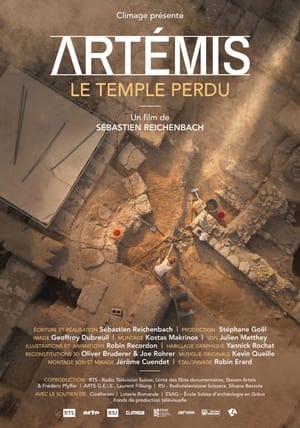
In Cairo, a German-Egyptian team is searching for traces of the largest temple of the Pharaohs, seeking answers as to why the sanctuary was abandoned more than 2000 years ago.
In the heart of a metropolitan city of 15 million people and among the construction of a new billion-dollar transportation network, an archaeological sensation has been discovered: the ancient harbour of Theodosious, lost from the history books for over 1000 years.
Néandertal : Qui a tué notre cousin ?
In Chile's Atacama Desert, astronomers peer deep into the cosmos in search for answers concerning the origins of life. Nearby, a group of women sift through the sand searching for body parts of loved ones, dumped unceremoniously by Pinochet's regime.
China - Treasures of the Jade Empire
For the first time ever, scientists have plunged into the mystical waters of Lake Titicaca in Peru. This team of fifteen international scientists and underwater archaeologists believes it will uncover remarkable traces of life from pre-Columbian times.
The region of Lake Turkana, located in Kenya and Ethiopia, is considered to be “the Cradle of Humankind”. Among other finds, primate fossils from millions of years ago have been discovered in the region. But what about the region’s modern inhabitants and their relationship to their environment? Iiris Härmä, whose previous work includes the award-winning Leaving Africa, had the chance of joining Helsinki University’s researchers, Álvaro Fernández-Llamazares and Mar Cabeza, on their pre-pandemic trip to study the Daasanach people’s relationship to their environment through traditional animal tales. The researchers hope that storytelling would help to bridge the gap between people’s everyday lives and conservation efforts.
La capitale gauloise disparue
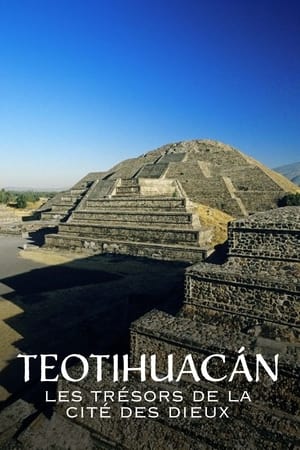
For centuries, archaeologists have been trying to understand the Aztec empire and reveal the truth about their origins. Now, new excavations could reveal astonishing secrets about how they lived and what life was like inside one of the greatest empires in history. Where did this group of nomadic people originate from? How did they undertake building their towering pyramids and other ambitious engineering feats using manpower alone? And how was such a powerful empire wiped out after just 200 years of power?
Que cachent les pyramides d'Égypte ?
After decades of inaccessibility due to unrest and wars, teams of archaeologists from around the globe return to the greatest sites in Mesopotamia in a bid to save what can still be saved.
Les templiers, la démesure des Batisseurs
Prehistoric Women
Jonathan Dimbleby’s landmark 1973 documentary “The Unknown Famine” stands as a pivotal moment in Ethiopian history—a journalistic endeavour that not only exposed a humanitarian crisis but inadvertently helped precipitate the end of Africa’s oldest monarchy. The footage was broadcast by ITV for its flagship affairs series named "This Week".
CBS News presents a Smithsonian adventure featuring Iris Love and narrated by Walter Schirra produced by CBS News in association with the Smithsonian Institution (1971).
A documentary that brings to light the extraordinary story of the Sacred Band of Thebes – an elite military unit composed of 150 pairs of male lovers that became one of the most formidable forces of the ancient world. It delves into the history of this little-known chapter of classical antiquity through forensic archaeology, rare archival material, ancient art, and animation. It explores how the Sacred Band rose to prominence, met its tragic end, and continues to resonate in modern discussions of identity, heroism, and love.
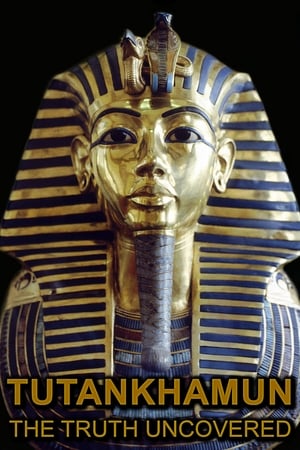
American archeologists have found a new tomb in the desert valley. This is the first find of this magnitude since King Tutankhamun's tomb was uncovered in 1922, according to Egypt's Supreme Council of Antiquities. Called KV 63 - it is the 63rd discovered since the valley was first mapped - the new, intact tomb was found just 16 feet away from King Tut's resting place. A team of archeologists led by Otto Schaden discovered the tomb by accident while conducting "routine digs" on the nearby tomb of King Amenmesses, a 19th Dynasty pharaoh. Explore the wonders of the magnificent lost era.