We all know about Alexandria, one of the greatest cities of the classical world, with its great Library and fabled Lighthouse. But Heracleion? A great port and religious centre at the mouth of the Nile, it was mentioned by the likes of Herodotus, but at some point it vanished, and its location became unknown.
Egyptians were famed for their extravagant building techniques and extraordinary gods, but what about the ordinary citizens? How did they lead their day to day lives? What did they do for entertainment? Did they believe in their gods? Discover astonishing facts that throw new light on our understanding of the Ancient Egyptians.
Johan van der Keuken went against the grain in 1980: from Amsterdam (on April 30 with the coronation riots and squatting actions) via Paris, southern France and Italy to Egypt. He made his personal travelogue in three parts for VPRO television. Later, he fused the three parts into one long movie.
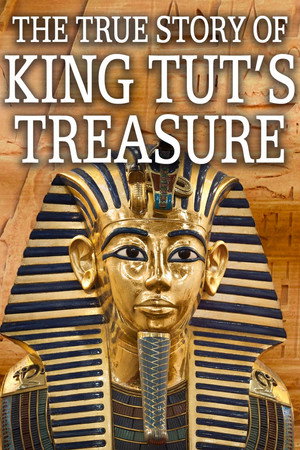
Howard Carter hunts for the tomb of the boy king Tutankhamun.
Go beyond the lost human history! A profile and examination of the recent findings of a highly advanced human settlement submerged at the end of the Ice Age when the sea level rose. The story of Atlantis has its roots in actual historical events!
5000 years ago the ancient Elamites established a glorious civilization that lasted about three millennia. They created marvelous works in architecture and craftsmanship. These works of art depict the lifestyle, thoughts, and beliefs of the Elamites.
Of the Seven Wonders of the Ancient World, the Pyramid is the only one to survive. Many believe that even with our 21st-century technology, we could not build anything like it today. Based on the most up-to-date research and the latest archaeological discoveries, here is how the Pyramid came to be.
Explores the Pyramids of Giza as Egyptologists try to unravel the mysteries and decipher the clues behind these stone giants built over 4,500 years ago.
Travel to ancient Egypt to see how science was used to tell time, make a workable calendar, and align huge buildings. You'll learn about the connection the ancient Egyptians felt with the stars and various astronomical phenomena, and experience some of the most spectacular temples and tombs of the ancient world recreated in all of their original splendor. Telly Award winner. Narrated by John Rhys-Davies, of the Indiana Jones films and The Lord of the Rings films.
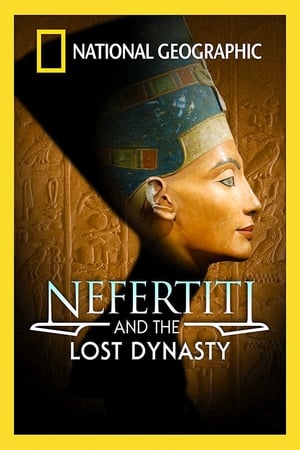
It is one of Egypt's enduring mysteries. What happened to Nefertiti and her husband, Akhenaten - the radical king, and likely father of King Tut? In a dark and mysterious tomb located in the Valley of the Kings, there is a small chamber with two mummies without sarcophagi or wrappings. At times, both have been identified as Queen Nefertiti by scholars, filmmakers and historians. But the evidence has been circumstantial at best.
The great history of Egypt is inscribed on its monuments, temples and tombs, but hieroglyphs – the written language of the ancient Egyptians – fell silent until 1822 when a young French scholar, Jean-François Champollion, became the first person to decipher their texts for over a thousand years. Champollion’s insights and the work of other scholars helped bring an entire civilisation back to life. Today, researchers are increasingly interested in the authors who created these hieroglyphic works. Near Luxor, The Latest Secrets of Hieroglyphs follows a new generation of Egyptologists as they unlock the texts inscribed inside a richly adorned tomb, revealing the beliefs and lives of the priests, scribes, painters, engravers and builders who created this grand funerary monument.
Follows Bradley - only the third American coach to manage a foreign team - his wife, Lindsay, his staff and his players. In gaining access to the training camps and providing in-depth coverage of the Pharaohs' games in Africa, the filmmakers document the team's personal and professional struggles to keep their eyes on the prize of getting to the World Cup while living in and representing a country in turmoil.
Egypt's Great Pyramid may be humanity's greatest achievement: a skyscraper of stone built without computers or complex machinery. This super-sized tomb has fascinated historians and archaeologists for centuries, but exactly how the ancient Egyptians finished the monument and fitted its two and a half million blocks in a quarter of a century has long remained an enigma. Today the secrets of the pyramid are finally being revealed thanks to a series of new findings. At the foot of the monument, archaeologists are uncovering the last surviving relic of the pharaoh Khufu, whose tomb it is: a huge ceremonial boat buried in flat-pack form for more than 4500 years. It's a clue that points to the important role that ships and water could have played in the pyramids' construction. This documentary follows investigations that reveal how strong the link between pyramids and boats is. It's a story of more than how Egypt built a pyramid: it's about how the pyramid helped build the modern world.
3,200 years ago, Egypt is living the final hours of its golden age under the reign of Ramesses II. After ruling the country for 67 years, the great pharaoh dies at the old age of 92. His mummy is burried in the heart of the Valley of the Kings. This is the beginning of his great journey towards the afterlife but only under one condition: that his tomb remains off limits forever. However, in the 19th century, many European adventurers explore the tomb of the king searching for the burial chamber. Then begins an archeological investigation, which reveals the story of Ramesses II after-life.
Produced by CBN Documentaries and Biblical Productions, "In Our Hands" tells the story of the Battle of Jerusalem in the Six-Day War through the eyes of the IDF's 55th Paratrooper Brigade
Has the famed Egyptian beauty, Queen Nefertiti, been found in a secret chamber deep in the Valley of the Kings? A Discovery Channel Quest expedition led by Dr. Joann Fletcher and a team of internationally renowned scientists from the University of York Mummy Research Team hopes to find out. If they find her, it will be one of the greatest archaeological discoveries since Nefertiti's stepson, King Tutankhamen, was discovered in 1922. The "Great Royal Wife" of the renegade Akhenaten, Nefertiti was a mother of six who helped lead a religious revolution that changed Egypt and the world forever. Yet after her death, her enemies destroyed all evidence of her life. Now, drawing on 13 years of research, Fletcher and her team bring Nefertiti's turbulent reign to life like never before with cutting-edge computer animations to recreate ancient Egypt's great temples, x-rays to reveal the telltale signs of foul play on her mummy, and forensic graphics to recreate the mummy's face.
Tutankhamun: The Mystery of the Burnt Mummy
Looking for a forgotten city: off the coast of Egypt, just a few metres under the surface, but blanketed by sand and mud, slumbers the ancient port of Heracleion.
January 2011: a team from the University of Basel makes two spectacular discoveries. The first was a previously unknown tomb, which was given the number KV64 and contained two mummies. It had originally been created at the time of Amenhotep III for a princess of the 18th dynasty and was reused a few centuries later for the burial of a noblewoman of the 22nd dynasty. Right next to it is the already known burial site KV40, where the Basel researchers have now carried out excavations for the first time. They discovered dozens of mummies - an unusual find in the Valley of the Kings, where most tombs were built for just one pharaoh. Initially, the archaeologists estimated the number of dead at 30, but after months of collaboration with evolutionary scientist Frank Rühli from the University of Zurich, they came to the conclusion that there must actually be more than 90. Who were these women?
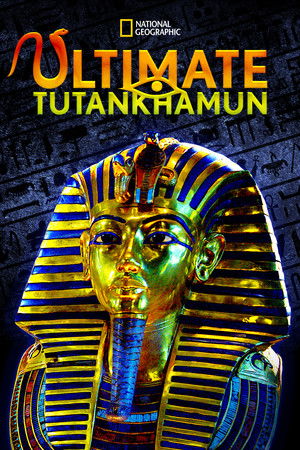
As part of a high-tech forensic probe into the demise of Egyptian Pharaoh Tutankhamun, scientists use X-rays and CT scans as they attempt to reach a conclusion about just how this famed king died. In addition, they explore the mysterious curse on explorers linked to Tut's tomb excavation.