冰血长津湖
Montage of documentary footage from the liberation and building of the republic as a tribute to JV Stalin on his seventieth birthday.
A harrowing exploration of the rapid rise of American religious fanaticism after 9/11. This film explores an emerging ultra Right Wing mass movement seeking dominion over all aspects of contemporary American society. The film weaves archival video, contemporary Christian Nationalist movement propaganda (recruiting videos, apocalyptic/military videogame imagery, etc.) and original investigative material) to create an intense examination of the totalistic mindset and its will to power.
"No film may throw ridicule on any religious faith..." So began Article VIII of the Hollywood Production Code, a series of ethical guidelines that for forty years helped the motion picture industry produce many of the greatest and most family-friendly films in history. That was then, however, this is now. A revered "historical" movie quietly takes every opporturnity to lie and twist the facts in order to make Christians appear as backward, foolish hypocrites. An actress jumps at the chance to play a Christ-hating role, saying, "I'm an atheist, so it was a joy." One of Hollywood's most respected directors films a passion play written by a disciple of Friedrich Nietzsche, the father of the "God is dead" movement. Not surprisingly, the movie's Jesus helps crucify people and later confesses that satan is inside him. A media mogul states that "Christianity is a religion for losers."
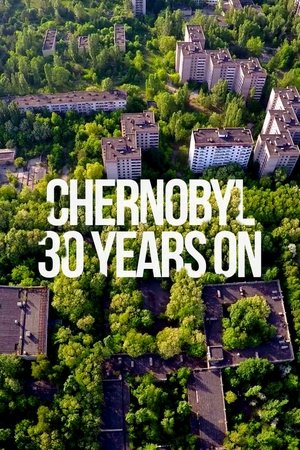
Thirty years after the Chernobyl disaster, which occurred on the night of April 26, 1986, its causes and consequences are examined. In addition, a report on efforts to strengthen the structures covering the core of the nuclear plant in order to better protect the population and the environment is offered.
Za život radostný
Vítězný lid
Julius Fučík
Pravda dějin
A film about the experiences that Czechoslovak peasants gained on a study trip to the Soviet Union.
The documentary Their Kingdom, co-directed in 1928 by Nutsa Gogoberidze and Mikhail Kalatozishvili (Kalatozov) for Soviet Georgia’s Cinema Trust, was considered lost until 2008, when there appeared a possibility that this important film – Georgia’s first documentary feature and Kalatozov’s directorial debut – had not disappeared irretrievably.
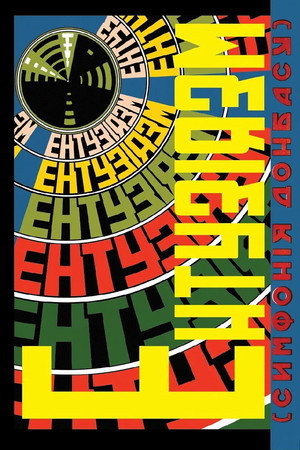
An audiovisual symphony that delves into the industrial, agrarian, and cultural fabric of the Donbas region during the inaugural Soviet Five Year Plan. It spotlights anti-religious campaigns, propagandistic marches, and the vibrant athletic culture of its time
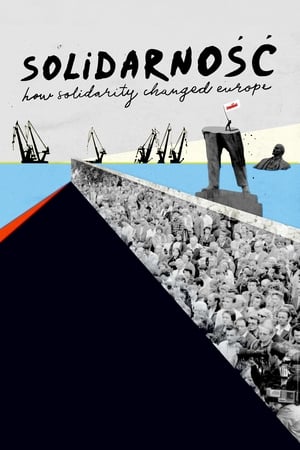
Gdańsk, Poland, September 1980. Lech Wałęsa and other Lenin shipyard workers found Solidarność (Solidarity), the first independent trade union behind the Iron Curtain. The long and hard battle to bring down communist dictatorship has begun.
Amazing China is a documentary film edited and produced based on the six-episode documentary series "Brilliant China" broadcasted on China Central Television (CCTV). The film is a joint production of China Central Television and China Film Co., Ltd. It premiered on March 2, 2018, in major cinemas across the People's Republic of China. The documentary highlights the achievements of the Communist Party of China (CPC) led by General Secretary Xi Jinping since the 18th National Congress of the CPC in 2012.
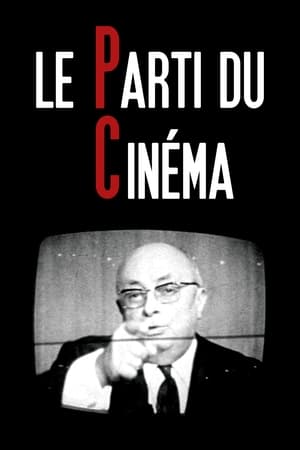
Le Parti du cinéma
Made by the highly influential Russian cameraman Roman Karmen, this documentary vividly features Albanian life immediately after the communists came to power in 1944. The film is especially memorable since it’s missing much of the heavy socialist realism that marked Albanian doc making. Shortly after he completed the film, Karmen set off for Berlin to shoot the Soviet victory over Nazi Germany.
No one knows why for certain, but from 1968 to 1973 communist Albania enjoyed a brief liberalisation in the arts. Banned books and Beatles records changed hands. Albania’s Nobel-nominated novelist Ismail Kadare wrote two of his most famed masterpieces, Kështjella (The Castle) (1970) and Kronikë në gur (Chronicle in Stone) (1971) during this period. The rock'n'roll and jazz arrangements featured in this concert documentary were the pretext that brought about the end to the artistic thaw. Several performers seen in the festival were sent to prison or internal exile. The portly, smiling music conductor, Gasper Çurçia, was later accused of forging bus tickets and executed.
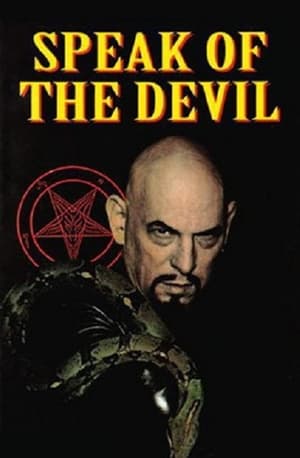
But what is the Church of Satan? Who is Anton LaVey? Where is he from? Why does he do that? It does not take much to imagine the worst. Orgiastic ceremonies, where one revels in the blood of virgins, moonlight lamb sacrifices, noise concerts in the basement of a historical building… No, really nothing that amusing among the activities in the Church of Satan. Anton LaVey is nothing like a horned Charles Manson, and his path is all the more unexpected. Nick Bougas allows us to discover the artist, the musician, the philosopher, all through hallucinatory images retrieved from archives, making this rare documentary only two years before the author of the Satanic Bible disappeared.
From 1945 to 1989, after the capitulation of Nazi Germany, two rival ideologies, communism and capitalism, faced each other in a merciless battle. On one side of the Iron Curtain and on the other, throughout the Cold War, the USSR and the United States sought to shape children’s imaginations through their magazines and films. Never in the history of mankind have so many comic books been published and so many cartoons produced for young people. In November 1989, communism collapsed with the Berlin Wall; capitalism was left to decide the future of the world. What if this victory had been prepared for a long time, and our thinking conditioned, from our early childhood, to ensure this absolute triumph?
Documentary about the life and career of Karl-Eduard von Schnitzler, presenter and creator of the infamous GDR propaganda programme 'Der Schwarze Kanal' ('The Black Channel').