An anthology of one-minute films created by 51 international filmmakers on the theme of the death of cinema. Intended as an ode to 35mm, the film was screened one time only on a purpose-built 20x12 meter public cinema screen in the Port of Tallinn, Estonia, on 22 December 2011. A special projector was constructed for the event which allowed the actual filmstrip to be burnt at the same time as the film was shown.
Combining high definition and Super 8 footage, Lampedusa is composed of interwoven narratives based on a series of real events. In 1831, a volcanic island suddenly erupted from the sea a few kilometers off the southern coast of Sicily. An international dispute ensued, as a number of European powers laid claim to this newfound “land”. The island receded below sea level six months later, leaving only a rocky ledge under the sea…
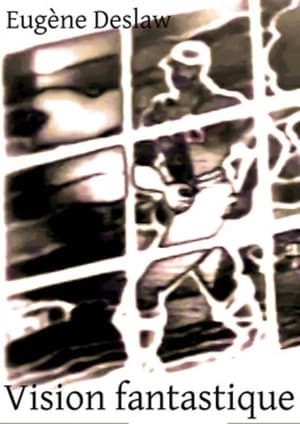
Footage filmed in Spain, subjected a new visual effects process. Deslaw devoted himself to the discovery of a new machine that enabled film to be developed while using a new method called solarisation.
This film is depicts early lesbian sexuality, using reenacted scenes from the experience of a 12-year old girl as the platform for a meditation on forbidden desire, transgression, and Lacanian psychoanalytic concepts of identity formation. Raw adolescent memories counterpoint staged scenes, exploring mechanisms of power and submission.
In 1947, two years after the end of the Second World War, Film Journal No. 1 was released in Sarajevo. Fifty years later, after the collapse of the Communist bloc, this newsreel was lost in the confusion of the fighting in Yugoslavia. In Journal No. 1 Hito Steyerl attempts to find out how the footage got lost and what was on this document from the Sutjeska studio. In the simultaneous projection of Journal No. 1 the ‘unattainability of an historical zero hour of the national identity’ takes concrete form: The lost newsreel reports on a literacy campaign as well as Muslim women confidently removing their headscarves. We listen however to eyewitnesses trying to recapture the lost content and we see the artist Arman Kulasic making a number of drawings that resemble the story-boards for the lost film. What appears to be moments of great change remain limited by subjective and uncertain memory. The film was premiered at documenta 12.
"Adrift" is shot on the arctic island of Spitzbergen and in Norway. It combines time-lapse photography with stop-motion animation of the landscape. Through camera-angles and framing the film gradually dislocates the viewer from a stable base where one loses the sense of scale and grounding.
Rather than writing a simple letter to explain his absence from the press conference for his latest Cannes entry, "Goodbye to Language," at the Cannes Film Festival, instead, legendary filmmaker Jean-Luc Godard created a video "Letter in motion to (Cannes president) Gilles Jacob and (artistic director) Thierry Fremaux." The video intercuts from Godard speaking cryptically about his "path" to key scenes from Godard classics such as "Alphaville" and "King Lear" with Burgess Meredith and Molly Ringwald, and quotes poet Jacques Prevert and philosopher Hannah Arendt.
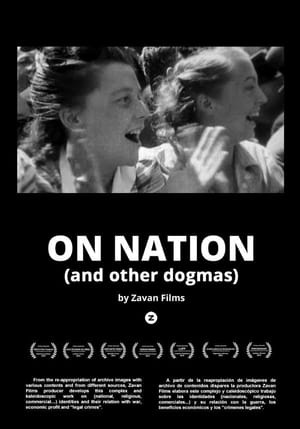
From the re-appropriation of archive images with various contents (war images, soccer matches, social celebrations, religious rites, historical characters, etc.) and from different sources (including films by Chris Marker, Alain Resnais, Leni Riefenstahl or Gianikian and Ricci Lucchi, as well as images from ads and news...), together with reflections of Pierre Bourdieu, Zygmunt Bauman, Bertolt Brecht, Hannah Arendt, Stanley Milgram, Eric Hobsbawn, Amin Maalouf, Josep Fontana, etc., Zavan Films producer develops this complex and kaleidoscopic work on (national, religious, commercial...) identities and their relation with war, economic profit and "legal crimes".
A homogeneous structure of wind and light across tree branches in the South region of Isère
The rare short film presents a curious dialogue between filmmaker Julio Bressane and actor Grande Otelo, where, in a mixture of decorated and improvised text, we discover a little manifesto to the Brazilian experimental cinema. Also called "Belair's last film," Chinese Viola reveals the first partnership between photographer Walter Carvalho and Bressane.
A look at the various modes of transportation made for the Expo '86 World Fair in Vancouver, Canada.
Made on a wind-up Bolex camera, The Sound of Seeing announced the arrival of 21-year-old filmmaker Tony Williams. Based around a painter and a composer wandering the city (and beyond), the film meshes music and imagery to show the duo taking inspiration from their surroundings.
An experimental ethnographic documentary that criticizes the colonizer view of anthropology.
The title comes from Sergei Yesenin's last poem before comiting suicide. Using Virginia Woolf's last letters as a base, this film is meditation on the power of the word and its undertsanding and the the last moments before saying "goodbye".
Behind-the-scenes footage, rare screen tests and insightful interviews highlight this engrossing two-hour look at one of Hollywood's greatest dream factories. Such film luminaries as Tom Hanks, William Friedkin, George Lucas, Oliver Stone and Robert Altman discuss their work at the studio. Clips include scenes from Butch Cassidy and the Sundance Kid, Patton, Young Frankenstein, Star Wars, Alien, Big, Home Alone, Die Hard and dozens more.
Thanks to his myriad film roles, Lon Chaney is known as “the man of a thousand faces,” and you could say that the early horror era never beheld a figure more intriguing. Yet because of his numerous transformations, his face never became as iconic as that of, say, Boris Karloff. Accompanied by a soundtrack from Bernhard Lang, this “re-imagination of shots” taken from Chaney´s forty-six surviving films offers a beguiling excursion into the history of film. The director reveals surprising associations, while highlighting the enduring magic of works which are now more or less forgotten.
This film describes a psychological state "kin to moonstruck, its images emblems (not quite symbols) of suspension-of-self within consciousness and then that feeling of falling away from conscious thought. The film can only be said to describe or be emblematic of this state because I cannot imagine symbolizing or otherwise representing an equivalent of thoughtlessness itself. Thus the actors in the film, Jane Brakhage, Tom and Gloria Bartek, Williams Burroughs, Allen Ginsberg, Peter Olovsky and Phillip Whalen are figments of this 'Thought-Fallen Process', as are their images in the film to find themselves being photographed."
This experimental nature documentary by Minna Rainio and Mark Roberts depicts climate change and the wave of extinction from the point of view of our near future. Actually, it depicts the age we live in now, or rather its fateful consequences.
El desastre de Annual
In 1967, experimental filmmaker Jorgen Leth created a striking short film, The Perfect Human, starring a man and women sitting in a box while a narrator poses questions about their relationship and humanity. Years later, Danish director Lars von Trier made a deal with Leth to remake his film five times, each under a different set of circumstances and with von Trier's strictly prescribed rules. As Leth completes each challenge, von Trier creates increasingly further elaborate stipulations.