Black Santas are local heroes, spreading joy and love to children and families at a bustling mall during the Christmas season. But even during this special time, the ugly shadow of bigotry falls on the season's true spirit.
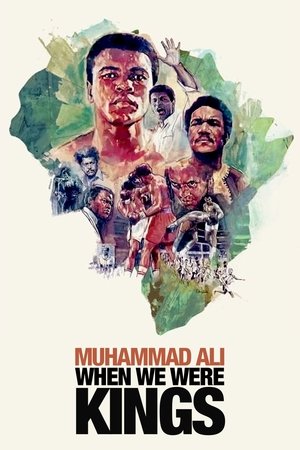
It's 1974. Muhammad Ali is 32 and thought by many to be past his prime. George Foreman is ten years younger and the heavyweight champion of the world. Promoter Don King wants to make a name for himself and offers both fighters five million dollars apiece to fight one another, and when they accept, King has only to come up with the money. He finds a willing backer in Mobutu Sese Suko, the dictator of Zaire, and the "Rumble in the Jungle" is set, including a musical festival featuring some of America's top black performers, like James Brown and B.B. King.
Rap de Saia is a documentary that reports, through the voices and rhymes of the protagonists themselves, part of the historical trajectory of Female Rap in the State of Rio de Janeiro. In addition to its historical trajectory, Rap de Saia brings a collection of themes that leads us to reflect on women in today's society.
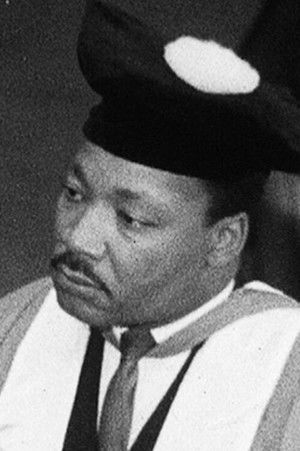
A remarkable event the great American civil rights leader, Martin Luther King makes a powerful speech on a unique visit to Newcastle University.
France is at the heart of Madonna's life. She is inspired by French culture and its values and has surrounded herself with French artists for many years. To celebrate the 40th anniversary of the Queen of Pop's career, this film revisits the close and unique bond between Madonna and France and features testimonials from close collaborators and French friends who have helped create her unique artistic universe: Maripol, Jean Paul Gaultier, Julien d'Ys, Nicolas Huchard, and Marion Motin. Today's artists such as Florence Foresti, Leïla Slimani, Victor Weinsanto and HollySiz talk about the influence of this emancipating figure, which extends far beyond music.
United States, September 1st, 2016. American football player Colin Kaepernick kneels during the national anthem, protesting police brutality against black people. Part of the population regards the gesture as an unacceptable affront to the flag. Later, he loses his place on his team. Today, however, he is considered by many as a true hero.
The documentary mixes reenactments with true accounts from four characters/actors who tell the stories of six black gay men, their experiences and their romantic relationships crossed by racism and homophobia.
Exploring how punk influenced politics in late-1970s Britain, when a group of artists united to take on the National Front, armed only with a fanzine and a love of music.
A low-intensity war is being fought on the streets of Europe and the aim is on fascism. This critically acclaimed documentary takes us behind the masks of the militants called antifascists. In 2013 a group of armed nazis attacks a peaceful demonstration in Stockholm where several people are injured. In Greece the neo-nazi party Golden Dawn becomes the third largest in the election and in Malmö the activist Showan Shattak and his friends are attacked by a group of nazis with knives and he ends up in a coma. In this portrait of the antifascists in Greece and Sweden we get to meet key figures that explain their view on their radical politics but also to question the level their own violence and militancy.
In 1967, Visconti came to Algiers for the filming of The Stranger with Mastroianni and Anna Karina. Camus, during his lifetime, had always refused to allow one of his novels to be brought to the screen. His family made another decision. The filming of the film was experienced in Algiers, like a posthumous return of the writer to Algiers. During filming, a young filmmaker specializing in documentaries Gérard Patris attempts a report on the impact of the filming of The Stranger on the Algerians. Interspersed with sequences from the shooting of Visconti's film, he films Poncet, Maisonseul, Bénisti and Sénac, friends of Camus, in full discussions to situate Camus and his work in a sociological and historical context. “The idea is for us to show people, others, ourselves as if they could all be Meursault, or at least the witnesses concerned to his drama.”
Pour mes fils, mon silence est impossible
In Brussels, Belgium, the Royal Museum of Central Africa is undertaking a radical renovation, both physical and ethical, to show with sincerity, crudeness and open-mindedness the reality of the atrocities perpetrated against the inhabitants of the Belgian colonies in Africa, still haunted and traumatized by the ghost of King Leopold II of Belgium, a racist and genocidal tyrant.
A French documentary on how groups of youth in Paris generated a backlash against the NeoNazi skinhead subculture, and by doing so earned themselves the nickname Chasseurs de Skins or 'Skinhead Hunters'.
Despite the perceived progress the world has made over the years, it's become increasingly clear that racism continues to run through our culture. This is abundantly apparent on the streets of London. This difficult documentary explores racism in today's climate through stories from people of various races.
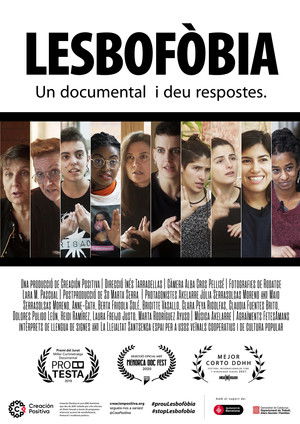
What situations of violence do lesbians experience today? How do they face them? What are the underlying problems? What reality permits them to keep happening? What answers and strategies can we produce and put into practice as a society to do away with this and other forms of discrimination? Ten individuals explain their experiences and points of view, building a choral testimonial to bring male sexist violence against lesbians into the light, analyze the underlying problems, and seek responses and strategies to put an end to lesbophobia in conjunction with other types of violence.
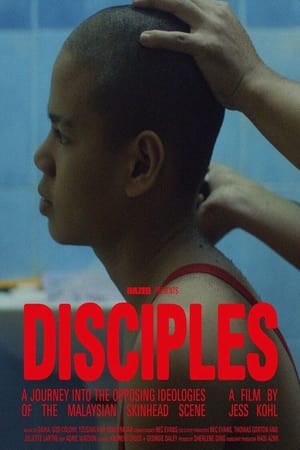
“DISCIPLES” is a new Dazed film by Jess Kohl exploring the subcultural world of Malaysian skinheads including the traditional, SHARP skins, and Nazis.
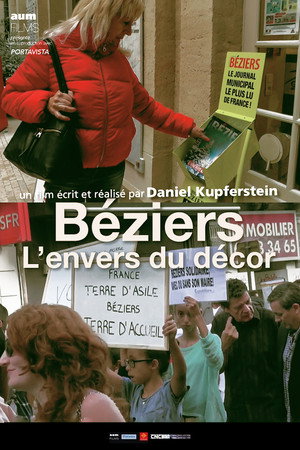
Structured in two parts, the film uses the municipal newspaper, Le Journal de Béziers (later renamed Le Journal du Biterrois), to examine the city's management by Robert Ménard, elected mayor in 2014 with the support of the National Rally. By meeting with residents and activists, the film reveals the "behind the scenes" of this southern French city. It shows how this newspaper shapes a political and ideological line for a fundamentalist Catholic France, rejecting Muslims, while simultaneously seeking to control and monitor all its inhabitants. A vision of the far right in power…
#standwithme examines the realities of modern-day slavery, the role we play in it as consumers, and the importance of knowing the story behind what we buy. After seeing a photo of two enslaved boys in Nepal, Vivienne Harr is moved to help in the only way she knows how: by setting up her lemonade stand. As Vivienne's vision begins to show promise for something greater, she and her family must fight to avoid supporting the very thing they are up against.
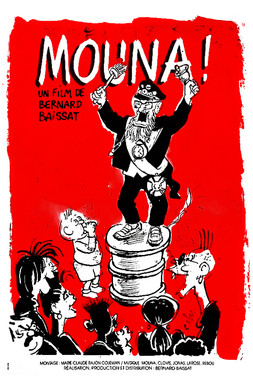
Everyone knows Aguigui Mouna, the jester who harangues the crowds on the Beaubourg esplanade in Paris and rides his bicycle through demonstrations. But many don't know the story of André Dupont, a Savoyard raised in tough conditions, forced into violence in the navy to rise to power and into resourcefulness in civilian life to survive. Antibes, 1952, the transformation: Aguigui Mouna is born. Laughter, solidarity, non-violence, humanism—Mouna has found the meaning of his existence. He will try to share them with all the robots of this "poop-pee-capitalist" society. A comic book character who, through his adventures, reveals the absurdities of his century.