This Oscar-winning documentary tells the story behind Japanese daredevil Yuichiro Miura's 1970 effort to ski down the world's tallest mountain.
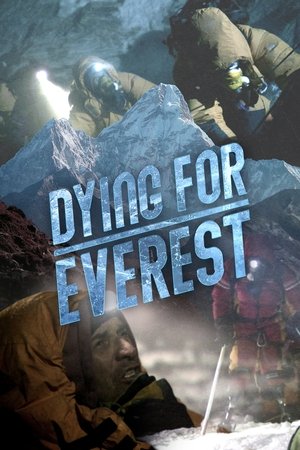
2006 was one of the deadliest Everest seasons on record. Experienced mountaineer Lincoln Hall was invited to join an expedition as a high altitude cameraman. It was his second attempt to summit the mountain, having turned back just short 22 years earlier. Shortly after reaching the summit, Hall began to behave irrationally, suffering from lack of oxygen. Aided by his loyal Sherpas for over 9 hours, he eventually collapsed and they declared him dead. His family were informed and the news hit headlines. But something happened that night that science cannot explain. The next morning Lincoln Hall was found alive by approaching climbers and his dramatic rescue began. Never before has a man been declared dead so high on Everest and survived. This is the remarkable true story of Lincoln Hall’s extraordinary journey back from beyond.
Jim Geiger, a retired forest ranger and amateur mountaineer, attempts to become the oldest American and first great grandfather to summit Mt. Everest, aged 68. His transformation from a weekend hiker to attempting one of the most extreme and physically demanding feats known to man is driven by a desire to prove that age is just a number. What ensued, however, forever changed Jim's life.
The dramatic story of the British expedition that made the first ascent of Everest. Combining interviews with the surviving members of the 1953 British and 1952 Swiss attempt on Everest with rare archival material, this film tells the story of the race to climb Everest in the early 1950s and its climax in 1953.
Transcending cultural barriers and consistently going against the grain, female Nepali climber Pasang Lhamu Sherpa attempted to summit Everest four times in the early nineties. Although she was not allowed to attend school as a child, Pasang did not let that stop her from pursuing her dreams. After founding her own trekking company in Kathmandu, she blazed a trail for Nepali women via her efforts to summit Everest. Proving how big you can dream and how far you can go to achieve those dreams, she left a legacy not only for the family she has left behind, but for the myriad women following in her footsteps.
National Geographic sull'Everest
An international team of climbers ascends Mt. Everest in the spring of 1996. The film depicts their lengthy preparations for the climb, their trek to the summit, and their successful return to Base Camp. It also shows many of the challenges the group faced, including avalanches, lack of oxygen, treacherous ice walls, and a deadly blizzard.
What compels a man to push the limits of what is attainable ever higher? After thirty years of relentless struggle with the highest peaks on earth, Marc Batard has finally found the answers to these questions. He had to reach the summit of Everest twice, once shattering the record for fastest time in 24 hours without oxygen, and climb the most difficult faces of the Alps to glimpse the path to inner healing. It was through physical suffering that he was able to confront the pain of his soul. He was finally able to talk about the violence of his childhood, the shock he carried like a ball and chain for decades. Having completed his summit therapy, Marc Batard tells his story in this documentary by Gilles Perret.
Six blind Tibetan teenagers climb the Lhakpa-Ri peak of Mount Everest, led by seven-summit blind mountain-climber Erik Weihenmayer.
Becoming a mountaineer and climbing Everest in exactly one year? That’s the dream of Inoxtag, a 21-year-old very rich YouTuber who doesn’t do any sports. By following him for a year, we will discover in this documentary all the changes in his life to achieve this dream.
Kancha Sherpa was one of 103 Sherpas that brought Sir Edmund Hillary and Tenzing Norgay to the top of Mt. Everest in 1953, as the first to reach the top. This achievement would have been impossible without the strength, courage and knowledge of the Sherpas, who have a strong connection to the mountains of the Himalayas. At the age of 80, Kancha is the Last of the First from the 1953 expedition to Mt. Everest. Kancha is looking into the future, with a heartfelt hope that his tradition, will reach far into the 21st century and beyond. He is concerned to see modern traditions melting away old traditions, like the snow on top of Everest.
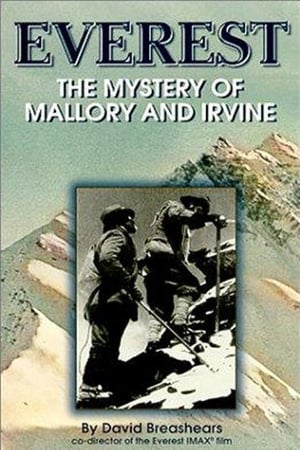
Uses astonishing visuals to tell the intersecting stories of George Mallory, the first man to attempt a summit of Mount Everest, and Conrad Anker, the mountaineer who finds Mallory's frozen remains 75 years later.
Blind climber Erik Weihenmayer and his team's highly successful ascent of Mount Everest along with four other remarkable milestones on the mountain. Time magazine called this the most successful Everest expedition of all time.
A documentary of the first successful expedition to the summit of Mount Everest. New Zealand's Edmund Hillary and Sherpa Tenzing Norgay climb Mount Everest in 1953.
This feature-length documentary retraces the journey of 4 Canadians who set off to climb the perilous north side of Mount Everest without the use of oxygen or sherpas. The group's ordeal gives us a rare insight into the human condition under stress, and, while immobilized on the edge of the mountain by extreme weather, we share the tensions that afflict the group's solidarity - threatening the dream of attaining the summit itself.
Half a century ago, Edmund Hillary and Tenzing Norgay became the first humans to stand atop the highest mountain of earth. Now, their sons and Brent Bishop, son of the first American to summit Everest, make a historic expedition to face Everest's unforgiving heights. Experience their harrowing, deeply individual quests to conquer this awesome peak - and discover the dramatic history of Everest, from tragedy and triumph to the unsung role of the remarkable Sherpa people. With gripping, on-location filming and never-before-seen archival footage, this is the thrill of Everest as only National Geographic can present it!
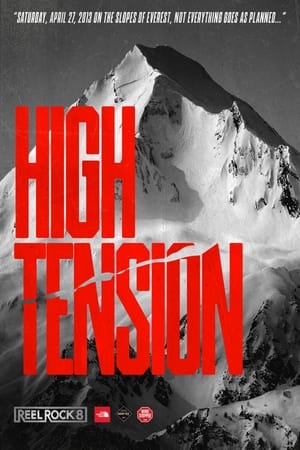
Ueli Steck (Switzerland), Simone Moro (Italy) and Jon Griffith (GB) are not like 95% of the climbers on Everest: they don't use oxygen, altimeters (improperly called Sherpas), or fixed ropes. In 2013, the trio aims to repeat the arduous Western Spur. The Sherpas have the mission to equip the mountain with fixed ropes on this famous day, up to Camp 3: ropes without which customers of commercial expeditions could not climb Everest. An argument ensued, insults were hurled from both sides. The confrontation at Camp 2 degenerated: a Sherpa water bottle physically attacked the trio of Europeans. Blows and stones were thrown and threats led the trio to flee the mountain. The Réel Rock film crew, which is part of the climbing team, films this chaos without complacency.
In 2019, Nepalese mountain climber Nirmal “Nims” Purja set out to do the unthinkable by climbing the world’s fourteen highest summits in less than seven months. (The previous record was eight years). He called the effort “Project Possible 14/7” and saw it as a way to inspire others to strive for greater heights in any pursuit. The film follows his team as they seek to defy naysayers and push the limits of human endurance.
At 18,000 feet above sea level and over the course of 40 days last Spring, documentary filmmaker Dianne Whelan immersed herself in the challenging and captivating world of base camp at Mt. Everest. With spectacular footage of the mountains’ landscape as a backdrop, 40 DAYS AT BASE CAMP is an intriguing and intimate portrayal of three climbing teams and their journey to the peak.
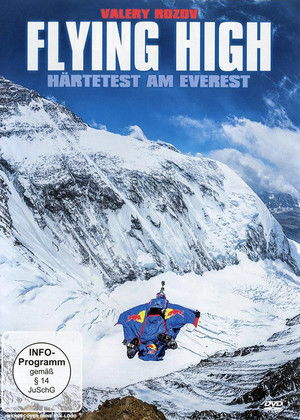
One of the greatest adventures of mankind told in a one-year storyline: Will Valery Rozov be able to do a wingsuit flight from the top of the world? Starting from training on a 7.500 m peak in India, the images show the feasibility test in vast nature, wind channel testing, the development of a completely new wingsuit and the final adventure: leaping off and flying from the Everest massif.