In three virtuosic sequences created entirely in-camera, Benning alternates contrary camera movements in a trio of Chicago locations with increasing rapidity to a point where they first fracture and then merge in the viewer’s eye. Preserved by the Academy Film Archive in partnership with Austrian Film Museum in 2013.
This short focuses on the job of the costume designer in the production of motion pictures. The costume designer must design clothing that is correct for the film historically and geographically, and must be appropriate for the mood of the individual scene. We see famed costume designer Edith Head at work on a production. The Costume Designer was part of The Industry Film Project, a twelve-part series produced by the film studios and the Academy. Each series episode was produced to inform the public on a specific facet of the motion picture industry. Preserved by the Academy Film Archive in 2012.

35mm experimental short film. Preserved by the Academy Film Archive in 2015.
The entire film is divided into four consecutive chosen approaches—the fourth section devoted to a reiteration and extension of the original material. Preserved by the Academy Film Archive in 1999.
"Beydler's magical Hand Held Day is his most unabashedly beautiful film, but it's no less complex than his other works. The filming approach is simple, yet incredibly rich with possibilities, as Beydler collapses the time and space of a full day in the Arizona desert via time-lapse photography and a carefully hand-held mirror reflecting the view behind his camera. Over the course of two Kodachrome camera rolls, we simultaneously witness eastward and westward views of the surrounding landscape as the skies, shadows, colors, and light change dramatically. Beydler's hand, holding the mirror carefully in front of the camera, quivers and vibrates, suggesting the relatively miniscule scale of humanity in the face of a monumental landscape and its dramatic transformations." -Mark Toscano. Preserved by the Academy Film Archive in 2010.
Drunk and disillusioned Roman, Marcellus Gallio, wins Jesus' robe in a dice game after the crucifixion. Marcellus has never been a man of faith like his slave, Demetrius, but when Demetrius escapes with the robe, Marcellus experiences disturbing visions and feels guilty for his actions. Convinced that destroying the robe will cure him, Marcellus sets out to find Demetrius — and discovers his Christian faith along the way.
Warhol Factory days... serendipity visits, Janis and Castelli and Bellevue glances... Malanga at work ... glances at Le Mépris and North by Northwest... girl rock groups and a disco opening... a romp through the Modern. My second film. Preserved by the Academy Film Archive in partnership with Estate Project for Artists with AIDS in 1998.
This film is an outgrowth of one of Sonbert's film classes at NYU, in which he was given outtakes from a Hollywood film photographed by Hal Mohr to re-edit into a narrative sequence. Adding to this found footage, Sonbert filmed Warhol's superstars Rene Ricard and Gerard Malanga in more private and reflective moments. -- Jon Gartenberg. Preserved by the Academy Film Archive in partnership with Estate Project for Artists with AIDS in 1998.
Following Sonbert's death in 1995, we recovered a 16mm reversal print of THE TENTH LEGION among the materials in the filmmaker's estate, which Sonbert had struck before disassembling it and recutting sections into CARRIAGE TRADE. -- Jon Gartenberg. Preserved by the Academy Film Archive in partnership with Estate Project for Artists with AIDS in 1998.
One of the most profound themes coursing throughout Sonbert's work is that of love between couples in all its pitfalls and perfect moments. To express this theme between his protagonists onscreen as well as in the relationship between his ever-roving hand-held camera and the human subjects in his field of vision, Sonbert employed diverse cinematic strategies, including in-camera editing (in The Bad and the Beautiful), twin-screen effects (in Ted and Jessica), and montage of discrete shots filmed in distinct spaces (in Honor and Obey). -- Jon Gartenberg. Preserved by the Academy Film Archive in partnership with the Estate Project for Artists with AIDS in 1998.
Truth Serum is a rare work by Sonbert made in New York City in 1967. The completed film (that is missing its original soundtrack) provides a unique glimpse into his life and friends at the time including fellow filmmakers Nathaniel Dorsky and Jerome Hiller. Preserved by the Academy Film Archive in partnership with Estate Project for Artists with AIDS in 1998.
About this film, Sonbert wrote in the London Filmmakers' Co-op catalogue: "New York again and some Morocco. First sketches of varieties of people. East west city country, rich poor, old young. Many levels. Less movement but more editing and geometric progressions. It's over before you know it." -- Jon Gartenberg. Preserved by the Academy Film Archive in partnership with Estate Project for Artists with AIDS in 1998.
Sonbert's vivid color palette enhances the ritualistic nature of each action observed. Set against this lush panorama, Sonbert subverts the expectation of classic cinematography with a liberal sprinkling of avant-garde techniques. The incorporation of the materiality of film, the treatment of light, and the use of a hand-held camera, all suggest the influence of Stan Brakhage (Sonbert's "hero"). Sonbert's use of the shot as the foundation of his silent montage works parallels the use of the frame as the basic filmmaking unit in the films of Gregory Markopoulos (Sonbert's "mentor"). -- Jon Gartenberg. Preserved by the Academy Film Archive in 1998.
Warren Sonbert described Divided Loyalties as a film 'about art vs. industry and their various crossovers.' According to film critic Amy Taubin, "There is a clear analogy between the filmmaker and the dancers, acrobats and skilled workers who make up so much of his subject matter." -- Jon Gartenberg. Preserved by the Academy Film Archive in partnership with Estate Project for Artists with AIDS in 1998.
Directed by Hy Hirsh. Preserved by the Academy Film Archive in 2000.
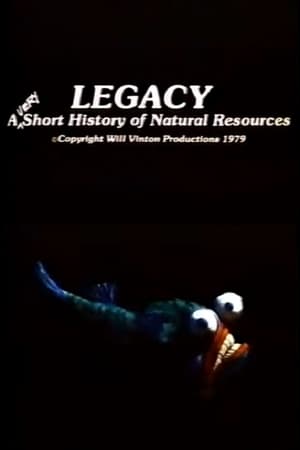
Legacy takes the audience on a rapid-fire journey through the evolution of the world, starting with a cosmic bang, evolving through billions of years of plants, animals and the creation of natural resources, ending with man and his bounty – “sitting on his world contemplating his coconut”. Preserved by the Academy Film Archive in 2012.
Two young men, one rich, one middle class, both in love with the same woman, become US Air Corps fighter pilots and, eventually, heroic flying aces during World War I. Devoted best friends, their mutual love of the girl eventually threatens their bond. Meanwhile, a hometown girl who's the lovestruck lifelong next door neighbor of one of them pines away.
Charlie, a wandering tramp, becomes a circus handyman - soon the star of the show - and falls in love with the circus owner's stepdaughter.
The style is relatively unchanged, but the images--press conferences, news events, disasters--convey his vision of the world in a new, direct, political fashion. Featuring startling footage of the City Hall riots after Councilman Dan White received a light prison sentence for slaying San Francisco Mayor George Moscone and Supervisor Harvey Milk, Noblesse Oblige opens a new chapter on Sonbert's career. --David Ehrenstein, LA Reader. Preserved by the Academy Film Archive in partnership with Estate Project for Artists with AIDS in 1998.
The Cup and the Lip is a complex and challenging picture that will stimulate adventurous filmmakers for years to come. Although its imagery is too dense, varied and fast-moving to be thoroughly parsed after one viewing, the film appears to be a regretful and perhaps sardonic essay on human frailty--and on the effort to stave off chaos by means of political and religious institutions, which carry their own dangers of social control and mental manipulation.