7-year-old Sasha has always known that she is a girl. Sasha’s family has recently accepted her gender identity, embracing their daughter for who she truly is while working to confront outdated norms and find affirmation in a small community of rural France.
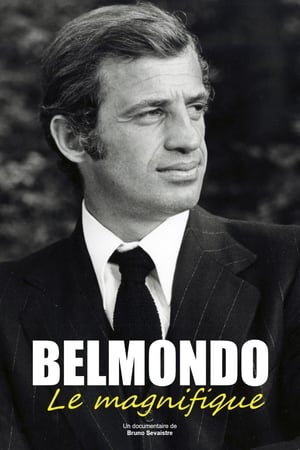
With more than 70 films and 160 million cumulative tickets in France, Jean-Paul Belmondo is one of the essential stars of French cinema.
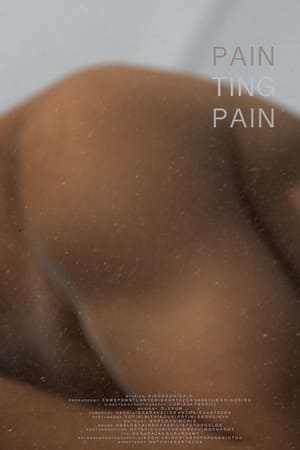
The film approaches the work of the Greek artist Nikos Koniaris. The particular way in which the painter depicts human suffering is presented through a film - a hybrid of real recording and directed material. The grief, the sick body, is reflected in self portraits, portraits of dying strangers and paintings of dead models. The paintings, apart from his work, also express a different version of himself. All together contribute to the depiction of man as a "garment of pain".
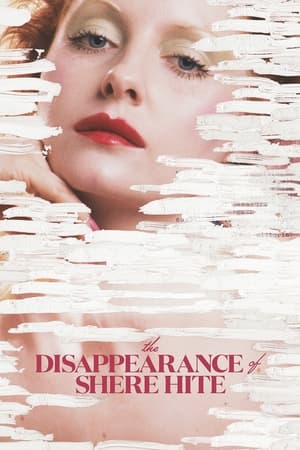
Shere Hite’s 1976 bestselling book, The Hite Report, liberated the female orgasm by revealing the most private experiences of thousands of anonymous survey respondents. Her findings rocked the American establishment and presaged current conversations about gender, sexuality, and bodily autonomy. So how did Shere Hite disappear?
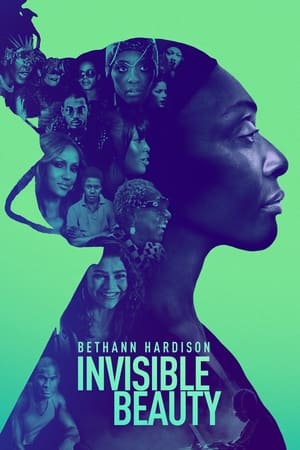
Fashion revolutionary Bethann Hardison looks back on her journey as a pioneering Black model, modeling agent, and activist, shining a light on an untold chapter in the fight for racial diversity.
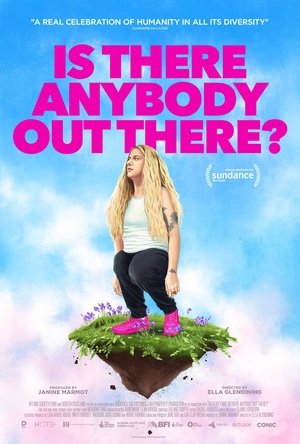
While navigating daily discrimination, a filmmaker who inhabits and loves her unusual body searches the world for another person like her, and explores what it takes to love oneself fiercely despite the pervasiveness of ableism.
His signature roles were the edgy North German characters: Jan Fedder was one of the most popular actors in the North. He was one of the most popular actors, a real guy with rough edges and a lot of heart: Jan Fedder. He was already on stage as a child and had his first acting lessons at the age of 13. He knew early on what he wanted: to become an actor. Antje Althoff's film traces his life and career, showing his incorrigible nature, an endearing symbiosis of a big mouth and a similarly big heart.
Achour is thirty. Night and day, he walks. Rebellious soul, he crisscrosses Alger and its neighborhoods, stays at friends' houses and often leaves the city to meet the nearby montain in Kabylia, his alter-ego. In this environment, marked by war and terrorism, his resistance continues, mobile and ascending. Algerian hardcore-punk musician, Achour once screamed his anger against the country's regime and sang "Anarchytecture". But the movement died down, friends went their separate ways. His Facebook wall became his notebook, his window open to the world. It represents a scream aimed towards the echo of the mountains, between virtual wall, infinite facades of large complexes and the strata of mineral cliffs. A scream comes back at us.
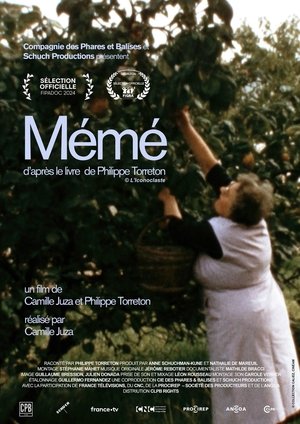
Mémé
A man tells the story of his three cats.
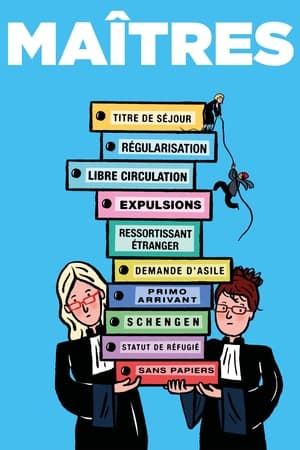
A Sense of Justice, immerses us In a law firm in this same city. There, we can find Christine Mengus and Nohra Boukara, specialized in the rights of foreigners, supported by Audrey Scarinoff and their co-workers.. Stories from their sad, appalling or tragicomic cases alternate with their daily legal work. And as we hear snatches of consultations involving illegal entry or departure, deportation orders, the right to reside or medical assistance, we become witnesses to predictable tragedies, to the administrative or social precariousness induced by such predicaments, and to whole lives depending on court rulings.
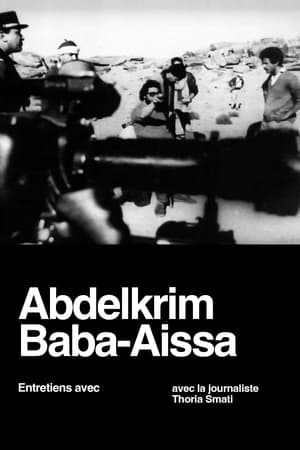
In 2024, Abdelkrim Baba Aissa, aged 75, engages in a series of filmed interviews with Algerian journalist Thoria Smati. They address the chronology of the rich and committed career of this self-taught Algerian actor, director, producer and screenwriter, who made his debut on Algerian television as an assistant director then at ONCIC as a director in the years 70.
Ivan, first tsar of Russia. History will remember him as "the Terrible. Russian people love him for centuries. He liberates Russia from foreign oppressors, demands absolute obedience and loyalty in order to radically modernise Russia? Ivan IV, Grand Duke of Moscow, first Tsar of Russia by the grace of God. A madman? A sadist?
How do you deal with life's curveballs? FIGURE 3 tells trapeze artist Korri Singh Aulakh's story of being diagnosed with the chronic autoimmune condition Myasthenia Gravis. It's the third installment in FIGURES, a new series of portrait films. Shot on a mix of 16mm film, VHS and digital.
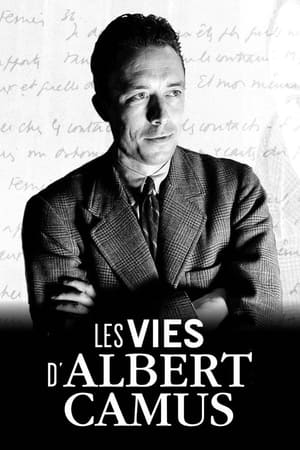
Albert Camus, who died 60 years ago, continues to inspire defenders of freedom and human rights activists around the world today. The Nobel Prize winner for literature is one of the most widely read French-language writers in the world. He continues to embody the rebellious man who opposes all forms of oppression and tyranny while refusing to compromise his human values.
Stop for Bud is Jørgen Leth's first film and the first in his long collaboration with Ole John. […] they wanted to "blow up cinematic conventions and invent cinematic language from scratch". The jazz pianist Bud Powell moves around Copenhagen -- through King's Garden, along the quay at Kalkbrænderihavnen, across a waste dump. […] Bud is alone, accompanied only by his music. […] Image and sound are two different things -- that's Leth's and John's principle. Dexter Gordon, the narrator, tells stories about Powell's famous left hand. In an obituary for Powell, dated 3 August 1966, Leth wrote: "He quite willingly, or better still, unresistingly, mechanically, let himself be directed. The film attempts to depict his strange duality about his surroundings. His touch on the keys was like he was burning his fingers -- that's what it looked like, and that's how it sounded. But outside his playing, and often right in the middle of it, too, he was simply gone, not there."
Rolland, a 70 year-old man, exiled by his family due to his sexual orientation, makes peace with the past by finding himself in a small ghost town in the western part of Jalisco, San Sebastián del Oeste. Almost 40 years later, he wants to go back to his hometown, try to regain his daughter's love and be a part o his granddaughter's life.
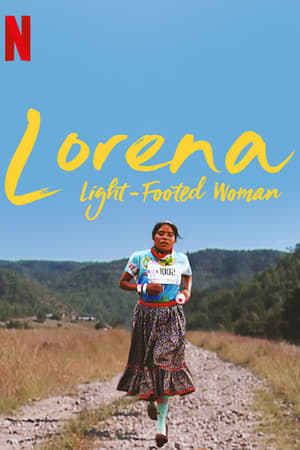
A young woman of the Tarahumara, well-known for their extraordinary long distance running abilities, wins ultramarathons seemingly out of nowhere despite running in sandals.
In a conservative Armenian family a 16 years old Karine dreams to become a veterinarian, but her family, especially her father, who is a well-known dog-fighter, is against it. They say it’s not a proper job for women. Karine needs to choose: to follow her dreams or to listen to her patriarchal family.
“You bet on someone in the beginning of the process and then you wait and see what life does with them.” This is how Czech director Helena Trestikova explains her long-term documentaries. Following on from the European Film Academy Award winning RENE (2008), Trestikova brings us KATKA – 14 years in the life of a drug addict. KATKA is an extraordinarily raw and uncensored character portrait of a troubled young woman living on the edge of human existence, desperately searching for love and salvation. Will she find it in the rehab? Will she find it in the arms of the man she loves? Or in the first cry of her long-desired baby? Tagging along with her through the back streets and squalors of Prague, Trestikova gets deep under the skin of a person most of us would cross the road to avoid, and shows us Katka’s profoundly human face. You might be angry with Katka, or your heart may go out to her. One thing is certain – you will never forget her.