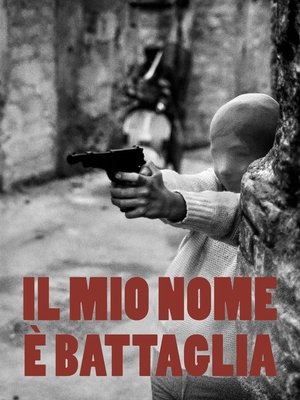
Il mio nome è Battaglia
A young woman of the Tarahumara, well-known for their extraordinary long distance running abilities, wins ultramarathons seemingly out of nowhere despite running in sandals.
7-year-old Sasha has always known that she is a girl. Sasha’s family has recently accepted her gender identity, embracing their daughter for who she truly is while working to confront outdated norms and find affirmation in a small community of rural France.
Mamita Lidia
Swedish documentary from 2012. "A devilish man who can do many arts". A portrait of August Strindberg (1849-1912), which in addition to his authorship also devoted to alchemy, photography, painting and music.
Alain Chamfort, le pape de la pop chic
In the 1960s, a young Spanish flamenco dancer named Antonia Singla captivated audiences with her strikingly passionate performances. Having lost her hearing at a young age, La Singla rose to fame with her commanding presence through a combination of her powerful gaze and thunderous movement. However, just at the height of her fame, she seemingly disappeared and decades later has been all but forgotten. When a young woman in Seville comes across La Singla’s story, a bigger picture starts to be unveiled. Through research, interviews and captivating archival footage, she starts to piece together the legend of La Singla. Through the beauty of her performances and the heartbreak of her story, La Singla celebrates and preserves the legacy of one of the greatest Flamenco dancers of all time.
When the world was on fire, they called Hans Blix. This is how the Swedish diplomat is introduced in ‘Blix Not Bombs’. And if there is one fire he is particularly associated with, it is the 2003 invasion of Iraq. Prior to the invasion, Blix led the delegation of UN officials to find out whether weapons of mass destruction were present in Iraq. And it is the invasion and its consequences that we get Blix’s formidably insightful analysis of in a thorough and honest conversation with director Greta Stocklassa. Few others understand the complexities of international politics on the world stage like Blix, and none can explain it with his intellectual elegance. But Stocklassa’s film is also a portrait of the man himself, now an elderly gentleman, writing his memoirs, walking with a cane and watching birds through the window of his apartment. His outlook and commitment is as urgent as ever, as Blix takes stock of the invasion of Iraq and the state of the world today.
At the close of Jacques Chirac's life, politician Jean-Louis Debré has wished to make a film to celebrate his friend, to tell the story of their friendship and professional understanding, and to make an intimate portrait of the former President of France through the accounts of a few very close friends. Thanks to Jean-Louis Debré's presence, Claude Chirac and some of Jacques Chirac's closest friends, famous or unknown, agreed to talk to the camera, sometimes for the first time, to evoke their untold-before memories and tell about the moments that bonded the two men for a lifetime.
Sean Penn is almost a living legend. His filmography paints a picture of an 'other America': the lower class, the oppressed and the outsiders. Whether as an actor or director, he turns all the great myths upside down.
Albert Camus died at 46 years old on January 4, 1960, two years after his Nobel Prize in literature. Author of “L'Etranger”, one of the most widely read novels in the world, philosopher of the absurd and of revolt, resistant, journalist, playwright, Albert Camus had an extraordinary destiny. Child of the poor districts of Algiers, tuberculosis patient, orphan of father, son of an illiterate and deaf mother, he tore himself away from his condition thanks to his teacher. French from Algeria, he never ceased to fight for equality with the Arabs and the Kabyle, while fearing the Independence of the FLN. Founded on restored and colorized archives, and first-hand accounts, this documentary attempts to paint the portrait of Camus as he was.
This cinematic portrait shows the Austrian filmmaker Ulrich Seidl at work. The much-discussed ‘Seidl method’ is conveyed here vividly and directly: The camera watches over Seidl’s shoulder during the filming of his new production IM KELLER, and observes him at the rehearsals for his latest theatre production ‘Böse Buben / Fiese Männer’. The film paints the picture of a fascinating and exceptional artist using a combination of extensive interviews and excerpts from earlier works.
What is essential in a time of upheaval? Director Brittany Farhat documented the months of panic and epiphany in the leadup to July Talk’s lauded Drive-In Shows of 2020, and with the help of unreleased archival footage spanning a decade, follows the thoughtful group of artists to a crossroads of identity and circumstance.
The 1960s opened with La Dolce Vita by Federico Fellini and its unforgettable lead: Marcello Mastroianni. The actor seemed to glide effortlessly through his roles — and through life — as if to say that life is not all that serious, or perhaps that it is far too serious not to be laughed at. But what kind of man was hiding behind the actor with the handsome, boyish looks, who appeared so gentle and nonchalant?
Artus : Son p'tit truc en plus
Ten years ago, Volodymyr Zelensky was just one of the many faces on Ukrainian television screens. He became a star thanks to the 2015 satirical series Servant of the People, in which he played a history teacher who becomes president. Four years later, what began as fiction became a reality. This French documentary follows the transformation of a popular TV comedian into a statesman on the front lines of the Russian invasion. Archival footage, family photos, television appearances, and interviews with Zelensky and those closest to him create a multi-layered portrait of a man who always longed for a large audience. At the same time, the film places his personal development in the broader context of post-Soviet Ukraine, which is also searching for its own identity.
Documentary on Antoine de Caunes, a French television presenter, comedian, actor, journalist, writer and film director.
A study of the psychology of a champion ski-flyer, whose full-time occupation is carpentry.
Part film, part baptism, in BLACK MOTHER director Khalik Allah brings us on a spiritual journey through Jamaica. Soaking up its bustling metropolises and tranquil countryside, Allah introduces us to a succession of vividly rendered souls who call this island home. Their candid testimonies create a polyphonic symphony, set against a visual prayer of indelible portraiture. Thoroughly immersed between the sacred and profane, BLACK MOTHER channels rebellion and reverence into a deeply personal ode informed by Jamaica’s turbulent history but existing in the urgent present.
Mariem, 53, a former estate agent, has been living at a shelter for several months. Surrounded by women in far more precarious circumstances than herself, she tries to regard her unprecedented social downfall as an immersion in real life. By the time she leaves, Mariem’s view of the world will have changed forever, enriched by all the women she has met along the way.