Like many of John Adams’ operas, Doctor Atomic is based on recent world historical events—here, the effusive Robert Oppenheimer, “father of the atomic bomb,” anxiously awaits the bomb’s first test in Los Alamos, New Mexico. Adams adapted the work into a symphony, comprising its three main acts. In the second half of the program, Adams conducts his 2015 violin concerto, Scheherazade.2, which restages the tale of the One Thousand and One Nights heroine as a strong woman navigating a patriarchial society, incarnated by the solo violin part. The work was composed specifically for Canadian-American virtuoso Leila Josefowicz and co-commissioned by the Royal Concertgebouw Orchestra, who perform it to perfection. The evening then closes out with Tromba Lontana, an orchestral fanfare written to mark the 150th anniversary of Texas’s independence from Mexico in 1836.
In the 1960s Karl Böhm (1894–1981) had made his mark as interpreter of Mozart with the the Berlin Philharmonic. Yet his recordings with the Vienna Symphony demonstrate a mutual sympathy and deep love for this timeless music. The musicians are razor-sharp in attack, harmony, and release. Böhm's style is minimalist: a firm downbeat, a ruffled hand here and there, a slight sway, no mugging. Occasionally, when quite excited, he gives a little hop but immediately pulls himself on a tight leash.
There are only a couple of DVD recordings of Mozart's Symphony No. 40. Fortunately, this one by Karl Bohm, recorded live in Vienna's Musikvereinssaal, is excellent, as are the other Mozart symphonies on this DVD. Since this disc offers three of the big six last symphonies of Mozart, Nos. 35 (Haffner), 40, and 41 (Jupiter), plus two more, it is an outstanding value. Despite the age of the recordings (1973-74), both the sound and the video are quite good.
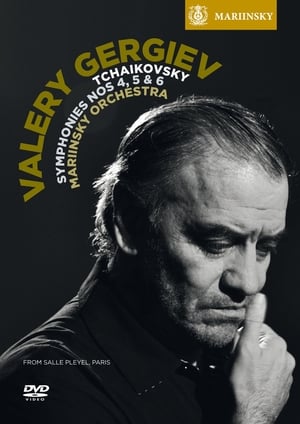
Valery Gergiev is widely recognised as the greatest modern interpreter of Tchaikovsky’s music and the Mariinsky holds a peerless reputation in the repertoire. Together they deliver definitive interpretations of Tchaikovsky’s most popular symphonies. These acclaimed performances were filmed at Salle Pleyel in Paris during January 2010, directed by Andy Sommer. The themes of fate and death pervade Tchaikovsky’s final symphonies. The composition of the Fourth Symphony coincided with the breakdown of Tchaikovsky’s marriage and a failed suicide attempt, yet he considered it to be his greatest. In contrast he believed his Fifth to be flawed and uninviting, yet today this heartfelt work is widely regarded as one of his finest. The subject of fate is further instilled in the Sixth Symphony, premiered shortly before Tchaikovsky’s death. It was posthumously entitled ‘Pathétique’ by his brother and is a deeply melancholic work, full of dynamic extremes and an inherent sense of finality.
Famed conductor Herbert Von Karajan leads the Berlin Philharmonic in a performance of what may be Vivaldi's best-known composition -- "The Four Seasons" -- in this sparkling video. Recorded in 1987 at the Chamber Music Hall, this concert features Anne-Sophie Mutter as a guest violin soloist.
From his impressive back catalogue as a cinematic composer, the illustrious Ennio Morricone conducts a moving and uplifting tribute to the victims of the 9/11 attacks and to all victims of unjust tragedies throughout history. Filmed in 2007 in high definition at the historic Piazza San Marco in Venice, this remarkable live performance features music from 'Cinema Paradiso', 'The Good The Bad and The Ugly', 'Once Upon a Time in America', 'Love Circle', 'The Mission' and many other timeless classics.
Ludwig van Beethoven headed for Symphony No. 9 literally his entire life. As early as the 1790s, he had an eye on Ode to Joy, perhaps the most well-known poem by Friedrich Schiller, written on the threshold of the French Revolution (1786). In his mature and, in particular, later years, the deaf composer with an acute ‘hearing vision’ increasingly distanced himself from conventional forms and genres and wrote parts beyond the possibilities of instruments of his day. He nurtured the idea of a symphony with a choir for at least several years. The history of the Ninth’s interpretations includes 200 years of staggering revelations and lingering stagnation. Performed by the musicAeterna orchestra, choir, and guest soloists under the baton of Teodor Currentzis, Beethoven’s opus magnum acquires the original poignancy and energy of a recent discovery.
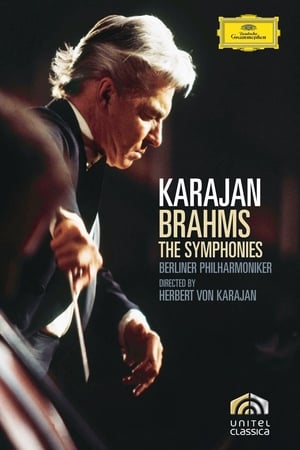
This set was recorded in the late 1960s to early 1970s. Herbert von Karajan is widely acknowledged to be one of the finest conductors of the 20th century, and around 1970 he was at his peak.
Repertoire Modest Mussorgsky: Night on Bald Mountain; Antonín Dvořák: Song to the Moon from “Rusalka”, Op. 114; Aram Chatschaturjan: Adagio from “Spartacus”; Richard Strauss: Final Scene from “Capriccio”, Op. 85; Richard Wagner: Overture to “Rienzi, der Letzte der Tribunen”; E. W. Korngold: Mariettas Lied from “Die tote Stadt”; Richard Strauss: Zueignung, Op. 10 No. 1; Sir Edward Elgar: Salut d’amour; Giacomo Puccini: Donde lieta uscì from “La bohème”; Tu che di gel sei cinta from “Turandot”; Ruggero Leoncavallo: Musette svaria sulla bocca viva from “La bohème”; Mimì Pinson, la biondinetta from “La bohème”; Piotr Tchaikovsky: “Romeo and Juliet” (Fantasy Overture)
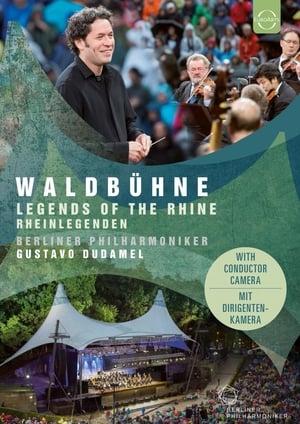
For their annual season end concert, the Berliner Philharmoniker take the audience on a dreamy, magically journey through the river Rhine with Schumann’s beloved 3rd Symphony Rhenish. Pieces from Wagner’s Der Ring des Nibelungen under the baton of dynamic conductor Gustavo Dudamel complete this evening.
Chopin Year 2010 coincides with the 60th anniversary of Daniel Barenboims stage début, and as a pianist he has decided to devote this year to the great Romantic master of the keyboard. Fryderyc Chopin was born on 1 March 1810 in a small village near Warsaw, and on the eve of the 200th anniversary of this date Barenboim gave this wildly acclaimed Warsaw recital as part of an extensive European tour. Recorded live at the National Philharmonic Hall, Warsaw, the programme presents some of the composers best-known works, including the great B flat minor Sonata with its famous Funeral March, which sounded to many as the composer may well have imagined it. Ive been playing Chopin ever since I was a little boy. On the advice of my father, who was also my teacher, I performed some of his pieces in my very first concert, when I was just seven. At that point I was playing the Etudes and the Nocturnes obviously I didnt try and tackle the larger scale Sonatas or the Fantasy until later.
Filmed on tour at Berlin's Philharmonie, this account of the valedictory Ninth Symphony is an intense interpretation, expressing Bernstein's conviction that modern man had at last caught up with the message encoded in Mahler's last completed work. Having made his famous 1966 studio recording of "Das Lied von der Erde" in Vienna, Bernstein re-recorded this in Israel with the same searing subjectivity. René Kollo draws on the voice of a great Wagner tenor, while Christa Ludwig, the greatest exponent of the contralto songs at the time, is unbearably poignant in the final movement's fusion of elation and sadness.
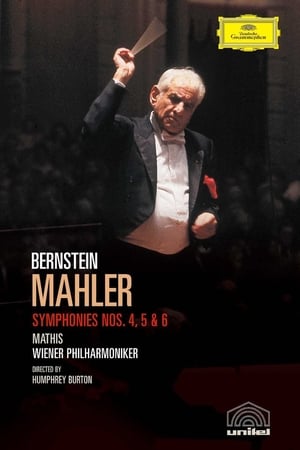
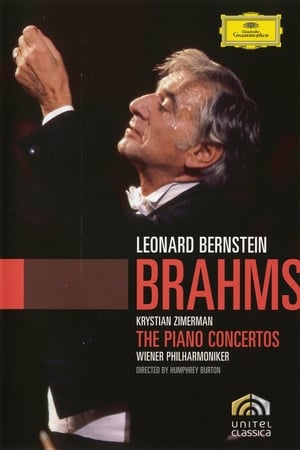
Leonard Bernstein made these recordings during his wonderfully productive collaboration with the Wiener Philharmoniker in the mid-1970s when he was at the peak of his career. Humphrey Burton's direction is, as always, very fine, giving the viewer/listener both the larger picture and highlighting individual soloists, players or groups of musicians and, of course, the maestro. The video and audio tracks show their age, but are quite acceptable even for today's standards. Bernstein's Seventh is everything one could desire: dark and spooky, highly sensual, but also structurally strong and assertive where needed. Bernstein's reading does not gloss over breakdowns in tonality and the foreshadowing of later musical developments.
In Anton Bruckner’s 7th Symphony, the listener encounters a music characterized by great spaciousness and profound solemnity, a music which speaks of grief and lamentation, but also of their transcendence. With its monumental architecture and intensity of sound, the symphony has moved listeners ever since its triumphal premiere in 1884. The Guardian calls Daniel Barenboim’s London interpretation “Tremendous … Barenboim and the Staatskapelle seem to have this work in their systems, and the overall impression was of music unfolding organically at its own pace rather than of a work being self-consciously interpreted or led.” Anton Bruckner Symphony No. 7 in E major (original version) Daniel Barenboim, conductor Staatskapelle Berlin Recorded live at the Philharmonie Berlin, 25 June 2010
Opera greats Luciano Pavarotti and Joan Sutherland -- one of the most acclaimed tenors and one of the most beloved sopranos of the 20th century -- take the stage at the Met for a gala evening of opera scenes with special guest Leo Nucci. Filmed in 1987, the memorable program includes scenes from the first and third acts of Donizetti's "Lucia di Lammermoor," the third act of Verdi's "La Traviata" and the third act of Verdi's "Rigoletto."
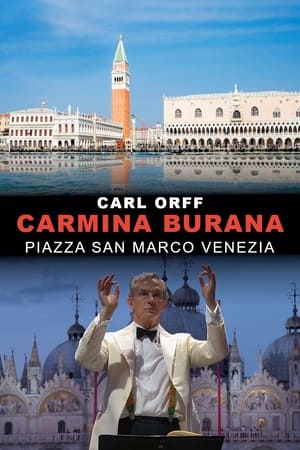
The Choir and Orchestra of the La Fenice Theatre, conducted by Fabio Luisi, take over Piazza San Marco in Venice for a grandiose concert. Facing the basilica, the musicians perform the famous cantata "Carmina burana", twenty-four medieval poems set to music by Carl Orff between 1935 and 1936.
In the 19th century, Romantic composer/pianist Franz Liszt tries to end his hedonistic ways but keeps getting sucked back in by his seductive fellow composer Richard Wagner.
Conductor: Claudio Abbado. Orchestra/Ensemble: Berlin Philharmonic Orchestra. 1.Symphony no 1 in C major, Op. 21 2. Symphony no 2 in D major, Op. 36 3. Symphony no 3 in E flat major, Op. 55 "Eroica" 4. Symphony no 4 in B flat major, Op. 60 5. Symphony no 5 in C minor, Op. 67 6. Symphony no 6 in F major, Op. 68 "Pastoral" 7. Symphony no 7 in A major, Op. 92 8. Symphony no 8 in F major, Op. 93 9. Symphony no 9 in D minor, Op. 125 "Choral"
Mozart - Berliner Philharmoniker - Radek Baborák - Daniel Barenboim
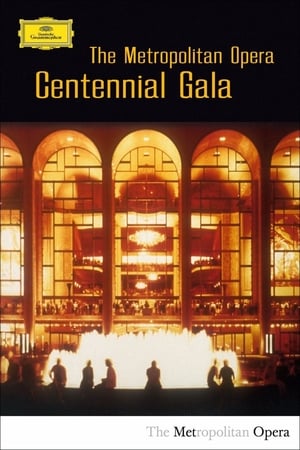
In celebration of its 100th anniversary in 1983, the Metropolitan Opera hosts a four-hour performance uniting some of the world's most spellbinding opera singers and conductors. The event includes a ballet from Samson et Dalila and boasts incredible classical performances from Kathleen Battle, Plácido Domingo, Jose Carerras, Leonard Bernstein, Marilyn Horne, Leona Mitchell, Luciano Pavarotti and many more.