French documentary campaigning for the liberalization of abortion and contraception, directed by Charles Belmont and Marielle Issartel in 1973.
A look at global sex tourism, focusing on the situation in Venezuela and Thailand.
Three women intimately share how they faced the world and their own family when deciding to terminate a pregnancy.
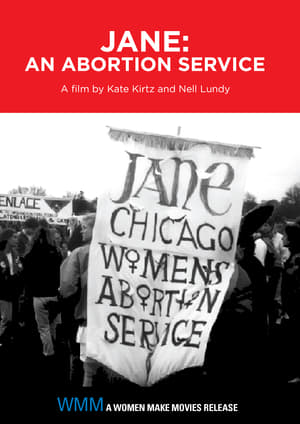
This fascinating political look at a little-known chapter in women's history tells the story of "Jane", the Chicago-based women's health group who performed nearly 12,000 safe illegal abortions between 1969 and 1973 with no formal medical training. As Jane members describe finding feminism and clients describe finding Jane, archival footage and recreations mingle to depict how the repression of the early sixties and social movements of the late sixties influenced this unique group. Both vital knowledge and meditation on the process of empowerment, Jane: An Abortion Service showcases the importance of preserving women's knowledge in the face of revisionist history. JANE: AN ABORTION SERVICE was funded by the Independent Television Service (ITVS) with funds provided by the Corporation for Public Broadcasting.
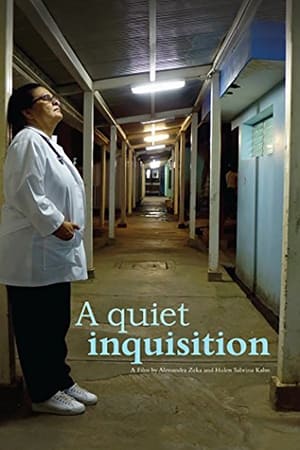
At a public hospital in Nicaragua, Ob/Gyn Dr. Carla Cerrato must choose between following a law that bans all abortions and endangers her patients or taking a risk and providing the care that she knows can save a woman's life. In 2007, Dr. Cerrato’s daily routine took a detour. The newly elected government of Daniel Ortega, a former Marxist revolutionary who converted to Catholicism to win votes, overturned a 130-year-old law protecting therapeutic abortion. The new law entirely prohibits abortion, even in cases of rape, incest, or when a woman’s life is at stake. As Carla and her colleagues navigate this dangerous dilemma, the impact of this law emerges—illuminating the tangible reality of prohibition against the backdrop of a political, religious, and historically complex national identity. The emotional core of the story—the experiences and situations of the young women and girls who are seeking care—illustrate the ethical implications of one doctor's response.
The story of Tasmanian-born actor Errol Flynn whose short & flamboyant life, full of scandals, adventures, loves and excess was largely played out in front of the camera - either making movies or filling the newsreels and gossip magazines. Tragically he was dead from the effects of drugs and alcohol by the time he was only 50 & the myths live on. But there is another side of Flynn that is less well known - his ambitions to be a serious writer and newspaper correspondent, his documentary films and his interest in the Spanish Civil War and Castro's Cuba
Les trente courageuses de La Réunion, une affaire oubliée
This lurid documentary offers a revealing expose of various deviant activities being practiced in that seething hotbed of sin and hedonism known as Los Angeles. Among the subjects shown herein are a young couple who are paid to have sex in front of leering voyeurs, a gang of rowdy bikers, a French artist who makes fancy designs out of women's pubic hair, a wild swinging Hollywood party, and an exclusive club of wealthy perverts.
Intimate confessions, paired with experimental choreography outside a woman’s clinic in Memphis, offer a glimpse into post Roe v. Wade America.
An exercise in gentle voyeurism revealing glimpses of the secret side of Salvador, the capital city of the Brazilian state of Bahia, filming a derelict prostitution zone.
Post Dobbs decision the Red River Women’s Clinic was forced to close its doors in Fargo, ND and move a mile and a half across the Red River to Moorhead, MN, into a state with very different reproductive rights legislation, in order to continue providing abortion services as well as other women’s healthcare to a wide region. This is a story of a collective action and resiliency.
A poetic and reflexive documentary approach to reproductive healthcare access in North Carolina, specifically on Indigenous reservations.
In the wake of the overturning of Roe v. Wade, a filmmaker is forced to confront the past when s/he returns to Kentucky to film the last abortion clinic in their home state – the very clinic where she sought help after she was raped as a girl years before.
Arson at a Planned Parenthood and the closing of a community clinic endanger the lives of women in Knoxville, TN. A teaching doctor reflects on what the post-Dobbs world means for her patients and her students, who are the next generation of reproductive care workers.
A sex documentary examining the varieties of sexual activity in San Francisco. It includes explicit footage from live sex shows and behind the scenes of a pornographic movie. A highlight is the film's period footage of San Francisco in the late '60s and early '70s.
A documentary about Goran Ivandic 'Ipe', the drummer of most popular Yugoslav rock band of all time, Sarajevo-based "Bijelo dugme" (White Button). Ivandic's fatal jump from the balcony of hotel Metropol in Belgrade in 1994 sparked much controversy around his fate.
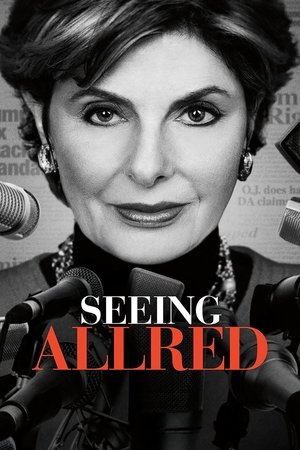
Gloria Allred overcame trauma and personal setbacks to become one of the nation’s most famous women’s rights attorneys. Now the feminist firebrand takes on two of the biggest adversaries of her career, Bill Cosby and Donald Trump, as sexual violence allegations grip the nation and keep her in the spotlight.
"Have you ever regret about not having kids?" - "Yes, I have, Sometimes"
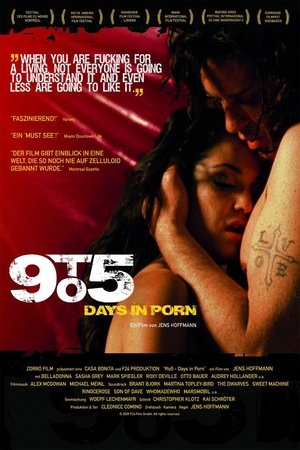
9to5 - Days in Porn focuses on the people behind a controversial and multi-billion dollar industry "The Adult Entertainment industry". It depicts their stories, each one different, unadorned and authentic, without glorification or prejudice. It delivers deep insight into their personal lives - from glamorous to grotesque - strange, fascinating, offensive, absurd and sometimes funny moments all at once.
Pier Paolo Pasolini sets out to interview Italians about sex, apparently their least favorite thing to talk about in public: he asks children if they know where babies come from; asks old and young women if they support gender equality; asks both sexes if a woman's virginity still matters, what do they think of homosexuality, if divorce should be legal, or if they support the recent abolition of brothels. He interviews blue-collar workers, intellectuals, college students, rural farmers, the bourgeoisie, and every other kind of people, painting a vivid portrait of a rapidly-industrializing Italy, hanging between modernity and tradition — toward both of which Pasolini shows equal distrust.